Brake Lights Not Working but the Bulb Is Good: What to Check
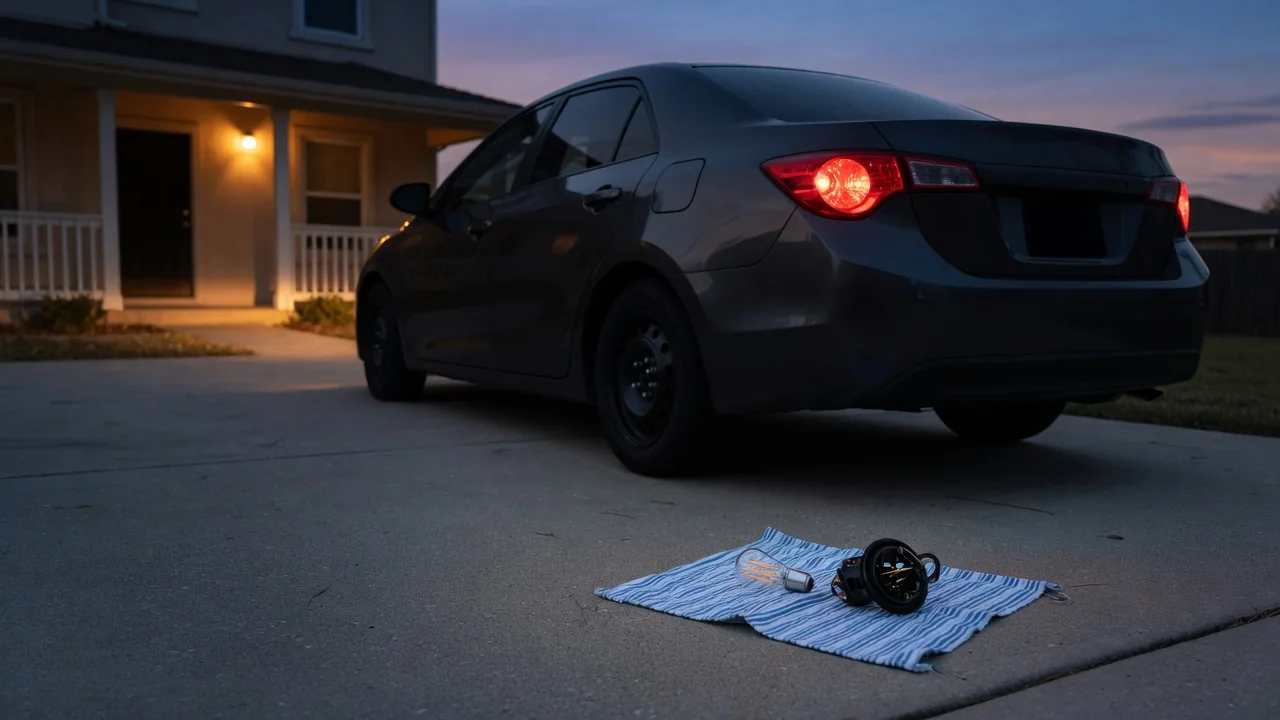
When your brake lights are not working but the bulb is good, the problem is somewhere else in the rear lighting circuit. A bulb that tests fine rules out only one part. The switch, fuse, wiring, sockets, ground connections and, on many newer vehicles, a body control module all have to work before the lamps light when you press the pedal.
Why Brake Lights Can Fail Even When the Bulb Tests Good
A brake lamp is the last stop in a chain. When you press the pedal, a brake light switch mounted near the pedal arm closes. It sends power, usually through a dedicated stop lamp fuse, along the tail light wiring harness to each socket. Current flows through the bulb filament or LED and returns to the battery through a ground connection on the body. If any link in that path is open, corroded or loose, a perfectly good bulb stays dark because the circuit is never complete.
That simple picture fits many older vehicles, but newer designs often work differently. On many cars and trucks, the switch only sends a signal to a body control module, which then powers the lamps or commands a separate lighting module. Some vehicles also use sealed LED assemblies instead of replaceable bulbs. The layout varies by make, model and year. Use your owner's manual and a service manual or wiring diagram for your exact vehicle to find fuse locations, connector positions and how the circuit is controlled.
Reading the Symptom Pattern: All Lights Out, One Side Out, or Only the Center Light
Which lights fail tells you where to look first. When all the brake lights go out together, including the center high-mount stop lamp, the cause is more likely something they share, such as the switch, the stop lamp fuse or the control signal. If only one side is dead, look at that side's socket, connector, harness section or ground. When only the third brake light fails, focus on its own wiring, which often runs through a trunk lid, hatch or headliner, or on its LED unit.
To check safely, park on level ground. Put an automatic in Park or leave a manual in gear with the engine off, and set the parking brake firmly. Have a helper press the pedal while you watch, or back up to a garage door or shop window and look for the reflection. Note whether the tail lights or turn signals also misbehave, or whether the brake lights stay on all the time. These patterns narrow the possibilities, but none of them confirms a failed part by itself.
Brake Light Switch and Pedal-Area Causes
The brake light switch is usually a plunger-style switch on a bracket near the top of the pedal arm, and it changes state as the pedal moves. Over time the plunger can wear, the mounting can slip out of adjustment, or a small plastic or rubber pedal stop bumper can crack and fall out. Any of these can keep the switch from turning on when you brake. They can also leave it stuck on, so the brake lights stay lit even with your foot off the pedal.
On many vehicles, the same switch signal feeds other systems, so related symptoms are worth noting. A shifter that won't leave Park, cruise control that won't engage, or push-button start that doesn't respond to the brake pedal may point toward the switch or its signal. Without removing any panels, you can shine a flashlight under the dash to look for a missing pedal bumper or a loose switch. Replacing or adjusting the switch should follow the procedure for your vehicle. If you're unsure, leave it to a qualified technician.
Fuses, Sockets and Ground Connections
Find the brake or stop lamp fuse using the owner's manual and the label on the fuse box lid. Some vehicles have more than one fuse panel. With the ignition off, pull the fuse with the supplied puller and look at it in good light. A blown blade fuse usually shows a broken metal strip inside the clear plastic. Replace it only with a fuse of the same rating. If the new fuse blows too, there is probably a short circuit that needs professional diagnosis, not a larger fuse.
Check the sockets closely whenever one lamp misbehaves. With the light off and cool, look for green or white corrosion on the contacts, melted or browned plastic, contacts that no longer grip the bulb base, or moisture inside the lamp housing. A poor ground connection causes its own set of symptoms. Lamps may be dim, flicker or stay dead. Pressing the brake may also make a turn signal or tail light glow faintly, because current is finding an unintended path back to the battery.
Wiring, Trailer Connections and Electronic Control Issues
Wiring tends to fail where it flexes or is exposed. Harnesses that pass through trunk lid or liftgate hinges bend every time the lid opens, which can eventually crack the insulation or break the wires inside. Wiring near the bumper or under the vehicle can be damaged by road debris, salt or a poor earlier repair. Look for chafed insulation, pinched sections, and connectors that are loose or corroded. Don't pull hard on harnesses, because that can create a new fault.
Aftermarket trailer wiring is another common suspect. A poorly spliced converter, a corroded trailer wiring connector, or a short in the trailer itself can disrupt the vehicle's rear lighting. Try unplugging the trailer and any converter and see whether the lights come back. On module-controlled systems, a lighting fault may set stored codes that need a capable scan tool and vehicle-specific information to read. Verify what any code means for your exact vehicle. A code is evidence to interpret, not proof that a particular part has failed.
Safety Limits and When to Get Professional Testing
Driving without working brake lights is a real hazard. Drivers behind you get no warning when you slow down, which raises the risk of a rear-end collision, especially in traffic or at night. In many places it is also a traffic violation. Limit driving until the problem is fixed, and avoid highways and heavy traffic if you must move the vehicle. Get professional testing if fuses keep blowing, if wiring looks melted or burned, or if the fault seems to be in a body control module or lighting module.
Some shortcuts create bigger problems. Don't probe wiring under the dash near airbag components, bypass fuses with wire or foil, or splice into harnesses without the right knowledge and tools. At the shop, tell the technician exactly which lights fail and whether the center light works. Mention when the problem started and any recent bulb changes, trailer wiring installation or body work. Also report related warning lights or symptoms, such as shift-lock or cruise control trouble. That history helps the technician test efficiently.