Brake Hose Repair: Why Damaged Hoses Are Replaced, Not Patched
The short answer
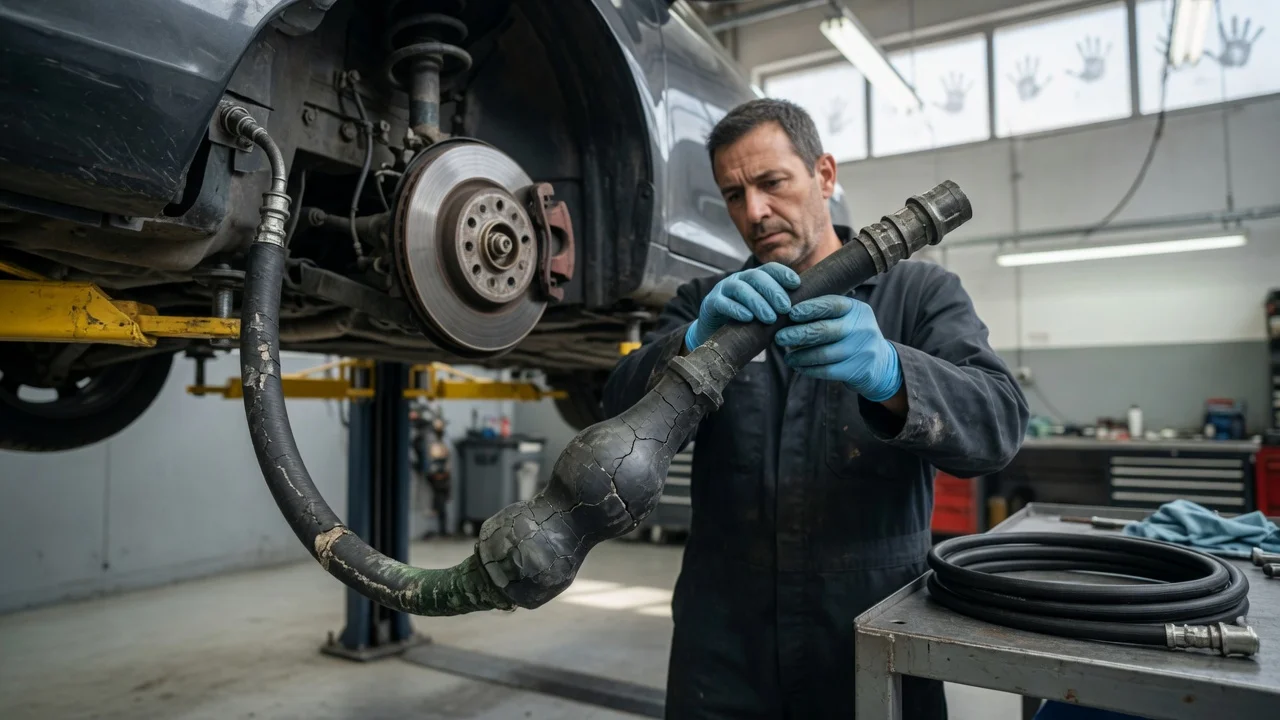
A flexible brake hose cannot be safely repaired. If a rubber brake hose is cracked, leaking, bulging, chafed or collapsed inside, the accepted fix is to replace the whole hose assembly with a new part made for the vehicle. Tape, sealant, hose clamps, splices and generic rubber hose are not safe substitutes. These hoses carry brake fluid at high pressure every time the pedal is pressed, and a patch that seems to hold in the driveway can fail under hard braking.
This guide covers the flexible hoses that link the rigid brake lines on the body or axle to the calipers or wheel cylinders at each wheel. Rigid metal brake lines are a separate case. A damaged section of metal line can sometimes be replaced with new line, correctly flared and joined with fittings rated for brakes. Methods and legal requirements for that work differ by market, so check the vehicle's service information and local rules before attempting it.
Symptoms that point toward a brake hose
Several brake faults can look alike, so a symptom alone does not prove the hose is at fault. These are the signs most often linked to hose problems:
A soft or spongy brake pedal, or a pedal that slowly sinks under steady pressure; Brake fluid wetness, drips or residue near a wheel, on the inside of the tire or on suspension parts; The brake fluid level in the reservoir dropping between checks; A brake warning light, which on many vehicles reacts to low fluid level; The vehicle pulling to one side when braking; One wheel that drags, runs noticeably hotter than the others or releases slowly after braking; Visible cracks, abrasion, swelling or a bulge on the hose itself
Checks to make and what the results mean
Do these checks only with the vehicle parked on level ground, the parking brake applied where appropriate and the wheels chocked. If you need to raise the vehicle, support it on proper stands and never work under a vehicle held up only by a jack.
Check | What to look for | What it suggests; Reservoir fluid level | Level below the minimum mark, or falling over days | Fluid is leaving the system somewhere. A hose is one possible source, alongside metal lines, calipers, wheel cylinders and the master cylinder. Visual inspection of each hose | Cracks, splits, chafe marks, crushed sections, swelling | External deterioration. A hose showing any of these should be replaced even if it is not leaking yet. Wetness at the hose ends and along the hose | Damp fluid residue at the crimped fittings or on the hose body | A leak at or near that hose. Confirm by cleaning the area and checking again after the pedal has been pressed. Helper presses the pedal while you watch the hose | The hose visibly balloons or bulges | The hose is weakening internally and expanding under pressure, which can cause a spongy pedal. Replace it. Wheel drag and heat after a short drive | One wheel much warmer than its partner on the same axle, or hard to turn by hand | A brake not releasing fully. A hose collapsed inside can trap pressure at the caliper, but a sticking caliper piston or slide pins can produce the same result. Braking pull | Vehicle steers toward one side under braking | Uneven braking force. A restricted hose is one cause, but seized calipers, contaminated pads and tire or alignment problems are also possibilities.
A spongy pedal with no visible leak and no bulging hose often has a different cause. Common examples are air in the hydraulic system, old fluid or a fault in the master cylinder. On vehicles with ABS, an ABS or brake warning light, or a stored fault code, is something to investigate rather than proof that any particular part has failed. A scan tool and the manufacturer's diagnostic procedure are the proper next step.
When to stop driving
Do not drive the vehicle, and arrange recovery or professional inspection, if any of these apply: fluid is actively leaking from a hose or fitting; the reservoir level is visibly dropping; the pedal sinks toward the floor or needs pumping to work; the brake warning light stays on together with a change in pedal feel; or a hose is split, crushed or bulging. Losing fluid can reduce braking at the affected wheels and, depending on how the hydraulic system is split, on other wheels as well.
What a proper replacement involves
Replacing a hose is a common workshop job. It is still safety-critical, and the details depend on the vehicle. The outline below is general. It does not replace the service procedure for a specific model.
Get the correct hose for the exact vehicle. Hoses can differ by model year, axle, side, brake package and drivetrain, so match the part number instead of judging by appearance. Use a flare-nut (line) wrench on the metal line fitting. An ordinary open-ended wrench can round off the soft fitting. Where the hose attaches with a banjo bolt, fit new sealing washers rather than reusing the old ones. Tighten fittings to the torque given in the vehicle's service information. Specific values were not supplied here and vary by vehicle. Keep the hose free of twists, and check its clearance from the tire, wheel and suspension across full steering lock and full suspension travel. Refill only with the brake fluid type specified for the vehicle, usually marked on the reservoir cap or listed in the owner's manual. Do not mix incompatible fluids. Bleed the brakes to remove air. Vehicles with ABS may need a specific bleeding sequence or a scan-tool procedure. Check for a firm pedal and for leaks before moving the vehicle, then test the brakes at low speed in a safe place before normal driving.
Brake fluid damages paint and irritates skin and eyes. Wipe up spills promptly and dispose of old fluid according to local rules. If you lack the tools, the service information or experience with brake hydraulics, have a qualified technician do the job. A mistake can leave the vehicle without adequate braking.
Replacing more than one hose
Hoses on the same vehicle usually age together. When one has failed from age or weather, inspect the others closely, and consider replacing them as a pair across the axle. That is a judgment call based on their condition, not a fixed rule. Service intervals, costs and expected hose life were not part of the supplied material and vary by vehicle, so check the manufacturer's maintenance schedule or a workshop's assessment for those.