Brake Booster Vacuum Hose Routing: Location and Connections
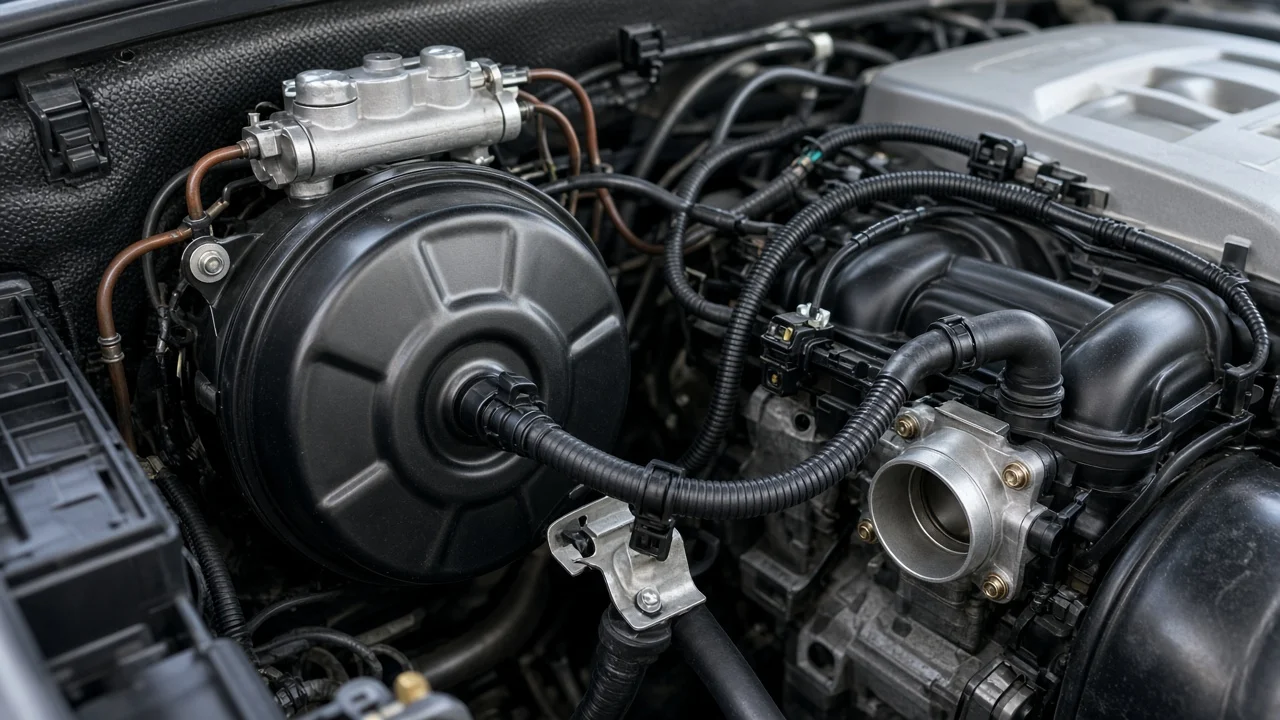
If you are looking for a brake booster vacuum hose diagram, the layout on most gasoline cars is simpler than it looks. One reinforced hose links an engine vacuum source to the round booster behind the brake master cylinder. Knowing where that hose goes, which way its check valve faces and whether your vehicle uses a different setup helps you spot a disconnected or cracked line before it becomes a hard brake pedal.
Where the Brake Booster Vacuum Hose Goes
On a typical gasoline engine, the hose runs from a fitting on the intake manifold, downstream of the throttle body, to the vacuum brake booster mounted on the firewall on the driver's side. At the booster end, it connects to a one-way check valve pressed into a rubber grommet on the booster shell, usually on the face pointing toward the engine. At the engine end, it connects to a dedicated port on the manifold, typically larger than the small nipples used for sensors and emissions lines. Drawn as a connection diagram, the whole circuit is short: vacuum source, hose, check valve, booster.
That basic picture needs a few qualifications. Some vehicles place the check valve inline in the hose instead of in the booster shell, some add a vacuum reservoir or a tee that feeds other accessories, and some use a vacuum pump rather than manifold vacuum. Exact routing, clip positions, hose length and molded bends depend on the engine and model year, so the factory service information for your specific vehicle is the reference that settles where the brake booster vacuum hose connects.
How the Booster Uses Engine Vacuum
The booster is a sealed canister divided by a flexible diaphragm. With the brakes released, vacuum is present on both sides of that diaphragm. When you press the pedal, a valve inside the booster lets outside air into the rear chamber while the front chamber stays under vacuum. The pressure difference pushes the diaphragm forward and adds force to the pushrod acting on the master cylinder, which pressurizes the brake fluid sent to each caliper so the pads clamp the rotors. The hose's only job is to keep the front chamber evacuated so that assist is ready every time.
The check valve lets air be drawn out of the booster toward the engine but closes when the source loses vacuum, such as under heavy throttle or after the engine shuts off. That keeps a reserve in the booster for one or more assisted applications. A valve installed backward blocks the vacuum supply entirely, which is why orientation matters. Inline valves are usually marked with an arrow or labeled ends; the arrow normally shows flow toward the vacuum source, but confirm against the markings on your part.
What Changes the Routing on Your Vehicle
Diesel engines produce little usable manifold vacuum, so they typically rely on a vacuum pump driven by the engine or an electric pump. On those vehicles, the booster hose runs from the pump to the booster, not to the intake. Many turbocharged gasoline engines also use a vacuum pump or a valved arrangement, because the intake manifold is under boost pressure during acceleration. Connecting the booster line to a point that sees boost, without the components the manufacturer specified, can leave the booster without vacuum when you need it.
Hybrids and electric vehicles may use an electric vacuum pump controlled by a pressure sensor, or they may have no vacuum booster at all and use an electrically controlled brake booster instead. Some trucks and diesel pickups use a hydraulic booster powered by the power steering system, which has no vacuum hose. Engine swaps, aftermarket intake manifolds and engines with low idle vacuum can change where to connect the brake booster vacuum hose or call for a reservoir or pump, so a stock diagram may not match a modified vehicle.
Checking and Reconnecting the Hose
With the engine off and cool, trace the hose from the booster to its source. Look for cracks, collapsed or kinked sections, oil-soaked rubber that feels soft, split ends, missing clamps, spots rubbed against brackets and a check valve grommet that is not fully seated. Then, with the engine idling, listen for a hiss near the hose, the check valve or under the dash at the pedal. A leaking or disconnected hose commonly causes a hard pedal, a hissing sound and a rough or unusually high idle, and it can set lean fuel mixture codes because unmetered air enters the engine.
A simple function check: with the engine off, pump the pedal several times to use up the stored vacuum, hold steady pressure, then start the engine. The pedal should drop slightly as assist comes in. To check the reserve, run the engine, shut it off, wait a short while and press the pedal; you should typically still feel assist on the first application. If a hose slipped off, push it fully onto its fittings, keep the check valve facing the right way, reuse or replace the clamp and route it away from exhaust parts and moving components.
Replacement hose must match vehicle fitment: inside diameter, molded shape and fittings. Use reinforced brake booster hose, because ordinary thin vacuum tubing can collapse under vacuum. If you find wet brake fluid at the check valve or around the booster, the master cylinder may be leaking internally, and that needs professional repair rather than a new hose.
Limitations and When to Get Professional Help
This guide describes common layouts, not your exact vehicle. A hard pedal means the car still stops but needs much more force and distance, so treat it as a safety fault and arrange repair rather than continuing normal driving. A pedal that sinks toward the floor or feels spongy points to a hydraulic problem, not the vacuum hose; stop using the vehicle and have it towed or inspected. Vacuum pump faults, brake warning lights, electric booster messages and internal booster leaks also call for a qualified brake technician.
For the next step, get the routing for your exact engine and model year from factory service information or a dealer before buying parts. If a new hose does not restore normal pedal feel, have the vacuum supply, check valve and booster tested. Weak braking with a normal pedal usually points elsewhere, such as brake pads or rotors worn past their wear limits, contaminated friction material or a sticking caliper, which a vacuum hose will not fix.