Finding a Brake Booster Vacuum Hose at AutoZone
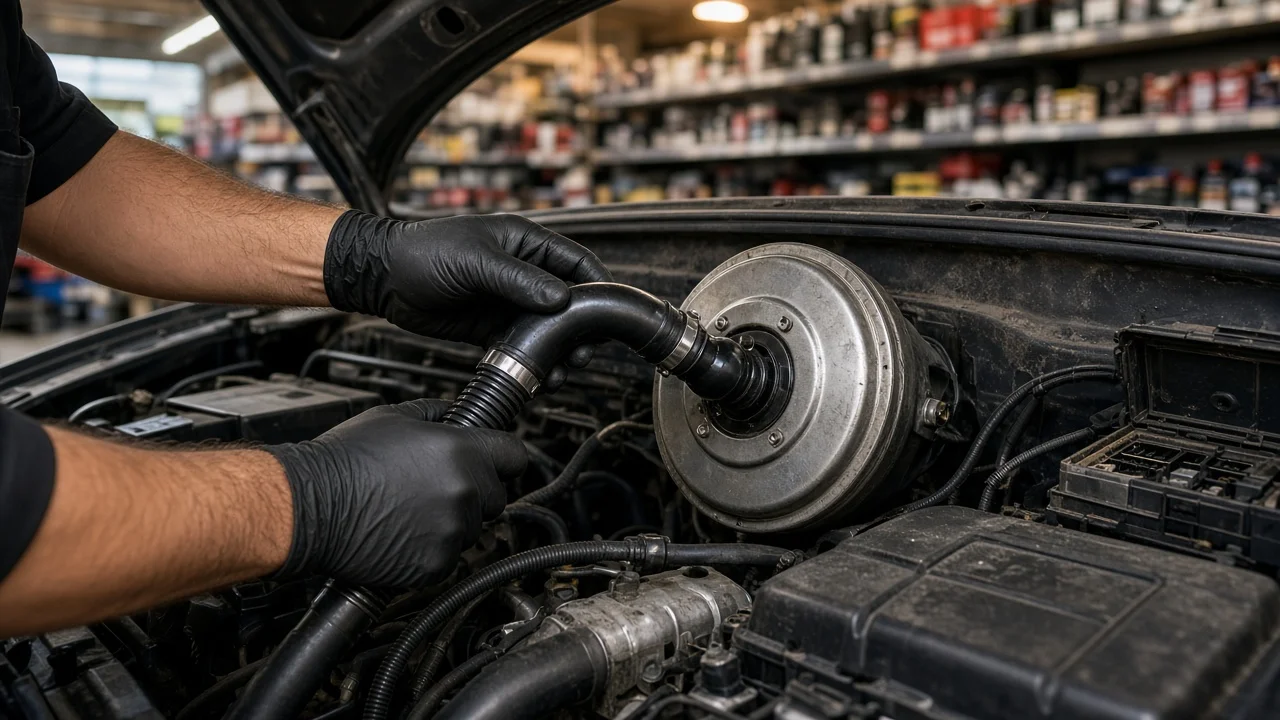
A brake pedal that suddenly feels hard, or a hiss near the firewall when you press it, often points to the vacuum hose feeding the brake booster. Parts chains such as AutoZone can usually supply either a vehicle-specific booster hose or bulk vacuum hose with a separate check valve. What you leave with depends on your engine, how the original hose is built, and what your local store has on the shelf.
Can you get a brake booster vacuum hose at AutoZone?
Often yes, with some qualifications. These hoses are generally sold in two forms. The first is a molded, preformed assembly listed for specific vehicles, sometimes with the check valve built in. The second is generic brake booster or vacuum hose sold by length, used with a separate in-line check valve and, if needed, a new grommet where the valve enters the booster. The parts lookup is driven by year, make, model and engine. Stock varies by location, so some molded assemblies may have to be ordered, and certain factory designs may only be available from a dealer. Do not assume a hose fits because it looks similar on the shelf.
Give the counter staff your exact engine size, and your VIN if the lookup shows several options for your model. Bringing the old hose, or at least a clear photo of both ends and the check valve, is the most reliable way to confirm a match. If the original is cracked rather than torn, you can measure its inside diameter to compare against bulk hose. Ask whether the listed part includes the check valve, because many listings do not.
How the booster hose does its job
On most gasoline engines, the brake booster is the large round canister between the brake pedal and the master cylinder. A hose connects it to the intake manifold, which produces vacuum while the engine runs. The booster uses the pressure difference between that vacuum and outside air to multiply the force of your foot, so you need far less effort to push fluid through the master cylinder to the calipers. When the hose leaks or comes loose, the booster loses that vacuum and you are left pushing the hydraulic system almost entirely with leg strength.
The one-way check valve keeps vacuum stored in the booster when manifold vacuum drops, such as under hard acceleration or right after the engine shuts off. That reserve is why you still get a few assisted pedal applications with the engine off. Hose material matters too. Booster hose has to resist collapsing under vacuum and tolerate oil and fuel vapors from the intake, so ordinary heater or fuel hose is not an appropriate substitute even when the diameter matches.
Configurations that change what you need
Not every vehicle uses manifold vacuum for brake assist. Diesels, and some turbocharged or direct-injection gasoline engines, use a mechanical or electric vacuum pump, so the hose runs from the pump rather than the intake and may be a different part entirely. Some trucks and heavy vehicles use hydraulic assist powered by the power steering system, which has no vacuum hose at all. Many hybrids and newer vehicles use electric or integrated brake boosters that also have no vacuum line. If your parts lookup shows no booster hose for your vehicle, this may be the reason.
Even among vacuum boosters, construction differs. Some vehicles use a short straight rubber hose with clamps that bulk hose can replace easily. Others use molded rubber with tight bends, rigid plastic lines with quick-connect fittings, or a check valve integrated into the hose body. Bulk hose forced around a tight bend can kink and restrict flow, and plastic quick-connect lines usually need the correct assembly rather than a homemade splice.
Confirming the hose is the problem
Typical signs of a booster vacuum leak include a hard, high pedal, a hissing sound under the dash or near the booster when braking, and sometimes a rough idle or engine lean codes because the leak lets unmetered air into the intake. A simple check: with the engine off, pump the pedal several times to use up stored vacuum, then hold light pressure and start the engine. With a working booster and hose, the pedal should sink slightly as vacuum builds. You can also look and listen along the hose with the engine idling for cracks, soft spots, a loose fitting or a split at the check valve grommet.
Keep the symptom in mind before buying parts. A hard pedal suggests a loss of assist. A soft or spongy pedal that sinks usually points to the hydraulic side, such as air in the lines, low or contaminated brake fluid, or a failing master cylinder, none of which a vacuum hose will fix. Grinding or squealing usually relates to worn brake pads and friction material, pulsation to brake rotors, and pulling to one side often to a sticking caliper. Those parts have vehicle-specific wear limits and need separate inspection.
Buying and fitting the replacement
When matching a part, confirm vehicle fitment by engine as well as model, compare the length and end shapes against the original, and check that any check valve points the right way. Valves are usually marked with an arrow or labeled ends showing which side faces the engine. If you use bulk hose, choose hose rated for brake booster or vacuum service in the correct inside diameter, and replace worn clamps rather than reusing ones that no longer grip.
Work with the engine off and cool. Remove the old hose carefully, since the booster grommet and plastic manifold fittings can crack if you pry hard, and replace a hardened grommet if it no longer seals. Route the new hose away from hot exhaust parts and moving components, and make sure it is fully seated at both ends. Afterward, repeat the pedal test, listen for hissing at idle, and confirm normal braking at low speed in a safe area before driving in traffic.
Limitations and next step
Parts lookups and general guidance cannot account for every engine variant, mid-year production change or prior repair, so the vehicle's service information remains the final reference for correct parts, routing and testing. A leaking booster diaphragm, a failed vacuum pump or a master cylinder fault can mimic a bad hose, and replacing the hose will not cure those. Because lost brake assist significantly increases pedal effort and stopping distance, limit driving until the cause is found. If the pedal stays hard after a new hose and valve, if the pedal sinks or feels spongy, or if you have any doubt about stopping ability, stop using the vehicle and have the brake system checked by a qualified technician.