Brake Booster Repair: Faults and Repair Options
What is the direct answer to my question?
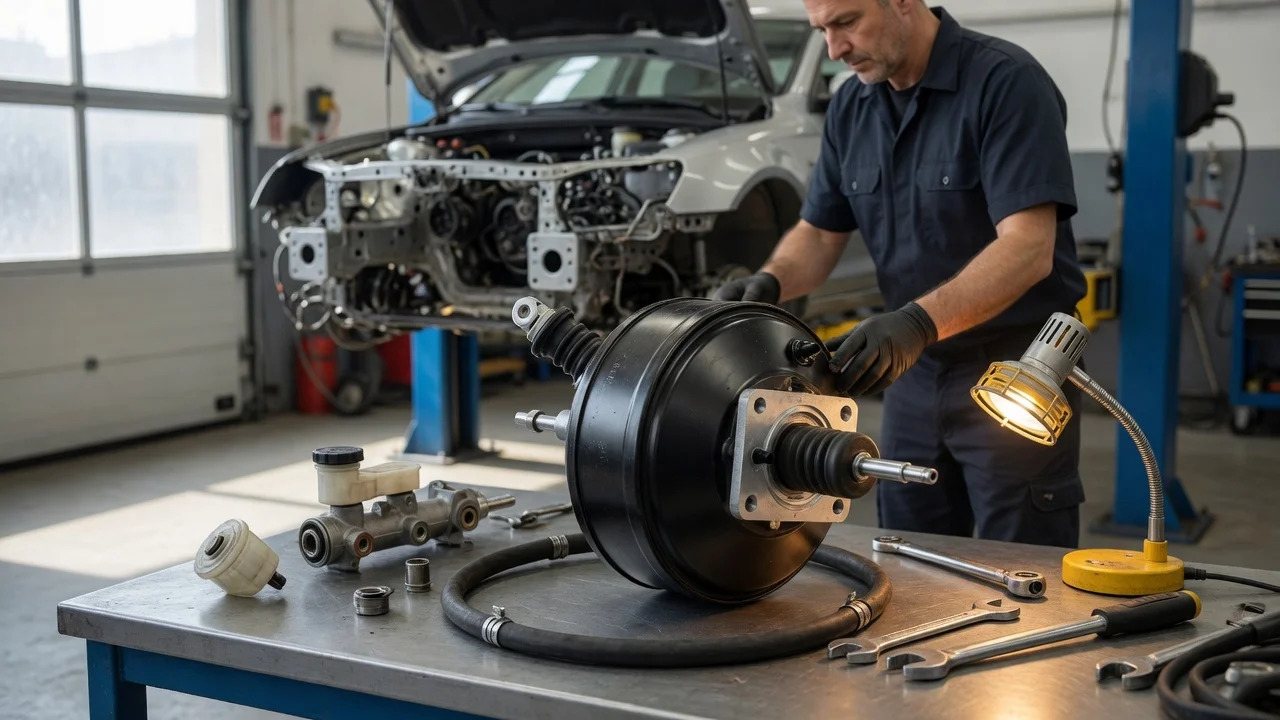
Brake booster repair means correcting the vacuum, hydraulic, or electronic assist system that reduces the pedal effort needed to stop the vehicle. A booster fault can make the pedal feel hard, low, or unusually soft, but the booster is not always the failed part. In some cases the booster can be rebuilt or resealed; in others it is replaced as a unit, or the actual problem is outside the booster. The repair path depends on the type of booster, the symptom, and whether the booster is separate from the master cylinder or part of an assisted braking assembly.
Where the repair boundary is
A conventional vacuum brake booster is mounted between the brake pedal and the master cylinder. It uses engine vacuum, or vacuum from a pump, to multiply pedal force. Many electric and hybrid vehicles instead use an electro-hydraulic or electric assist system, so the same symptom of a hard pedal may have a different cause and repair procedure. Vehicle-specific configuration matters: the applicable booster type, mounting, vacuum source, and control module support can change the correct diagnosis and replacement part.
Symptoms that can point to the brake booster
The most direct booster symptom is a brake pedal that is harder than normal to press while the vehicle is stopped or during braking. A failed booster can also produce a pedal that drops very slightly on startup and then becomes firm. Hissing or air movement near the dash when the pedal is pressed may indicate a vacuum leak in the booster or its hose, but similar sounds can come from the check valve, grommet, hose, or other vacuum-operated accessories.
A low or sinking pedal with poor braking is not automatically a booster fault. It is more consistent with a hydraulic problem involving the master cylinder, calipers, wheel cylinders, hoses, fluid condition, or air in the brake fluid. The booster can amplify foot force, but it cannot restore braking power lost to a hydraulic leak or air bubbles.
Faults commonly found in a vacuum brake booster
Failed internal diaphragm: vacuum cannot be held across the diaphragm, reducing assist or allowing a leak. Leaking reaction disc or pushrod seal: air passes the booster or the internal reaction mechanism no longer provides correct pedal feel. Defective check valve or grommet: manifold vacuum is not maintained in the booster reservoir. Damaged or disconnected vacuum hose: the booster receives reduced vacuum and assist is weak. Externally damaged housing: impact can distort the shell and change internal seal geometry.
What could explain this result, and what check would distinguish the causes?
Begin with observation before replacing the booster. A hard pedal can come from the booster, a blocked vacuum source, a leaking supply line, a failed vacuum pump, or a braking system fault outside the assist circuit. A check should separate the mechanical booster from the parts that feed it.
While the engine is off, pump the brake pedal several times to exhaust stored vacuum. Keep light pressure on the pedal and start the engine. If the pedal falls slightly under foot, vacuum assist is reaching the booster. If the pedal does not move, inspect the vacuum hose before condemning the booster. Disconnected, collapsed, cracked, or loose hose sections can create the same result. Check the booster check valve. It should allow flow toward the intake manifold or vacuum pump but prevent reverse flow. If air can pass both ways or the grommet is loose, that part may be the repair rather than the booster. With the engine running and the pedal released, listen for a continuous leak near the pedal area. A constant hiss that changes when the pedal moves supports a booster or seal leak, but confirm that the sound is not coming from the supply hose or another vacuum line. Measure the vacuum level if the booster has a vacuum supply. Low or unstable vacuum may make a good booster appear weak. The applicable vacuum specification depends on the engine, region, and vehicle configuration.
A fault code related to the brake system does not by itself prove that the booster needs replacement. On vehicles with electric or electro-hydraulic assist, a stored code can identify a sensor, communication, control module, power supply, or hydraulic pressure fault. The code must be interpreted with the specific system in mind and compared with the operating conditions required for that diagnostic.
Which differences matter for my intended use?
The main repair choice is between rebuilding or resealing the existing booster and installing a replacement booster. Rebuilding may be practical when the leak is limited to an accessible seal, diaphragm, or reaction component and the booster is designed for service. The benefit is lower parts cost, but the result depends on internal inspection and correct assembly. A replacement booster is usually the expected fix when the shell is damaged, the internal failure is unconfirmed, or a rebuilt unit is not supported for that application.
A used booster can restore function at lower cost, but its condition is less certain. A new or professionally remanufactured booster is the more predictable option when reliable braking is the priority. Remanufactured and rebuilt descriptions are not identical across suppliers, so the relevant comparison is whether the unit was resealed, reassembled with new wear parts, and tested for the booster type in question.
Compatibility is not only physical. A booster may bolt to the firewall and accept the master cylinder but still be incorrect if the pushrod length, vacuum port arrangement, brake pedal linkage, or control interface differs. On electronically assisted systems, software and communication support can matter as much as the mechanical fit. Confirm the correct version by the model year, engine, market, and applicable braking system, not by appearance alone.
When replacement is the supported repair
Replacement is clearer when the booster housing is damaged, the diaphragm has failed and no service kit is available, or the booster is integrated with hardware that is not approved for service. If the master cylinder is leaking into the booster, the hydraulic leak must be corrected at the same time. Installing a new booster without fixing that leak may damage the replacement.
What remains uncertain
Exact test values, repair intervals, and hardware availability are vehicle-specific. Some boosters are not serviceable by design, and some braking systems require a scan tool or controlled actuator test because there is no conventional engine vacuum to check. In those cases the owner can identify the symptom and the system type, but the final repair decision should be based on vehicle-specific diagnostic information rather than a replacement part ordered only from a symptom.