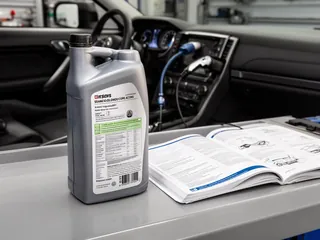
BP Engine Oil: How to Choose the Right One for Your Car
The short answer
The right BP engine oil for your car is the one that matches the viscosity grade and specification listed in your owner's manual for your model year, market and engine. The brand matters less than whether the oil carries the exact approval your manufacturer requires. If your vehicle calls for a specific manufacturer approval, an oil without that approval is not a safe substitute, even if the viscosity looks the same.
In many markets, BP's passenger-car engine oils are sold under the Castrol brand, which BP has owned for many years. Some regions have also carried BP-branded lubricant lines. Product names, ownership arrangements and regional availability can change, so the label on the bottle in front of you is the reliable reference.
What to check on the label
Viscosity grade: written as two numbers, such as 5W-30. The first number with the W describes cold-start flow, and the second describes thickness at operating temperature. Use the grade your manual lists for your engine and climate. Industry specification: standards such as API, ACEA or ILSAC define baseline performance. Your manual will name the one that applies in your market. Manufacturer approval: some carmakers require their own approval codes, for example Volkswagen, Mercedes-Benz or General Motors standards. If your manual lists one, the oil must state that approval explicitly. Engine type: petrol, diesel and engines with a diesel particulate filter or other emissions equipment can have different requirements, even within the same model.
When the answer changes
The same model can need different oils depending on the engine, the year it was built and the market it was sold in. A diesel version may require a low-ash oil that the petrol version does not, and a mid-cycle engine update can change the required specification. If your manual covers several engines, confirm which one is fitted to your car, using the engine code or your registration details if necessary.
Vehicles under warranty deserve extra care. Using an oil without the required approval can create problems if an engine fault is later investigated, so keep receipts or service records that show the oil specification used.
What this article cannot confirm
No product data sheets, prices or regional availability information were provided for this guide, so it does not state which specific BP or Castrol product carries a given approval, what it costs, or where it is sold. To confirm a match, compare the approvals printed on the product or its technical data sheet with your owner's manual, or use the manufacturer's oil-finder tool for your exact vehicle.
Next step
Find the oil requirement in your owner's manual, note the viscosity grade and any manufacturer approval, then choose a BP or Castrol product whose label lists both. If the manual is missing or unclear, a dealer or independent garage can confirm the specification for your car's engine.