BMW Z4 Manual Transmission: Which Years and Trims Offer It
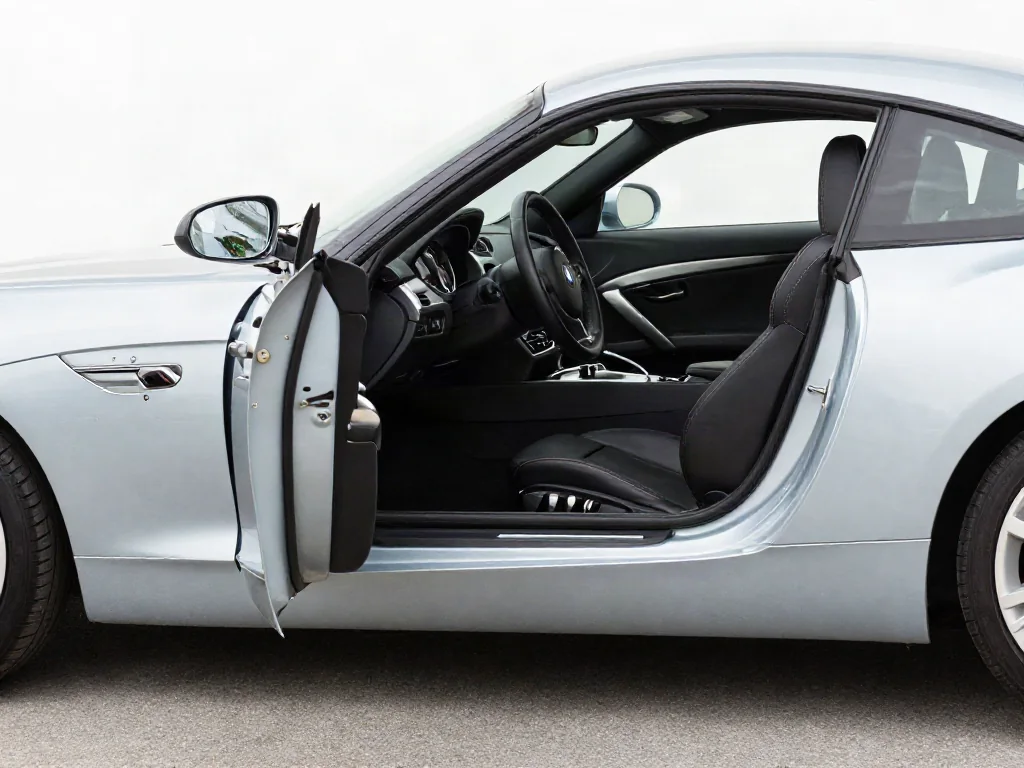
Factory z4 manual transmission cars exist in the US, but three pedals were never a given on every generation, trim, or body style. Used buyers should match chassis, model year, and factory equipment instead of assuming a six-speed manual came with every roadster or coupe. Availability is generation-specific, and a listing that looks sporting can still hide an automatic or a conversion.
BMW Z4 Manual Availability by US Model Year and Trim
BMW sold factory-manual Z4s in the United States, yet the option always depended on generation, US model year, trim, and body style rather than on the Z4 nameplate alone. The first-generation E85 roadster and E86 coupe, the second-generation E89 roadster, and the current G29 roadster each had different rules. A factory manual appeared on selected E85 and E86 cars, on certain E89 trims in limited windows, and later as a US option on the G29 M40i. Treating those groups as one continuous three-pedal lineup overstates what dealers actually offered.
When identifying an individual car, US model year is not the same as the calendar date on a build sticker or the year on a registration. A late-production example can carry the next model year, and a used title can lag either figure. Do not assume that an entire trim or model-year range offered a z4 manual transmission until the chassis, market, and factory transmission specification for that combination are confirmed. Adjacent years in the same generation often switched between a six-speed manual, an automatic, or a dual-clutch unit without a visible body-style change.
E85 Roadsters and E86 Coupes With Factory Manuals
In the US market, the E85 roadster ran through the 2003-2008 model years and the E86 coupe through 2006-2008. Within those windows, the applicable 2.5i, 3.0i, and 3.0si variants could be specified with a factory manual, but that statement still has to stay inside those chassis and body-style boundaries. A 2.5i roadster and a 3.0si coupe are not interchangeable listings, and a later Z4 with a similar displacement badge is not an E85 or E86. Confirm the chassis code and the original US-market specification before treating any first-generation car as a three-pedal example.
The 2006-2008 Z4 M Roadster and M Coupe were sold in the United States with a factory six-speed manual, which is a different proposition from a non-M E85 or E86 that happened to have three pedals. An SMG-equipped listing is not that car. Sequential Manual Gearbox cars use paddle or stick-selected automated clutch control and lack a conventional clutch pedal, even when the shifter looks sporting. Photos of the pedal box and the actual shifter, plus the factory transmission designation, are required before a first-generation Z4 is counted as a three-pedal manual.
E89 Manual Availability Requires Trim and Year Checks
The E89 roadster covered US model years 2009-2016, and a z4 manual transmission was not offered on every trim for that entire span. Verified US factory-manual windows exist for the sDrive30i, sDrive35i, and sDrive28i, each tied to particular years rather than to the generation as a whole. A 35i badge in 2009 and the same badge later in the run are not interchangeable evidence of three pedals. Treat those three designations as candidates that still need year-by-year confirmation, not as a blanket six-speed lineup from 2009 through 2016.
Some E89 trims were automatic-only once their US specifications are confirmed, so a generation-wide search for three pedals will mix factory manuals with two-pedal cars. Dual-clutch examples in this run can still offer a sequential gate or paddle selection, which is not a conventional six-speed manual. Engine designation, advertised trim language, and a manually selectable shift mode only describe how an automatic or dual-clutch unit is driven. Pedal count, shifter hardware, and the factory transmission specification for that VIN are what actually decide the question.
The G29 M40i Manual and Handschalter Package
On the US-market G29 roadster, a factory six-speed manual became available on the M40i for the 2025 model year. That option does not extend to every G29 trim, and it should not be read backward onto earlier G29 cars that were sold only with an automatic. Keep the claim tied to the M40i and to verified model years rather than to the G29 nameplate. Projecting the same offering into later years that have not been confirmed, or onto other G29 trims, overstates what BMW actually released in the United States.
The relevant US factory package is the Handschalter package, which is the build-sheet language buyers should look for rather than a marketing nickname in an advertisement. A factory build record, window sticker, or original equipment list should show that package together with the six-speed manual specification for that VIN. A seller who simply types Handschalter into a listing has not proved factory equipment. Until the build record matches the car in front of you, treat the 2025 M40i claim as unverified, even if the car already has three pedals.
How to Confirm a Used Z4 Is a Factory Manual
Ask for clear photos of the clutch pedal, the shifter, the instrument cluster, and the vehicle identification details before traveling to see a used Z4. Three pedals and a conventional six-speed gate are the first physical checks; cluster graphics can hint at transmission type but do not replace a factory record. Match the VIN to a reliable factory equipment record or original sales documentation that states the transmission specification. Listing filters and seller descriptions routinely mis-tag automatics as manuals, and a VIN by itself may not surface every option.
A three-pedal Z4 is not automatically a factory car, so determine whether a transmission conversion has been performed. Some Z4s have been converted from automatic or dual-clutch hardware to a six-speed manual, and those cars can look correct in photos while remaining non-factory. If the factory build record and the car disagree, require supporting invoices, a description of the donor hardware, and a specialist inspection before treating the car as a factory z4 manual transmission. A conversion changes parts, electronics, and resale expectations and should be documented as such.
Clutch, Shifting, and Service Checks Before Purchase
Review maintenance records for clutch, flywheel, transmission, and hydraulic-system work, and note dates, mileage, and who performed the jobs without treating any interval as a required replacement schedule. During an authorized, ordinary road test, pay attention to inconsistent clutch engagement, difficult gear selection, grinding, unusual vibration, or engine speed rising without corresponding acceleration. Those symptoms have several possible causes, including hydraulic issues, linkage or bushing wear, dual-mass flywheel problems, or a worn clutch, and they cannot establish which part needs replacement. Record what you felt and when it occurred so a specialist can interpret it.
Have a BMW specialist complete a prepurchase inspection that assesses leaks, clutch operation, shift quality, and any suspicion that the car was converted. Do not perform aggressive clutch tests, forced shifts, or under-car inspection without appropriate professional equipment; those checks can damage the car and still leave the diagnosis incomplete. If the inspection leaves unresolved findings, obtain a repair estimate before negotiating, because clutch and gearbox work on a Z4 can involve related hydraulics and electronics rather than a single wear item. A clean road test does not replace that inspection on a used three-pedal example.