BMW X5 E70 Parking Brake Actuator Repair Kits: Compatibility and Selection
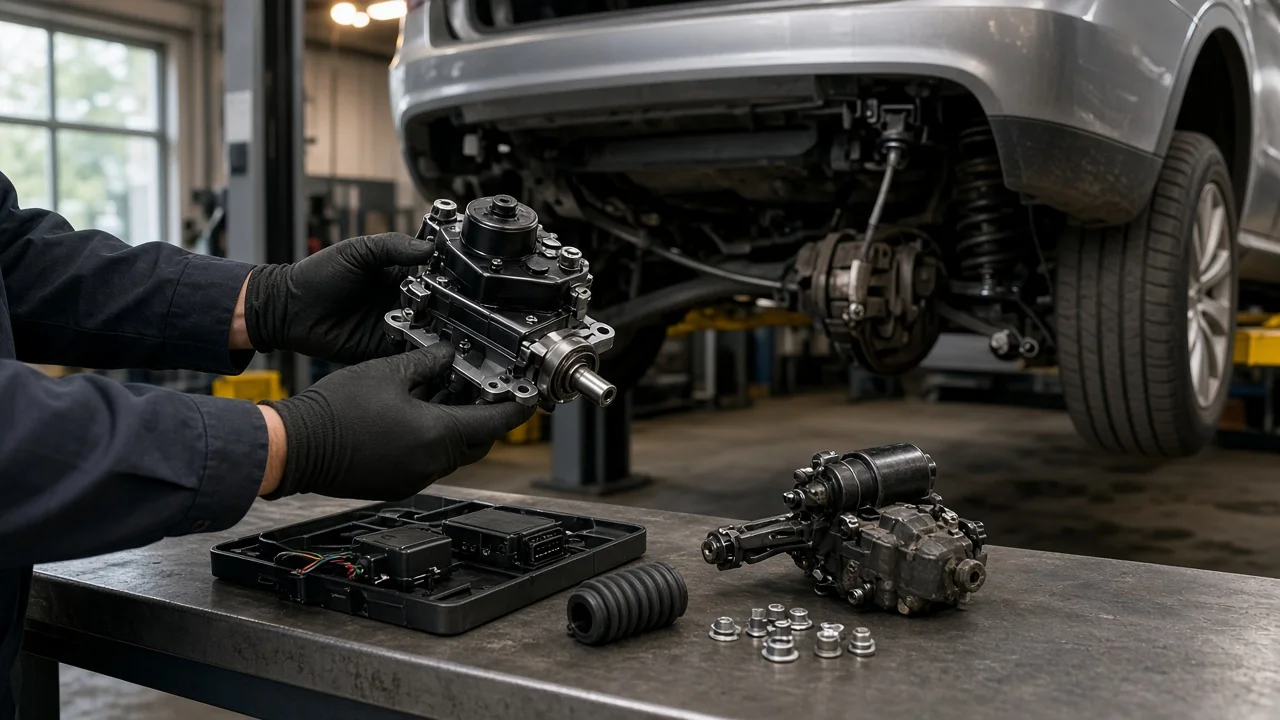
The BMW X5 E70 uses an electric parking brake with a single motorized actuator that tensions cables running to the rear parking brake shoes. When the actuator's internal gears wear, owners often see a parking brake warning, hear the motor run without result, or find the brake will not fully apply or release. A repair kit can restore the unit for less than a replacement, but only when the fault, the kit contents and the vehicle fitment line up.
Define the job the product must do
On the E70, the parking brake actuator sits under the vehicle near the rear axle. An electric motor drives a gear train and spindle that pulls the parking brake cables, which in turn expand shoes against the drum section inside each rear brake rotor. The most commonly reported failure is wear or stripped teeth on a plastic gear inside the unit. Typical symptoms include a whirring motor with no clamping action, intermittent fault messages, or a brake that applies only partially. An E70 parking brake actuator repair kit is meant to replace those worn mechanical internals while you keep the original housing, motor and electronics.
Before buying anything, be honest about the practical constraints. If the parking brake cannot hold the vehicle, do not rely on it: park on level ground, select Park and use wheel chocks until the system is repaired. The repair itself involves removing the actuator, opening the housing, cleaning out old grease and debris, fitting new parts, resealing and reinstalling. Afterward, the system normally needs to be released, initialized and tested with diagnostic equipment that supports BMW parking brake service functions. If you lack the tools or the confidence, plan for a workshop to fit the kit, or skip the kit and let the workshop supply the parts.
Check compatibility
Start with the vehicle. The E70 generation of the X5 was built from 2007 to 2013, and kits sold for it are frequently also listed for the X6 of the same era because it uses a similar actuator design. Treat those cross-references as a starting point, not proof of vehicle fitment. The most reliable check is the part number on the label of your existing actuator, compared against the numbers the kit seller says it covers. A VIN-based parts lookup can confirm which actuator the vehicle left the factory with, which matters if a previous owner already replaced the unit.
Then match the internal interfaces. A kit is only useful if its gears share the original tooth count, diameter, shaft bore and width, and if any included spindle and nut match the original thread and length. Some kits contain just the main drive gear; others add intermediate gears, bearings, a spindle or seals. Ideally, open the actuator first and see which parts are actually damaged, then choose a kit that covers all of them. Also confirm the actuator is the problem: read stored fault codes, check that the cables move freely and are not frayed or seized, and confirm the parking brake shoes are adjusted correctly. A new gear set will not fix a fault elsewhere in the system.
Features that affect the choice
Gear material is the main design trade-off. Reinforced polymer gears behave much like the original parts and are gentle on the components they mesh with, but they can wear in the same way the originals did. Metal gears, such as brass or steel, resist tooth stripping, yet they may run louder and shift wear onto whatever they engage with, so check which parts the new gear meshes against and whether those are also replaced. Labels such as lifetime, heavy duty or OEM quality mean little on their own. More useful evidence includes a stated material, tooth count or dimensions, clear photos of the actual parts supplied, a defined list of covered actuator part numbers, written installation instructions and a straightforward return policy.
Completeness matters as much as the gears. Because the actuator lives under the car, moisture and road grime are a real threat once the housing has been opened, so a kit that includes fresh seals or O-rings is worth more than a bare gear. Look for the correct grease or a clear specification of what to use, replacement bearings if the originals feel rough, and any screws or clips that are easily damaged during disassembly. Instructions that explain gear alignment and the spindle's starting position can save a frustrating rebuild.
Limitations and ownership costs
A gear kit cannot repair a failed motor, faulty control electronics, a defective position sensor, a corroded connector or damaged wiring. It also does nothing for stretched or seized cables or for worn parking brake shoes. Those shoes carry their own friction material inside the drum area of the rear brake rotors, and their thickness should be checked against the wear limits in the vehicle-specific service information whenever the system is apart. The hydraulic service brakes, including brake pads, caliper and brake fluid, are a separate system and are not part of this repair, although rear pad or rotor work on an E70 typically requires putting the parking brake into its service or release mode first.
The kit price is only part of the cost. Factor in access to diagnostic software that can run the parking brake release and initialization routines, cleaning supplies, grease if not included, and your time or a workshop's labor for removal, rebuild and reinstallation. Underbody panels and fasteners may need attention during access. Compare that total with a remanufactured or new actuator, which removes the risk of hidden faults in the motor or electronics. If the brake still fails to hold after repair, or warnings persist, stop relying on it and have the system diagnosed professionally.
Build a practical shortlist
Narrow your options with a short set of checks. Has the fault been traced to the actuator's mechanical parts rather than cables, shoes or electronics? Does the seller list the exact actuator part number fitted to your vehicle? Does the parts list cover every damaged component you found or expect to find? Is the gear material stated, and does it suit the parts it meshes with? Are seals, bearings and suitable grease included, or will you buy them separately? Are installation instructions provided? Do you have access to diagnostic equipment for release and initialization, or a workshop that does? Finally, how does the total cost of kit, consumables and labor compare with a remanufactured unit, and what is the return policy if the parts do not fit?
In practice, a repair kit makes the most sense when the housing is intact, the motor and electronics test good and the damage is limited to worn gears or a worn spindle. If you find corrosion inside the housing, multiple damaged parts or electrical faults, a complete remanufactured or new actuator is usually the more dependable route. When the diagnosis is unclear, have a brake specialist confirm the cause before you order, so the part you buy matches the problem you actually have.