BMW X3 Parking Brake Actuator: Fitment Guide
Buying a parking brake actuator for a BMW X3 starts with knowing which X3 you own. Across generations, BMW has used a manual hand lever, a single electric actuator that pulls cables, and electric motors mounted directly on the rear calipers. These parts are not interchangeable. Even within one generation, the correct unit can depend on production date, brake package and side of the vehicle. This guide explains how to narrow down vehicle fitment before you order.
Which actuator fits your X3
Match the part to your chassis generation and VIN, not just the model name. The first-generation X3 (E83, roughly the 2004 to 2010 model years in the US) uses a conventional hand lever and cables that expand small shoes inside the rear rotor hats, so it has no electric actuator to replace. The second generation (F25, roughly the 2011 to 2017 model years) uses an electromechanical parking brake: one motorized actuator unit under the rear of the vehicle pulls the left and right cables to drum-in-hat shoes. The third generation (G01, roughly the 2018 to 2024 model years), including the X3 M, moves the motor onto each rear caliper, so the replaceable actuator is a caliper-mounted motor, one per side. The newest X3 also uses motors at the rear calipers, but confirm the exact part through a VIN-based catalog lookup.
A central F25 unit and a G01 caliper motor differ in shape, connector, mounting and control logic, so a listing that only says it fits a BMW X3 is not enough to order from. Use the VIN lookup offered by a dealer parts counter or a reputable parts seller, and compare the part number printed on your old unit when you can reach it. If the numbers differ, check whether the listed part officially supersedes yours before assuming it fits.
How each system applies the parking brake
On the F25, the actuator houses an electric motor, a reduction gearset and its own control electronics. When you pull the parking brake switch, the motor winds in the cables, which spread the shoes against a drum surface machined inside each rear rotor hat. That drum section and its shoe friction material are separate from the brake pads, so normal pad wear does not affect holding force. The service information also describes an emergency release procedure for when the unit fails in the applied position.
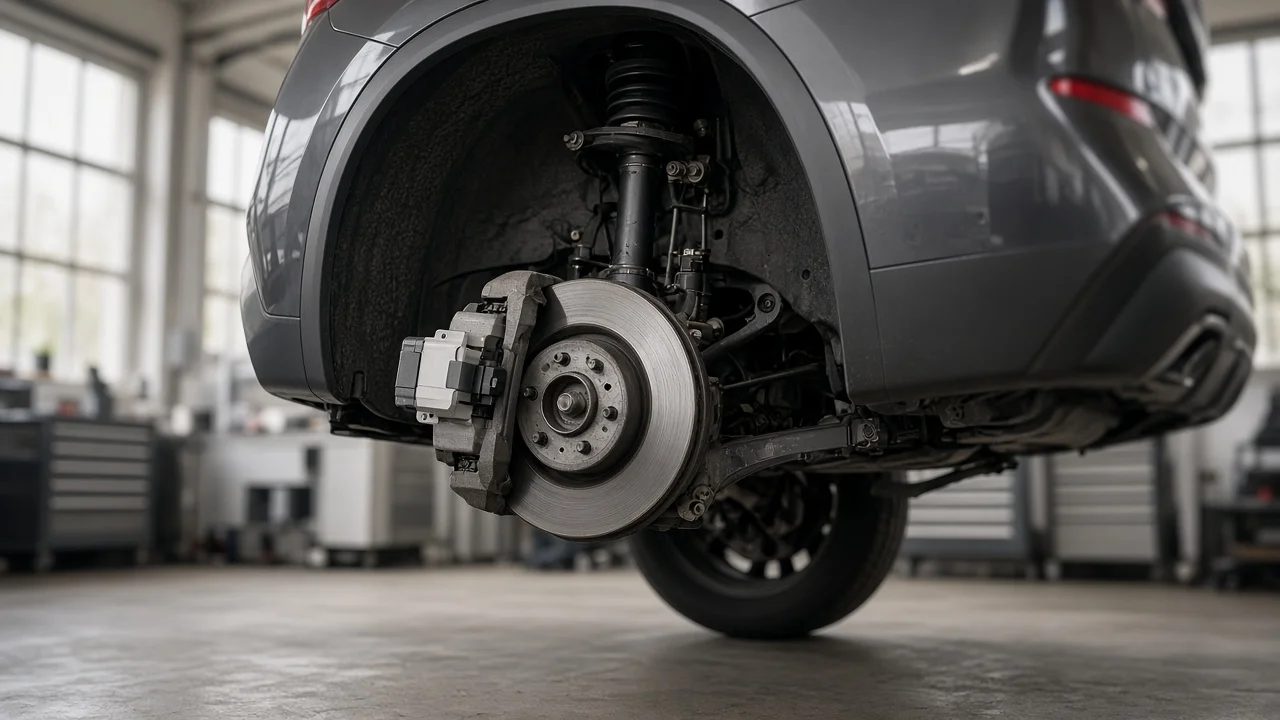
On caliper-mounted systems, a small motor and gearbox bolt to the back of each rear caliper. When commanded by the control module, the motor turns a spindle inside the caliper piston, mechanically pressing the same pads against the same brake rotors the hydraulic system uses for normal stopping. This is why rear pad replacement on these vehicles requires putting the system into service mode, usually with a diagnostic tool, before pushing the piston back. Forcing the piston can damage the spindle mechanism or the motor.
What changes the correct part
Several details can change the answer within a generation. Mid-cycle updates sometimes bring revised part numbers, so production date matters. Brake packages matter on caliper-mounted systems: M Sport brakes and the X3 M use different calipers, and a motor that fits one caliper design may not fit another. Left and right motors may carry different part numbers. Some sellers offer the motor alone, while others sell it pre-assembled to a complete caliper, which changes the job considerably because a new caliper means opening the hydraulic system and bleeding the brake fluid. New and remanufactured units can also differ in included hardware, seals and connectors.
The fault itself may not be the actuator. On an F25, stretched or seized cables, worn or contaminated shoes, or a corroded adjuster can cause poor holding or a fault message while the actuator still works. On caliper systems, a corroded connector, damaged wiring, a seized caliper or pads worn past their limit can produce similar warnings. Replacing the actuator will not fix those causes, so confirm the diagnosis before you spend money on the part.
What to check before ordering
Confirm your generation from the VIN or the production date on the door jamb label. Note exactly what the dashboard shows and when it appears: on applying, on releasing, or at startup. Listen for the motor. A whirring sound with no change in holding force points differently than silence. Read fault codes with a scanner that can access BMW chassis and brake modules; a basic engine code reader usually cannot see parking brake faults. The stored codes often indicate whether the problem is the motor, the circuit or a mechanical limit.
If the wheels are off, inspect the parts the actuator works against. On caliper systems, measure rear pad thickness against the wear limits in your service information and check the rotors for scoring or lip buildup. On an F25, inspect the shoes and the drum surface inside the rotor hat. After replacing any actuator, plan for the initialization or calibration routine the service information calls for. The system may not apply correctly or may keep a fault stored until that routine is completed.
If the parking brake will not release or the rear wheels drag, do not keep driving, because the rear brakes can overheat quickly. Move the vehicle on a flatbed if needed. If the brake will not apply, park on level ground, select Park, chock the wheels, and treat the vehicle as unable to hold itself until it is repaired.
Limitations and the next step
This guide covers how X3 parking brake designs differ, not the exact part number for your vehicle. BMW revises and supersedes parts, and fitment can only be confirmed against your VIN. Coding, calibration and service-mode functions may need BMW-capable diagnostic software that not every owner has. Get professional help if the brake is stuck applied, if a parking brake warning appears together with a service brake or brake fluid warning, if the job involves replacing a caliper and bleeding the hydraulic system, or if you are unsure the vehicle is safe to drive.
Before ordering, gather your VIN, the stored fault codes and a photo of the part number on the old unit. With those three items, a parts supplier or brake technician can confirm the correct actuator, tell you whether a new or remanufactured unit fits, and tell you whether the repair needs dealer-level programming.