BMW Wastegate Actuator Replacement Cost: What Drives the Price
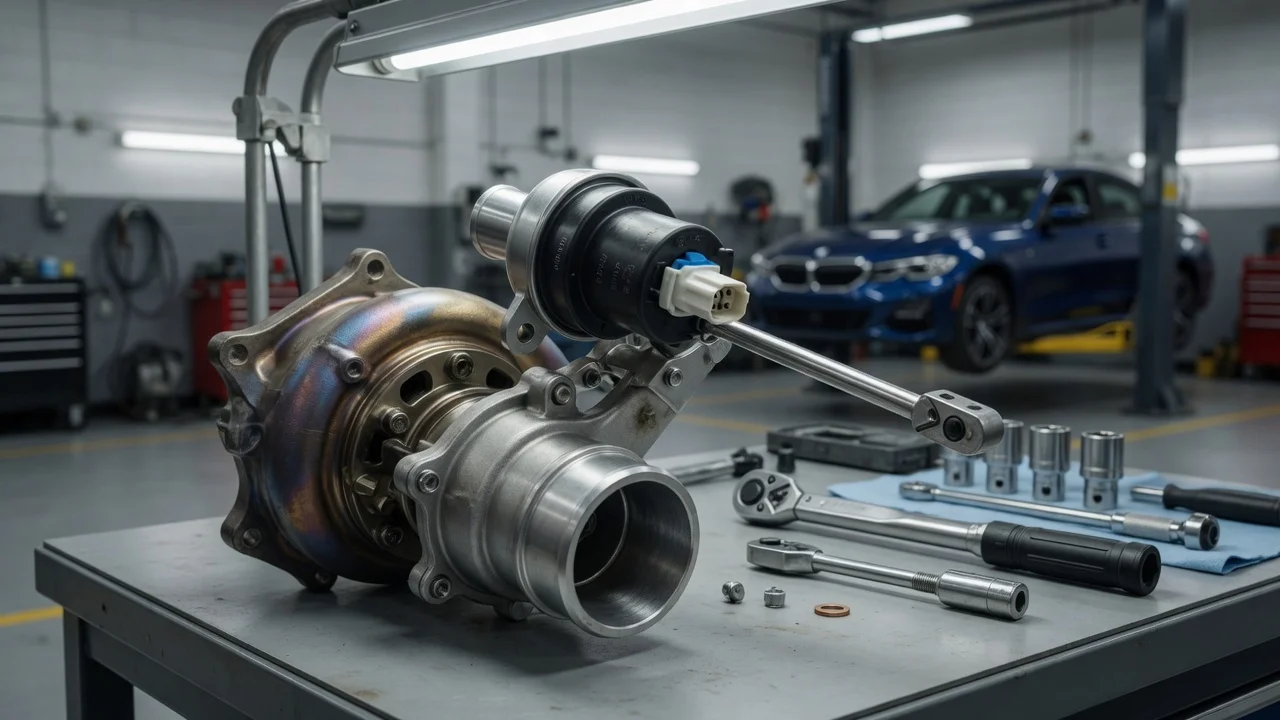
A quote for replacing the wastegate actuator on a BMW can describe very different jobs. The engine, the way the actuator is mounted, and the actual cause of the boost fault all shape the total. This guide explains what a complete estimate should cover, which factors move the price, how to compare offers on equal terms, and what to confirm before you approve the work. It does not list current prices, because those depend on your exact vehicle configuration and local labor rates.
What the estimate includes
The wastegate controls how much exhaust bypasses the turbine, which limits boost pressure. The actuator moves the wastegate flap. Depending on the engine, BMW uses either a vacuum-operated (pneumatic) actuator supplied by an electronic control valve, or an electronically driven actuator commanded directly by the engine control unit. The type fitted to your car determines the parts, the labor steps, and whether any setup is needed after installation.
A complete estimate covers diagnosis, the actuator or assembly being replaced, labor to reach and remove it, any gaskets or fasteners that must be renewed, adjustment or electronic adaptation where the manufacturer specifications require it, clearing stored faults, and a road test to confirm boost control. A parts-only price, a labor-only figure, or a 'starting from' number is a partial quote. It cannot be compared with a total until the missing items are added.
Also confirm that the actuator is really the failed component. Boost faults can come from cracked vacuum lines, a faulty control valve, wiring problems, or wear in the wastegate flap and its pivot inside the turbine housing. That internal wear is a known source of wastegate rattle on some BMW engines, and a new actuator does not correct it.
What changes the cost
Engine and turbocharger layout matter most. A single turbo mounted at the side of the engine is usually easier to reach than twin turbos, or than a V8 with its turbochargers in the valley between the cylinder banks. Access may require removing heat shields, intake ducting, the downpipe, or other components, and each of these adds labor time. Fasteners exposed to exhaust heat can seize, so a shop may list possible extra time for broken or corroded hardware.
Part availability is the next factor. On some engines the actuator can be bought separately. On others it is supplied only as part of the turbocharger, which makes the job a turbo replacement. Genuine BMW parts, parts from the original supplier, aftermarket actuators, and remanufactured assemblies differ in price, fit, and warranty. Electronic actuators may need calibration with diagnostic software after installation, and that time should appear on the quote.
Location and shop type also affect the total. Dealer and independent labor rates differ, as do diagnostic fees and policies on customer-supplied parts. Associated work, such as replacing brittle vacuum hoses, a control valve, or turbo gaskets disturbed during removal, raises the price but may be necessary to complete the repair properly.
Compare like-for-like options
Most owners choose among four routes. The first is repairing the vacuum supply or wiring when the actuator itself tests correctly. The second is replacing the actuator alone where it is serviceable separately. The third is installing a new turbocharger with an integrated actuator. The fourth is fitting a remanufactured turbo assembly. Each fixes a different fault, so compare prices only after the diagnosis shows which component has failed.
When comparing offers, check that they cover the same scope. Look at the part grade and brand, whether new gaskets and fasteners are included, whether adaptation or calibration is included, and how long the warranty runs. Ask whether the warranty covers labor as well as the part. A low quote that omits calibration, reuses old gaskets, or offers only a parts-only warranty may cost more if the repair has to be redone.
Be cautious with shortcuts. Avoid adjusting the actuator rod without the specified procedure, fitting unidentified used parts, and installing boost controllers that bypass factory control. These can mask the fault, cause overboost or underboost, and complicate later diagnosis.
Read an itemized quote
A useful quote identifies the vehicle by VIN and engine code, lists part numbers, and states whether each part is genuine, OEM supplier, aftermarket, new, or remanufactured. Labor should appear as hours multiplied by the hourly rate, with diagnostic time shown separately. The quote should also record the fault codes found and the tests performed, such as an actuator travel test with a scan tool or a smoke test of the vacuum lines, so you can see why this repair was recommended.
Look for items that are easy to miss. These include gaskets and seals, coolant or oil if turbo feed lines are disconnected, programming or adaptation time, shop supplies, disposal fees, taxes, and any core charge on a remanufactured part that is refunded when the old unit is returned. Ask how the shop handles extra damage found during disassembly. The usual practice is to stop and get your authorization before doing additional work, rather than adding it to the final bill.
Decide the next step
Start with a confirmed diagnosis. Get the stored fault codes and an actuator or boost-control test result in writing before buying parts. Check your service history and any remaining warranty or extended coverage, since turbo-related repairs are sometimes covered. Wastegate actuators have no universal replacement interval in the maintenance schedule. They are replaced based on condition, and wear depends on operating conditions such as heat cycles and driving style.
Next, request at least two itemized quotes for the same scope. Each should include the same part grade, gaskets, adaptation, and warranty terms. Confirm whether the actuator is sold separately for your engine or only with the turbocharger. Ask how long the car will be off the road. Avoid replacing parts on a guess, and do not keep driving for long periods in reduced-power mode, because an unresolved boost fault can lead to further problems. Once the diagnosis is confirmed and the quotes match in scope, you can choose based on price, warranty, and the shop's experience with your engine.