BMW Wastegate Actuator: Identification by Engine
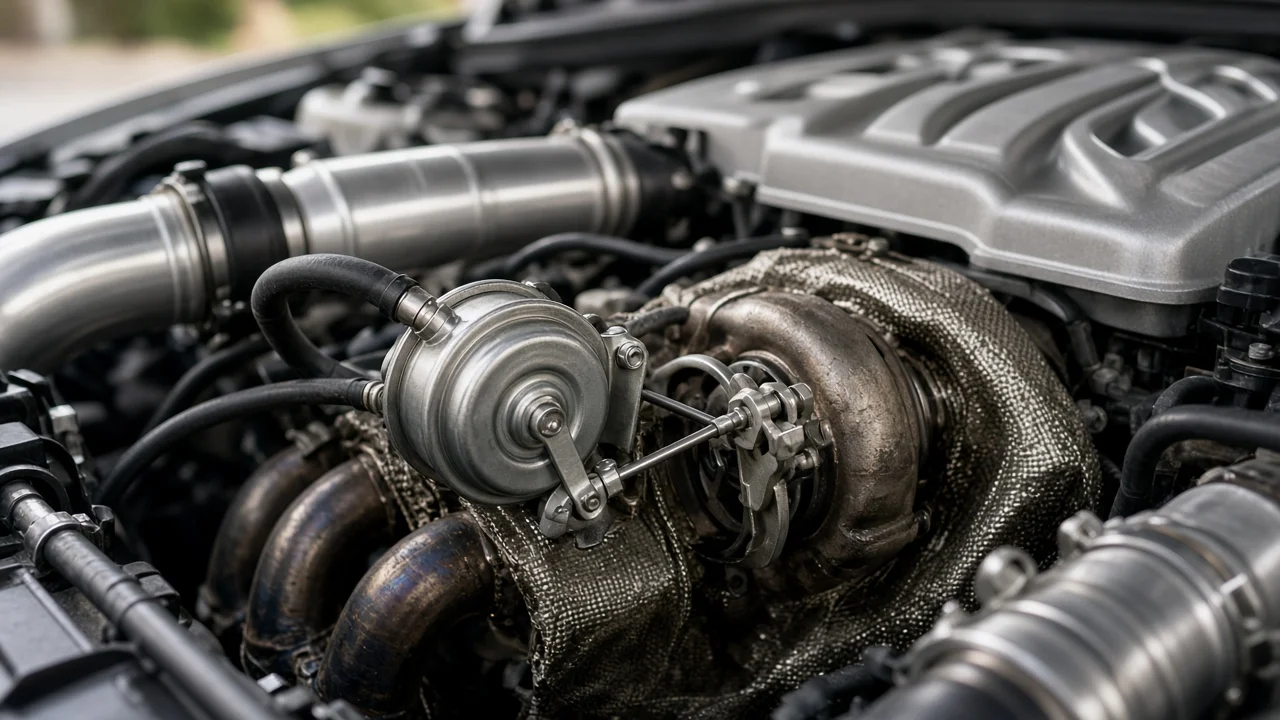
A wastegate actuator controls how much exhaust gas bypasses the turbine, which limits boost pressure. On turbocharged BMW engines, the actuator design depends on the engine family, not the model name. Two cars with the same badge from different years can use completely different parts. This guide explains how to identify the BMW turbo wastegate actuator fitted to your engine and how to tell common symptom reports apart from confirmed faults.
Identify the engine first, then the actuator
The correct wastegate actuator for a BMW is determined by the engine code and its production version, not by the series badge or body style. Broadly, BMW gasoline turbo engines fall into two groups. Earlier designs, such as the N54 twin-turbo and N55 single-turbo six-cylinders, generally use vacuum-operated actuators. In these, a diaphragm moves the wastegate rod in response to vacuum supplied through an electrically controlled solenoid. Many later engines, including the B58 six-cylinder, use an electric actuator with an integrated position sensor. BMW revised parts within engine families, so treat these groupings as starting points rather than a final identification for your vehicle.
Most BMW diesel engines use variable-geometry turbochargers. Their actuator moves internal vanes rather than a bypass flap. A part described as a wastegate actuator for a gasoline engine is usually not the relevant component on a diesel, even when the symptoms sound similar.
How a BMW wastegate actuator controls boost
On a vacuum-operated system, the engine control unit pulses a solenoid valve that regulates vacuum from the engine's vacuum pump to the actuator. The diaphragm inside the actuator housing pulls on a rod connected to the wastegate arm. That rod opens or closes the flap covering the bypass passage around the turbine. If the vacuum supply leaks or the solenoid fails, the actuator can no longer hold the commanded position. The result is boost that does not match what the engine is requesting.
An electric actuator replaces the vacuum circuit with a small motor and gearbox that drive the linkage directly. The control unit receives feedback from the position sensor, so it can detect when the flap does not reach its target and store a fault. In either design, the actuator is only one link in the chain. The flap, its pivot bushing, the linkage and the control signal all affect boost control. Wear at the flap pivot, for example, can cause rattling even when the actuator works correctly.
What changes the answer for your car
Model year and engine variant matter more than the car's series. The 335i, for instance, was built with the N54 and later the N55, and an engine family can receive updated turbochargers or actuators mid-production. Twin-turbo layouts, including the N54 and BMW's twin-turbo V8 engines, have two wastegates and two actuators, so a fault may affect only one side. M versions and market-specific engine configurations can use different turbochargers from the mainstream engine of the same displacement. On many BMW turbos, the actuator is mounted to the turbocharger housing and calibrated to it. Depending on the part, it may be sold only as part of the turbocharger assembly.
Owner reports often describe a rattle on cold start or when lifting off the throttle, hesitation, or a loss of power under load. These are symptoms, not a diagnosis. On some N54 and N55 engines, wastegate rattle is widely reported and is frequently traced to wear in the flap and linkage rather than the actuator. Low boost can also come from a cracked charge pipe, a leaking intercooler connection, a faulty boost pressure sensor, a weak vacuum pump or a split vacuum line. A failure is verified only when testing shows the actuator does not move the linkage to the commanded position, or the diaphragm does not hold vacuum.
Practical checks an owner can make
Start by noting the symptom conditions: engine temperature, gear, speed, throttle position, and whether the problem appears under hard acceleration or at steady cruise. Then read stored diagnostic codes with a scan tool that can access BMW engine control modules. A generic underboost code such as P0299 indicates a boost shortfall without identifying the cause. Manufacturer-specific codes and live data, such as requested versus actual boost, give a technician much more to work with. Save the code list and freeze-frame data before clearing anything.
With the engine cold and switched off, a basic visual inspection is reasonable. On vacuum-operated systems, look for cracked, disconnected or oil-soaked vacuum lines, and check any accessible actuator rod and clip for damage. On electric actuators, check the connector and wiring for heat damage or corrosion. Do not pry the linkage or change the rod length. Actuators are set up to the turbocharger during manufacture, and adjusting them changes boost behavior. Also review the service history for previous turbocharger, vacuum pump or charge pipe work, since repeat faults often relate to earlier repairs.
When buying a replacement, find the engine code from the VIN or the engine label. Then match the part number printed on the existing actuator or turbocharger. Some electric actuators need a basic setting or adaptation with diagnostic software after installation, so plan for that before buying.
Limitations and when to get professional help
This guide cannot confirm which actuator your vehicle uses or whether it has failed. Part supersessions, production changes and earlier repairs with non-original parts all affect the answer. Only a parts lookup by VIN reflects the exact configuration of your car. Manufacturer specifications for boost targets, actuator travel and test procedures are not reproduced here.
If the codes point to boost control, or the car enters reduced-power mode, see a technician with BMW-level diagnostic software. They can run actuator tests, smoke-test the intake and vacuum circuits, and compare requested and measured boost. Do not keep driving hard with an overboost fault, because uncontrolled boost can damage the engine. Bring your symptom notes and code history. They shorten diagnosis and help avoid replacing a turbocharger when a hose or sensor is the real cause.