BMW Shift Lock Release: Finding the Procedure for Your Model
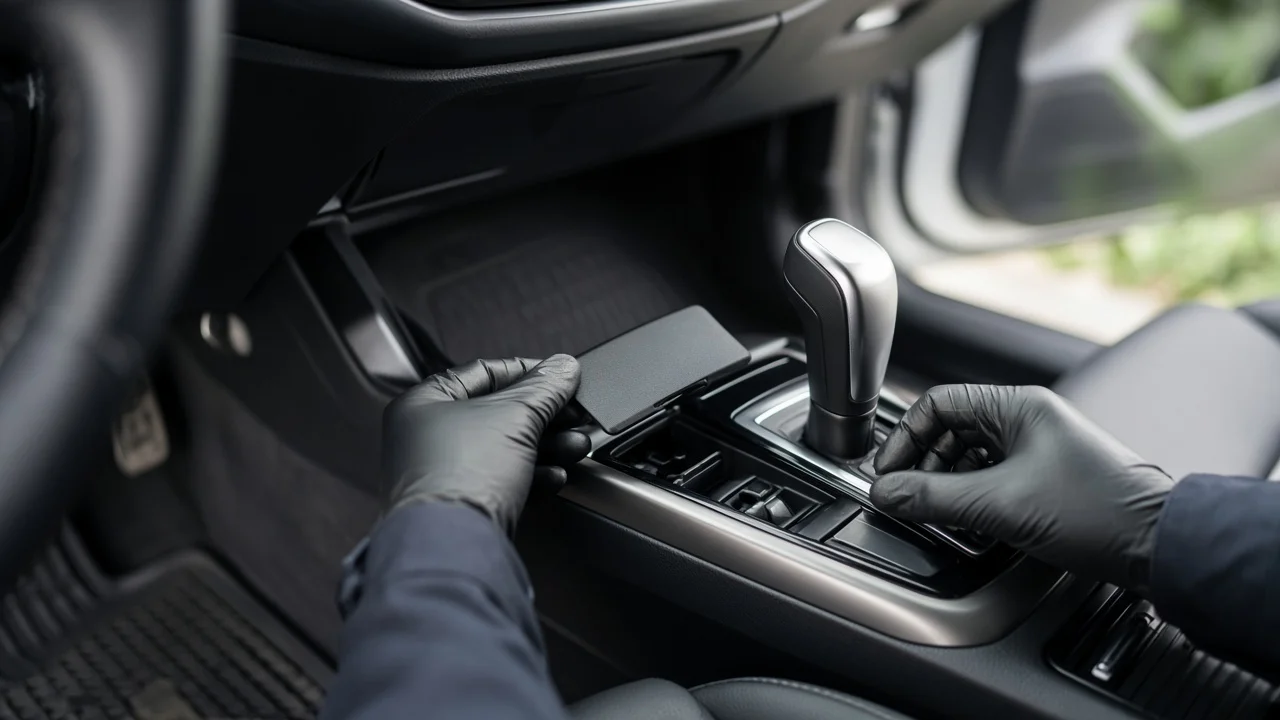
If your BMW will not come out of Park, the correct shift lock release depends on how the car is built. Older automatics with a cable-linked selector usually have a manual override for the shift interlock. Many newer models with an electronic selector instead use an emergency parking lock release. This guide shows how to tell which one you have and how each works. It also covers when a stuck shifter points to a fault that needs diagnosis rather than an override.
The short answer depends on your shifter
First identify the transmission type and the selector design. If the lever moves through a physical gate marked P, R, N and D and stays where you put it, the car most likely uses a mechanical cable with an electrically controlled shift lock. Its override is typically hidden under the selector trim or a small cover near the gate. If the lever springs back to center after each selection and you choose Park with a separate P button, it is an electronic selector, and there is usually no shift lock override to press. Those cars rely on an emergency release for the parking lock inside the transmission. That release is meant for towing or moving a disabled car, not for daily driving. The owner's manual for your exact model year is the authoritative source for the release location and steps. On many cars the manual can also be viewed on the central display.
In either case, the override is a workaround. It lets you move the car out of Park when the normal release fails. It does not fix the reason the lock stayed engaged in the first place.
How the shift lock and parking lock work
On a cable-shift automatic, a small solenoid at the selector blocks the lever in Park until two conditions are met: the ignition is on and the brake pedal is pressed. The brake light switch tells the control electronics that the pedal is down, and the solenoid is then energized to free the lever. The manual override simply moves the locking pin or tab out of the way by hand, bypassing the solenoid. The parking pawl in the transmission is still released mechanically through the cable once you move the lever.
With an electronic selector, the lever is only a switch. Gear requests travel as signals to the transmission control module, which engages and releases the parking lock inside the transmission. Because nothing mechanical connects the lever to the transmission, there is nothing to unlock at the shifter. Instead, BMW provides a mechanical release that acts on the parking lock directly, typically through a cable or lever reached from inside the cabin. On many designs the release stays engaged until it is reset as the manual describes. While it is engaged, the car can roll freely.
What changes the answer for your model
Model generation, body style and transmission all matter. BMW has fitted automatics from more than one supplier over the years, and a model line may have switched from a cable selector to an electronic one during its production run. Drivetrain layout and body style also affect access, because center console designs differ between rear-wheel-drive and xDrive versions and between sedans, wagons and SUVs. A procedure written for one generation can point you to a trim panel that does not exist on another, so confirm fitment before you start removing anything.
Operating conditions change the picture too. A weak or dead 12-volt battery is a common reason an electronic selector will not leave Park, because the electronics cannot command the release without power. In that case, restoring voltage by charging or by jump-starting at the designated connection points is usually the first step, before any emergency release. On cable-shift cars, low voltage can also stop the shift lock solenoid from working. Service history matters as well. A recent battery replacement, console work or transmission repair can explain why the selector now behaves differently.
Finding and using the release safely
Start with the owner's manual section on the selector lever or on towing. It shows the release location, the tool needed and the reset procedure for your fitment. On cable-shift models, the override is usually reached by lifting a cover or the selector surround. You then press the release while holding the brake and moving the lever. On electronic-selector models, the emergency release is typically behind a removable panel in the center console area and may require a tool from the vehicle's kit. Work gently with trim, because clips break easily and some panels hide wiring for the selector illumination or nearby controls.
Before releasing anything, park on level ground, apply the parking brake and chock the wheels, because the car will be free to roll once Park is disengaged. If the electric parking brake is also inoperative, do not rely on it to hold the car. Note what the car is doing as well. Check whether the brake lights come on when the pedal is pressed, whether a warning appears on the instrument cluster, and whether the selector display shows the correct gear. A photo of any cluster message gives a technician useful information later.
What a stuck selector may point to
A shifter that will not leave Park can have several causes, and no part should be assumed failed without testing. On cable-shift cars, the possibilities include: • a brake light switch that is not signaling; • a blown fuse; • a sticking or failed shift lock solenoid; • a wiring fault; • a misadjusted or binding selector cable; On electronic-selector cars, low voltage, a selector module fault, communication errors between modules or a transmission control problem can produce similar shift behavior. Brake lights that do not illuminate are a useful clue, but the cause still needs confirmation with a meter or scan tool.
Stored diagnostic codes in the transmission, selector or body modules usually narrow the search faster than swapping parts. A generic code reader may not see these modules, so a BMW-capable scan tool is often needed. If the codes relate to the transmission itself, check the fluid level only with the correct procedure and fluid specification for that unit. Many BMW automatics have no dipstick and must be checked at a defined fluid temperature.
Limitations and when to get help
This guide cannot give a universal location or step list, because BMW designs vary by model, year and market, and some details change with production updates. Use the owner's manual or official service information for your specific vehicle. If the instructions do not match what you find under the trim, stop rather than prying further. If the car must be moved after an emergency release, follow the towing guidance for your drivetrain, because some all-wheel-drive models have restrictions on how they can be towed.
Get professional help in any of these cases: • the override does not free the selector; • the car shows transmission warnings; • you have to use the release repeatedly; • the battery tests healthy but the electronic selector still will not leave Park; Repair options range from replacing a switch or fuse to cable adjustment, module repair or programming, or transmission work. The right repair depends on a proper diagnosis, not on the symptom alone.