BMW Parking Brake Actuator Reset After Repair
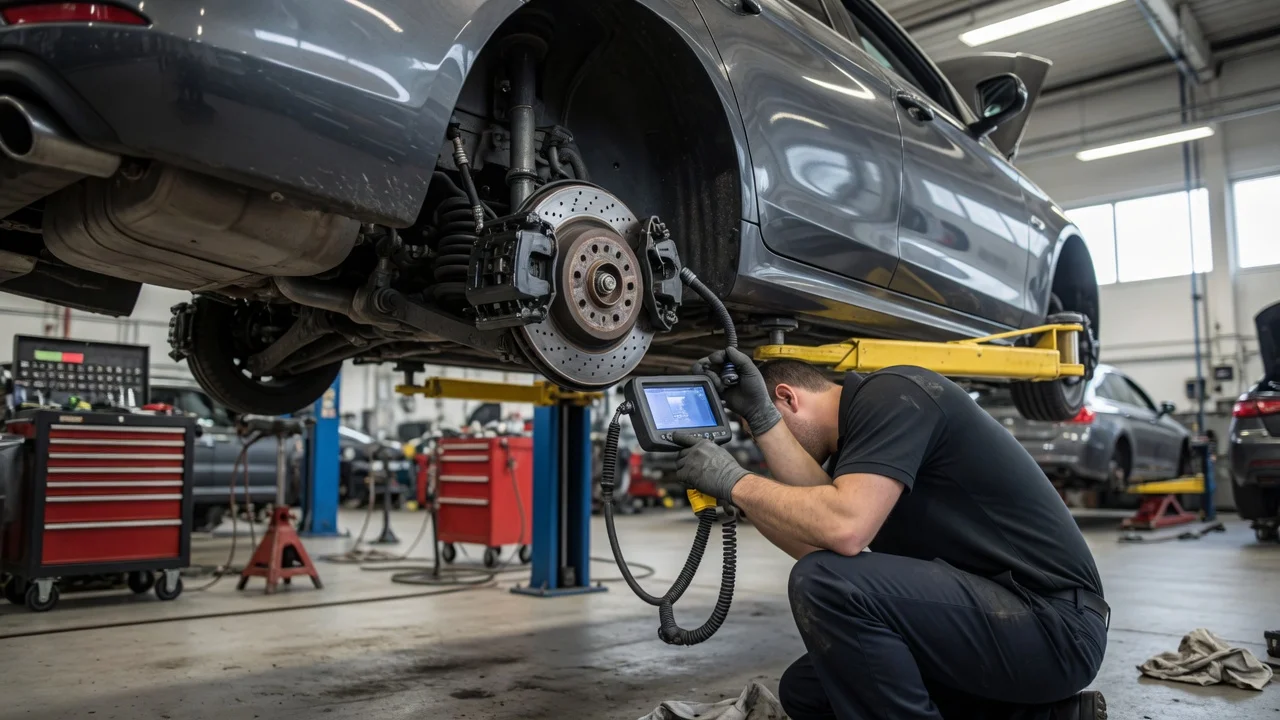
Confirm the fault before repair
Before replacing or resetting a parking brake actuator, separate an actuator defect from faults that produce similar warnings. A confirmed actuator fault usually stores a diagnostic trouble code for the electromechanical parking brake control module, often accompanied by a parking brake warning in the instrument cluster and an inability to apply or release the parking brake on one wheel. Codes for open circuit, short circuit, implausible position, or over-temperature can point to the actuator, the wiring, or the control module. Compare the stored code with the freeze-frame data and check whether the fault is intermittent or permanent. If the symptom is only a service reminder after pad replacement, the issue may be a calibration procedure rather than a failed actuator. Do not assume the actuator is defective without matching the code and the physical symptom because a wiring fault or control module software issue can mimic an actuator failure.
Define the repair scope
The affected system is the electromechanical parking brake circuit for the specific axle configuration and control module generation fitted to the vehicle. On many BMW models the parking brake acts on the rear brake calipers, but some configurations use a separate drum-in-hat parking brake mechanism. The actuator, wiring, control module, and foundation brake components can all influence operation. Before servicing, confirm whether the vehicle uses a single actuator per side, a combined electric motor on the caliper, or a separate actuator cable arrangement. Inspect the brake pads, brake rotors, and caliper condition. If the friction material is below the wear limit, the actuator may exceed its expected travel and set a plausibility fault. In that case the foundation brake repair is the core scope, and the actuator reset is performed only after the mechanical service is complete.
Confirm the extent of the damage after removing the wheel and inspecting the connector, wiring harness, and actuator housing. Check for corrosion, melted connectors, damaged boots, or signs that brake fluid has contaminated the actuator. If the caliper is seized or the piston is not retracting, the parking brake actuator may have been overloaded. On vehicles with a separate actuator and cable, inspect the cable routing and the actuator lever. If the control module has water ingress or the connector shows terminal damage, replacing the actuator alone will not fix the system. The repair scope should include every affected component needed to restore correct parking brake function.
Compare repair options
Choose the repair level based on the confirmed defect and the condition of related parts. If the actuator is functional and the fault is a lost calibration after pad or rotor replacement, perform the service adjustment and actuator calibration first. This is the least invasive option, but it leaves a worn actuator or damaged wiring in place. If the actuator is mechanically intact but the wiring or connector is damaged, a terminal and connector repair may be appropriate. That option can restore function without replacing the complete actuator or control module, but it requires proper terminal crimping and sealing. If the actuator is electrically open, shorted, mechanically seized, or has internal position-sensor faults, replacement is the correct option. Use a replacement part that matches the vehicle fitment and control module software. On vehicles where the actuator is integrated into the caliper, the service replacement may include the caliper assembly, and the hydraulic system will also need attention.
Specialist service is appropriate when the control module requires programming, when the fault involves multiple actuators, or when the diagnostic scan reveals a software mismatch. A repair shop with BMW-specific diagnostic equipment can code and calibrate the replacement correctly. Replacing a part without performing the required initial calibration can leave the parking brake inoperative or cause a new plausibility fault. If you are working without the necessary diagnostic tool, stop and arrange professional service. Braking faults may require stopping use of the vehicle and professional service.
Requirements and limits
Use the vehicle-specific service information for your BMW model and control module generation. The reset and calibration procedure is not identical across all model years or parking brake designs. A scan tool with BMW electromechanical parking brake service functions is required to retract the actuator during pad replacement, set the air gap or apply a new calibration, and clear learned positions. For most repairs the vehicle must be on a level surface, with the ignition on and the transmission in park or neutral, and with the wheels chocked. Follow the service manual procedure for supporting the vehicle before removing wheels. Never place body parts between the brake caliper and the actuator mechanism while it is being moved by the scan tool.
Observe the wear limits for the brake pads and the minimum brake rotor thickness. If the friction material or brake rotor is below specification, replace the affected parts before calibrating the parking brake. Perform the reset only after the mechanical work is complete and the wheels are refitted if the service procedure requires the brake to be applied against the brake rotor. Brake fluid work should follow the correct bleeding procedure and fluid specification. If the service routine does not complete as expected, do not force the actuator or drive the vehicle assuming the parking brake is working. A persistent fault after repair requires professional diagnosis.
Verify the outcome
After the reset, confirm that the diagnostic trouble codes are cleared and do not return. Use the scan tool to check the parking brake actuator positions and compare the left and right side values. Apply the parking brake and release it several times, listening for normal motor operation and checking that the warning indicator behaves correctly. Verify that the parking brake holds the vehicle on a slight incline and that both rear wheels release fully. There should be no dragging, scraping, or uneven brake application.
Record the repair and calibration for future service. If the parking brake warning returns, the actuator motor runs but the brake does not hold, or the system applies on only one side, stop using the vehicle and have the system diagnosed. Persistent symptoms after a successful reset may indicate a mechanical fault in the caliper, incorrect installation, or a control module issue that requires further professional service.