Choosing a Turbo Blanket for a BMW N63
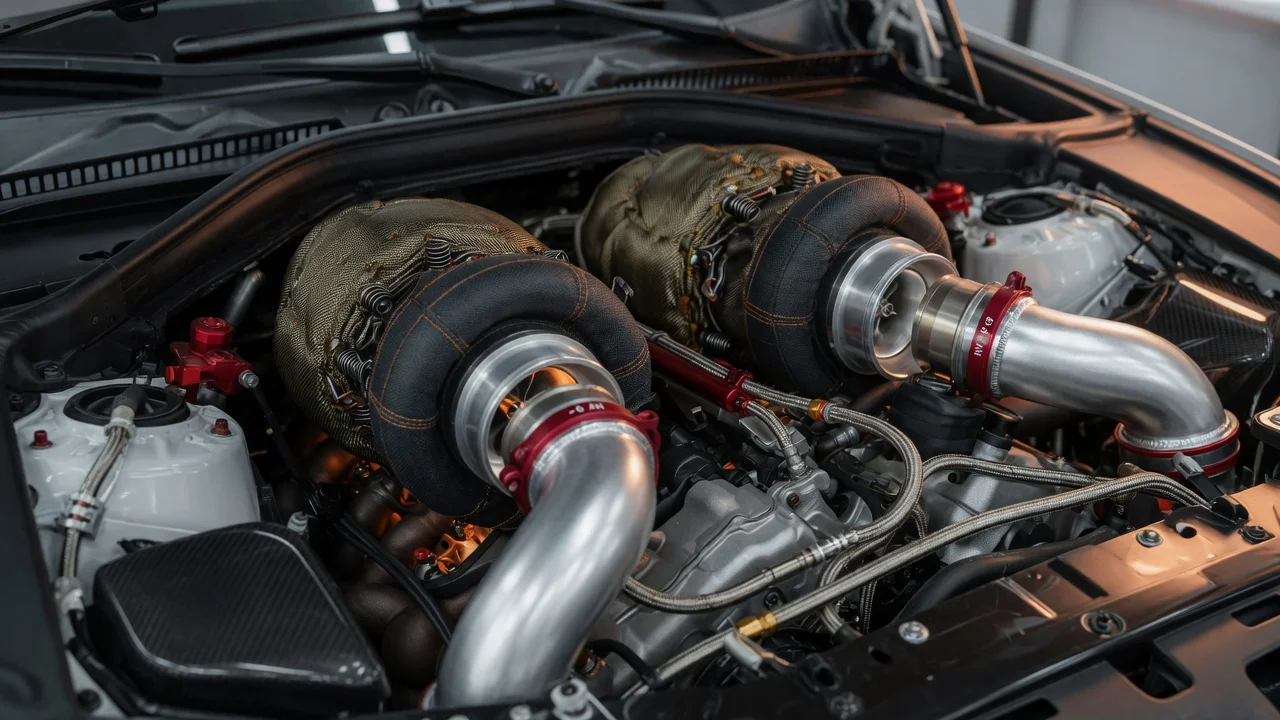
The BMW N63 4.4-liter twin-turbo V8 places both turbochargers in the valley between the cylinder banks, so heat that would escape on a conventional layout collects on top of the engine. A turbo blanket is one way owners try to manage that heat, but it is a narrow tool with real trade-offs. This guide explains what a blanket can and cannot do on an N63, how to confirm fitment for your engine variant, and how to compare options before buying.
Define the job the blanket must do
In the N63 hot-vee layout, the exhaust manifolds and turbochargers sit inside the V, close to intake parts, vacuum lines, wiring and coolant hoses. Owners commonly report brittle plastics, hardened hoses and aging harness insulation in this area as the engine accumulates miles. The realistic job of a blanket is to reduce radiant heat from the turbine housings toward those neighboring parts and to limit some heat soak after shutdown. It is a heat-management accessory, not a repair.
Separate symptom reports from verified failures before you spend money. Forum stories linking heat to smoke on startup, misfires, coolant loss or oil smells describe symptom conditions, not confirmed causes. Review the service history, read any stored diagnostic codes and have a proper inspection of the vee done. If the real issue is a leaking turbo oil line, a coolant leak, worn valve stem seals or a failing injector, a blanket fixes none of it and may hide the evidence. Also consider how the car is used: frequent short trips and stop-and-go traffic in hot weather produce more heat soak than steady highway driving, and a tuned engine generally runs higher exhaust temperatures than a stock one.
Check compatibility with your engine variant
The N63 name covers several generations. The original engine appeared in 2009 model year cars such as the 750i and X6 xDrive50i and later went into models including the 550i and 650i. An updated version, commonly called N63TU, followed in the early 2010s, and further revisions were used in later 5 Series, 7 Series, X5, X6 and X7 models. Turbocharger housings, flanges, heat shields and surrounding hardware can differ between these versions, so a blanket shaped for one may not fit another. Confirm the exact engine configuration by engine code or a VIN decode rather than by model year alone, especially for cars built around a model update.
Then check the interfaces the blanket must work around: the turbine inlet flange, the outlet and downpipe connection, the wastegate actuator and its linkage, oil feed and return lines, coolant lines, oxygen sensors and mounting studs. The blanket must leave the wastegate free to move and must not press on lines, sensors or wiring. It also has to fit beneath the factory heat shields and the intake components above the vee without forcing anything. If your turbochargers have been replaced with non-original or upgraded units, generic N63 fitment claims may not apply, and you should compare dimensions against the turbos actually installed.
Features that affect the choice
Most blankets use fiberglass, basalt or similar mineral-fiber fabrics, often with a reflective or coated outer layer. The listed temperature rating describes the material, not proven performance on your engine; check whether it is a continuous or peak figure before comparing products. An outer layer that resists oil and coolant matters on an N63, because the vee is where fluid from leaks tends to collect, and a saturated blanket is a fire hazard. Look at stitching thread, edge finishing and fastening method too. Springs and hooks make removal for inspection easier, while stainless wire holds firmly but takes longer to undo.
Treat marketing labels with care. Claims of lower under-hood temperatures, quicker spool or added power are only claims unless the seller explains what was measured, on which engine and under what conditions. Useful evidence looks different: a fitment listing that names specific engine codes, installed photos on the same variant, a published material specification, clear installation guidance and a return policy that covers parts that do not fit.
Limitations and ownership costs
Installation is rarely quick on this engine. The turbochargers sit deep in the valley under heat shields and intake components, so labor can easily cost more than the blanket itself. Budget for consumables that may be disturbed during access, such as gaskets, seals, clips and any fasteners that should be replaced, and follow manufacturer specifications for torque on everything you remove. If other work in the vee is already planned, fitting a blanket at the same time avoids paying for access twice.
A blanket keeps more heat inside the turbine housing. Some mechanics caution that this may add stress to the housing and nearby hardware, while others see no problem in practice; the evidence is mixed, so treat it as a risk to monitor rather than a certainty. A blanket also hides early signs of oil seepage or cracks and makes every future inspection slower, so plan periodic removal and check immediately if you smell burning oil. The fabric frays and its coating breaks down over time, which means eventual replacement. It cannot cool oil or coolant, stop internal engine wear or substitute for factory heat shields, which should stay in place.
Build a practical shortlist
Compare candidates against the same checklist. Does the listing name your engine code, not just the model? Does the design cover the turbine housing while leaving the wastegate, oil and coolant lines, and sensors clear? Will it fit under the factory heat shields? Is the outer layer resistant to oil and fluid? Is the temperature rating stated clearly, including whether it is continuous? Can it be removed and refitted for inspection without damage? Does it come with installation guidance, and will the seller accept a return if it does not fit?
Before ordering, settle the diagnosis: confirm there are no unexplained diagnostic codes, fix any leaks found during inspection and review the service records for past work in the vee. Then weigh the parts and labor cost against a modest, hard-to-measure benefit. For many owners, the sensible moment to add a blanket is during an already scheduled job that opens up the valley, with a plan to check it at future services.