BMW N54 Brake Booster Vacuum Hose: Choosing the Correct Part
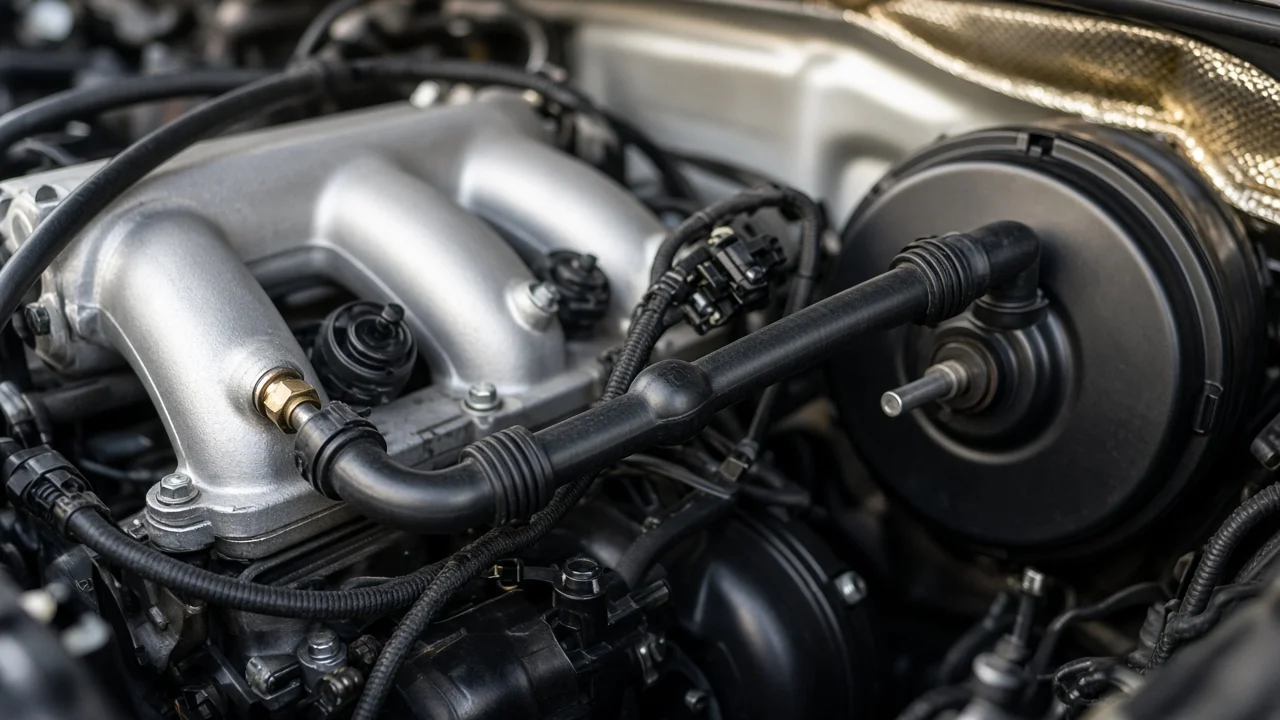
The N54 is a twin-turbo engine, so its intake runs under positive pressure whenever the turbos make boost. Instead of relying on manifold vacuum, it uses an engine-driven vacuum pump to power the brake booster. The line between that pump and the booster must hold vacuum without leaks, kinks or loose connections. Choosing a replacement N54 brake booster vacuum hose is mostly a fitment exercise: match the exact line for your car and replace the small parts that usually fail alongside it.
Define the job the product must do
The vacuum line has one job: deliver steady vacuum from the pump to the booster so the booster can multiply your pedal effort. A one-way check valve, either built into the line or fitted at the booster, keeps a vacuum reserve in the booster when the engine stops or demand rises elsewhere. On the N54, the vacuum supply also serves the wastegate control system. Depending on where a leak sits, a fault can therefore show up as braking symptoms, boost-control symptoms, or both.
Typical signs of a leaking or collapsed booster line are a pedal that feels unusually firm, needs more effort to stop the car, or hardens after a few stops in a row. You may also hear a hiss near the booster or along the line. Reduced brake assist lengthens stopping distances considerably. If the pedal has noticeably hardened, stop driving the car and have it towed or repaired before further use.
Before buying parts, confirm the hose is actually the problem. With the engine off, press the pedal several times to use up the stored vacuum. Then hold steady pressure on the pedal and start the engine. A healthy system lets the pedal sink slightly as vacuum builds. If it does not, suspect the pump, the line, the check valve or the booster itself. A visual inspection for cracks, loose connectors and a hardened booster grommet, plus a vacuum gauge teed into the line, will narrow it down before you spend money.
Check compatibility
The N54 appeared in several chassis, including the 135i (E82/E88), 335i (E90/E92/E93), 535i (E60/E61), Z4 sDrive35i (E89) and the 1 Series M Coupe. Engine bay layout and line routing differ between these platforms. Left-hand-drive and right-hand-drive cars place the booster on opposite sides of the firewall, so a line from a car with the other steering side will not fit. Production-date changes can also alter a part within one model. The reliable way to confirm vehicle fitment is a VIN-based lookup in a BMW parts catalog, followed by a comparison against the part on your car.
When comparing a candidate part with the original, check four interfaces. First, the booster end: does it use a grommet with a separate check valve, or an integrated valve and connector? Second, the pump end: what connector style and size does it use? Third, any tees or branches to other vacuum consumers. Fourth, the overall shape and length. BMW part numbers are often superseded, so follow the catalog to the current number rather than treating an older number from a forum post as definitive.
Features that affect the choice
Factory booster lines are generally preformed plastic with molded bends and fixed connectors, sometimes with the check valve built in. Preformed bends keep the line away from heat and moving parts and prevent kinks. A generic length of flexible hose loses that protection unless it is routed and secured carefully. When a listing sells the line as an assembly, check whether the check valve, connectors and booster grommet are included. Buying a bare line can mean reusing aged parts that caused the original leak.
Aftermarket silicone vacuum kits are popular on the N54, mainly for the boost-control lines. For the brake booster circuit, the key questions are wall thickness and resistance to collapse under vacuum, not color or a performance label. A hose that collapses under sustained vacuum restricts brake assist exactly when you need it. Treat a silicone kit as suitable for the booster only if it is specifically intended for that line, lists your chassis, and includes or accepts the correct check valve.
Labels such as OE quality, upgraded or heavy duty are marketing claims, not evidence. Useful evidence includes stated fitment by chassis and VIN or production range, a named material, a clear list of included parts, and whether the part is genuine BMW or comes from an original-equipment supplier. Oil resistance also matters on an aging N54. Oil leaks are common on these engines, and oil softens many rubber compounds. Fix the leak at its source, and avoid hose materials that are not rated for oil exposure.
Limitations and ownership costs
A new vacuum line restores assist only if the line was the fault. It will not cure a weak vacuum pump, a leaking booster diaphragm or a failing master cylinder. It also does nothing for hydraulic or friction problems. A soft or sinking pedal usually points to the hydraulic side, such as air or a leak in the brake fluid circuit or a master cylinder issue, rather than to vacuum assist. Worn brake pads, brake rotors below their wear limits, glazed friction material or a sticking caliper are separate problems with separate inspections. Measure them against the vehicle-specific service limits rather than assuming a hose fixes everything.
Budget for more than the line itself. Old plastic connectors and clips become brittle with heat and age and often break during removal. The booster grommet frequently hardens and leaks. A check valve that is not part of the new assembly may be worth replacing at the same time. Access varies by chassis, and some cars require removing covers or nearby components, so check the service information for your model before starting. If you install a separate check valve, follow its flow-direction marking, because a reversed valve blocks vacuum to the booster.
After installation, repeat the engine-off pedal test and listen for leaks with the engine running. Then make a careful low-speed test drive before normal use. If you disturbed connections shared with the boost-control vacuum supply, check for boost-related fault codes as well. If the pedal still feels wrong after a correct repair, keep the car parked and diagnose further, or hand it to a professional brake technician.
Build a practical shortlist
Compare candidates on the same points rather than on brand claims. Each part should pass these checks: the part number matches a VIN-based catalog lookup or its current supersession; the shape, length and connectors match your original; the check valve is included or the correct one is available, with clear direction marking; a new booster grommet and any needed clips are included or sourced separately; the material is suited to sustained vacuum, engine-bay heat and possible oil exposure; and the seller will accept a return if the part does not fit.
For a brake-critical line, a genuine BMW or original-equipment-supplier part is the conservative default, because its fitment and construction match the factory design. An aftermarket line is a reasonable choice when its listing documents your chassis, steering side and included parts. Whatever you choose, verify the fit against your old line before installing it. If you are not confident in the diagnosis or the repair, have a qualified shop handle it, since the booster circuit directly affects how well the car stops.