BMW N20 Timing Chain Replacement: Symptoms, Kits and Repair Costs
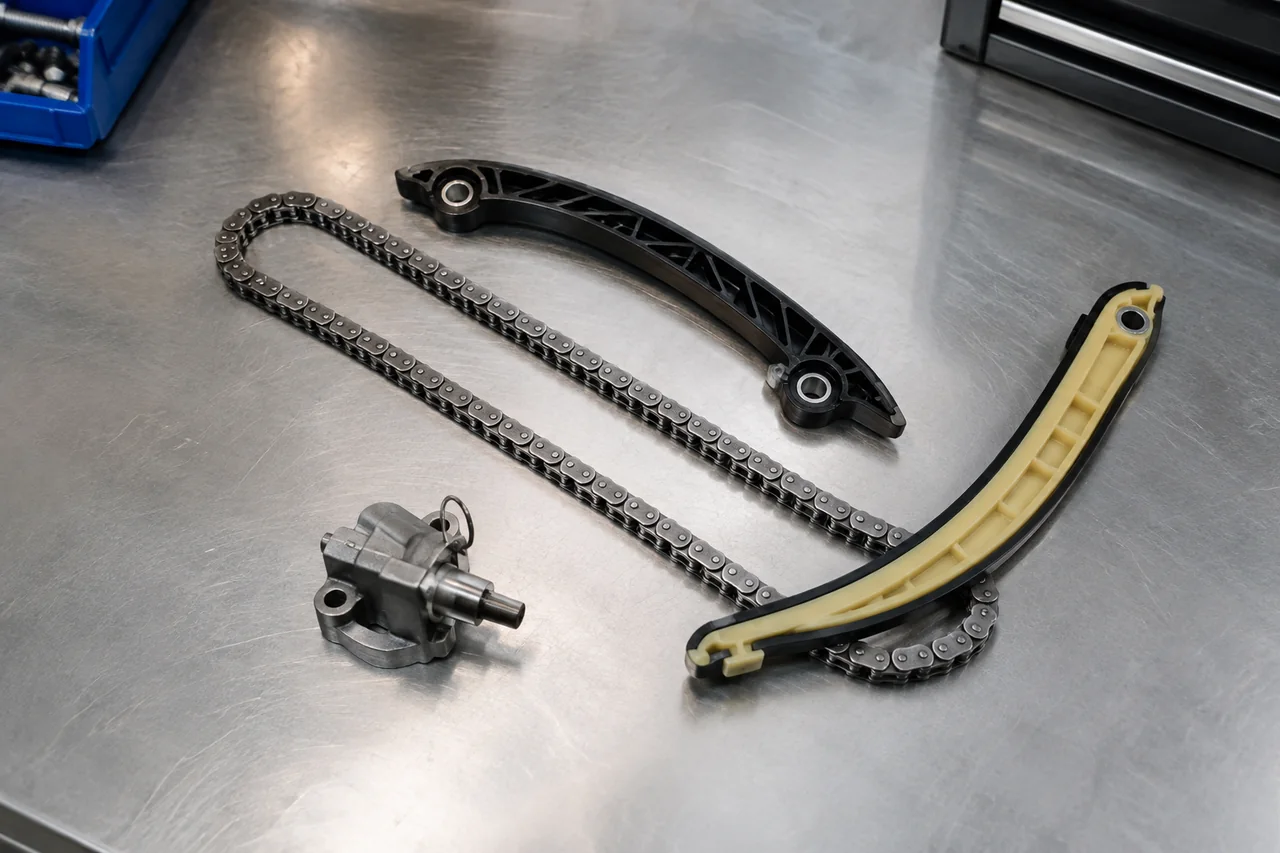
BMW N20 timing chain replacement is a system repair, not a single-part swap. On a confirmed N20, the chain keeps crankshaft timing aligned with camshaft timing, while timing chain guides and the chain tensioner keep that relationship stable. Noise, warning messages, or rough running can raise concern without proving chain failure. Engine identification, diagnosis, kit contents, and a written repair estimate all matter before authorizing 328i or X3 work.
Confirm the N20 Engine Before Planning a Timing Chain Repair
The N20 timing chain is a precision drive that keeps crankshaft timing and camshaft timing in a fixed relationship so valves open and close in step with piston travel. Timing chain guides support the chain along its path, and the chain tensioner maintains controlled slack so the links do not slap, jump, or wander. When that control is lost, valve events can drift even if the engine still starts. That is why BMW N20 engine timing chain replacement is planned as a correlation and control repair, not as a noise-only service.
A 328i badge or an X3 nameplate does not identify the engine. BMW 328i timing chain replacement guidance only applies after engine identification confirms an N20 through the VIN, build records, and current service information. The same check is required before treating any BMW N20 timing chain concern as interchangeable with another four-cylinder family. Keep the focus on confirmed N20 applications. Production years, failure rates, and assumed kit interchange should not be assigned to 328i or X3 vehicles that have not been verified.
Warning Signs and the Limits of Diagnosis by Sound
An N20 timing chain may announce trouble as a rattle on cold start, a higher-pitched whine, rough running, or an engine warning message. Those signs can also come from other rotating parts, oil-pressure issues, or unrelated sensors, so they do not confirm chain damage. Guide deterioration or a weak chain tensioner can still let the chain lose control, shifting camshaft timing relative to the crankshaft. Timing correlation faults then become a diagnostic lead, not proof that a particular rail or sprocket has already failed.
Note when the noise or roughness appears, and bring stored warning messages and maintenance records to the shop. Do not crank the engine repeatedly just to reproduce a rattle. If an oil-pressure warning, severe mechanical noise, or a sudden major running problem appears, stop safely and arrange towing. A technician should use vehicle-specific diagnostic information and mechanical checks. Any fault code is evidence to interpret, and its applicable BMW definition must be verified for that vehicle before anyone treats it as a failed N20 timing chain.
What an N20 Timing Chain Replacement Should Address
Professional BMW N20 timing chain replacement starts by establishing the fault, then performing an engine damage assessment of related hardware before parts are ordered. The repair proposal should treat the chain, timing chain guides, and chain tensioner as one system because reused worn pieces can undo a new chain. Related sprockets, covers, and seals should be documented as found, even when they are not automatically replaced. After specified components are installed, the shop verifies that the engine runs with correct correlation and without the original complaint.
Where findings and applicable service procedures indicate it, the shop should also inspect the oil pump drive chain and look for guide debris in the oil circuit and pickup area. Plastic fragments can travel beyond the timing case and change both the risk and the repair scope. Confirmed internal engine damage can expand the job well past n20 timing chain replacement, including valvetrain or bottom-end work. Timing-setting steps, torque values, and disassembly instructions belong in vehicle-specific procedures used by a trained technician, not in a general owner briefing.
Check the Contents and Fitment of an N20 Timing Chain Kit
An N20 timing chain kit commonly lists the chain, guide rails, and a chain tensioner, but package contents vary by supplier and by the exact engine and vehicle. Some kits stop at those core pieces. Seals, gaskets, specified replacement fasteners, fluids, and oil pump drive components may appear as separate line items rather than as part of the BMW N20 timing chain kit. Ask what is included before comparing quotes, because a cheaper kit can simply omit hardware the repair still requires.
Fitment is not assumed from a 328i or X3 description. VIN- and engine-specific part verification through current parts information is required before any n20 timing chain kit is ordered, and unsupported part numbers or interchange claims should not be trusted. Request an itemized parts list that names each chain, guide, tensioner, seal, and related drive component, then review written parts and labor warranty terms. Authorize the repair only after those documents match the confirmed N20 and the stated repair scope.
What Shapes the Replacement Cost for a 328i or X3
BMW N20 timing chain replacement cost is a repair estimate, not a sticker price. The total depends on the confirmed engine, vehicle configuration, local labor rate, required access, parts selection, and diagnostic findings. A typical bill separates diagnosis, labor, chain-system parts, associated seals and fasteners, fluids, and shop or environmental fees. Model year does not fix that math. A 2013 BMW 328i timing chain replacement cost question cannot be answered from the year alone, because engine type, damage, and included parts still have to be established.
For an X3, BMW X3 timing chain replacement cost still starts with engine verification before anyone applies N20 labor or kit assumptions. If the X3 does not have a confirmed N20, the quote is for a different engine and should not be compared as if it were n20 timing chain replacement cost. Extra work such as debris cleanup, oil pump drive service, or internal repairs should be listed separately. Ask for a written estimate that states included work, exclusions, warranty coverage, and how approval will be handled if debris or internal damage is found.
Documentation and Checks After the Repair
After BMW N20 timing chain replacement, keep the diagnostic findings, the itemized invoice, installed-part details, and the repair warranty together. Those records show what was actually fitted, including whether the oil pump drive chain or extra seals were part of the job. The shop should document post-repair checks for timing-related faults, abnormal noise, leaks, and normal engine operation. That write-up is the baseline if a later warning or a BMW 328i timing chain concern returns.
Report recurring rattles, roughness, or warning messages promptly rather than waiting for the next service. Stop driving and seek help if severe mechanical noise or an oil-pressure warning appears after the repair. Follow the applicable BMW maintenance guidance for oil service and inspections. There is no universal timing chain replacement interval that applies to every N20. Chain life still depends on lubrication, operating conditions, and whether the guides and tensioner remain in control.