BMW Electronic Parking Brake Release: Model-Specific Procedures
Most BMW models built in the last two decades use an electronic parking brake instead of a hand lever, so releasing it depends on electrical power, the right switch input, and conditions the control module checks first. This guide explains the standard release method, how the system works, which models and situations change the procedure, what an owner can safely check, and when a stuck brake calls for professional service.
The short answer: releasing a BMW parking brake
On most BMW models with an electronic parking brake, the basic release is the same. Switch the ignition on or start the vehicle, press the brake pedal firmly, then press the parking brake switch down. The switch sits on the center console and is usually marked with a P inside a circle. When the brake releases, the parking brake indicator in the instrument cluster goes out. Pulling the same switch up applies the brake again.
Many BMW models can also release the parking brake automatically when you drive off, provided the engine is running or the vehicle is drive-ready, a gear is selected, and the driver's seat belt is fastened and the door is closed. The exact conditions vary by model year and equipment, so the owner's manual for your specific vehicle is the authority. If the brake will not release with the switch and the brake pedal pressed, do not try to drive through it. A brake that stays applied usually points to low battery voltage, a system fault or a mechanical problem at the rear calipers.
How the electronic parking brake works
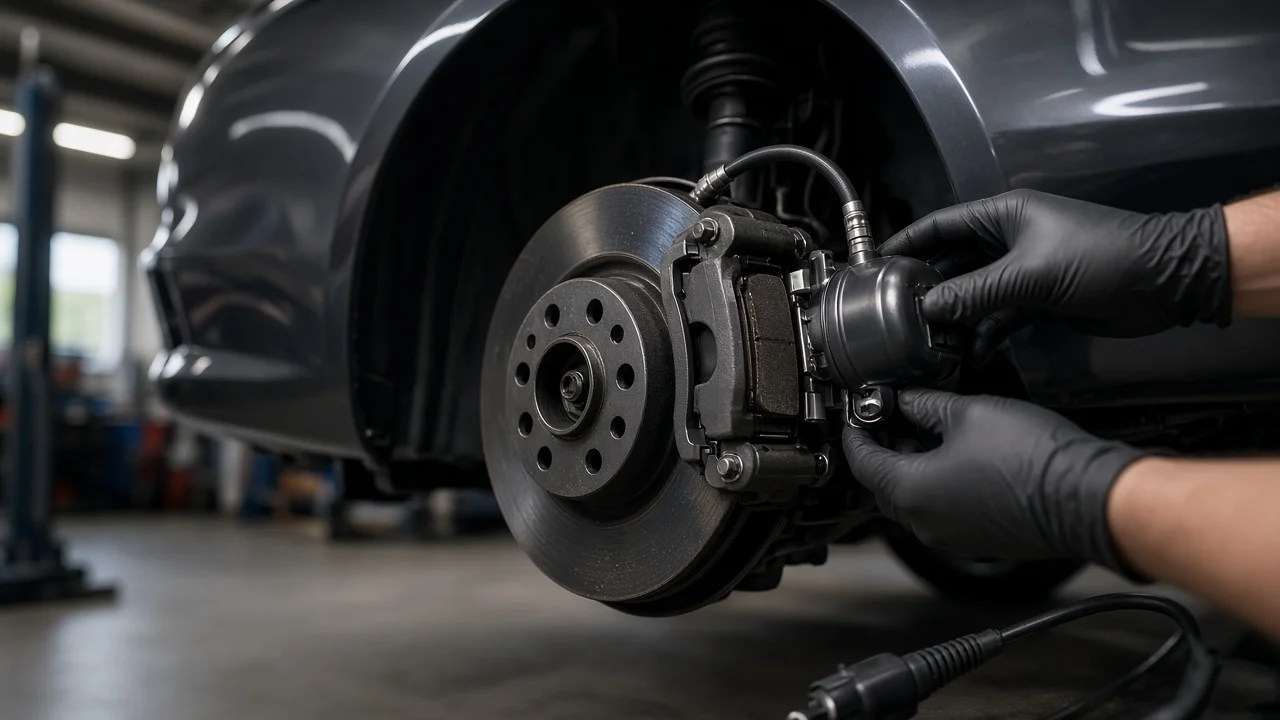
BMW has used more than one electronic parking brake design. Some earlier systems used a central electric actuator that pulled cables to small brake shoes inside the hat of the rear brake rotors, much like a traditional handbrake but motor-driven. Most current BMW models instead use an electric motor and gearbox mounted directly on each rear caliper. When you apply the brake, the motor turns a spindle that pushes the caliper piston and presses the brake pads against the rotor, using the same friction material that does the work during normal braking.
The mechanism is designed to stay locked once applied, without needing continuous power. That is why the car holds on a hill with the battery disconnected, and also why the brake cannot be released by the switch when there is no power. A control module reads the switch, brake pedal, gear position, wheel speed and other inputs, decides whether release is permitted, and stores fault codes when an actuator or sensor misbehaves. A red parking brake indicator generally shows the brake is applied, while a yellow or amber warning typically signals a fault in the system.
What changes the procedure between models
Vehicle generation and system design matter most. Cable-actuated and caliper-actuated systems behave differently, and features such as Auto Hold, which keeps the car stationary at stops and releases when you accelerate, change how the parking brake interacts with everyday driving. Automatic and manual transmissions can also have different automatic release rules, and some models apply the parking brake automatically when the engine is switched off in Park. Because these behaviors differ by series, model year and options, confirm the exact sequence for your car's vehicle fitment rather than relying on another BMW's procedure.
Operating conditions change the result as well. A weak or discharged 12-volt battery can prevent release or trigger warnings, and charging or properly jump-starting the battery often restores normal function. In freezing weather, pads applied against wet rotors can stick, so the brake may release electrically while the wheels still drag. A logged fault, a damaged actuator, corroded caliper hardware or a seized piston can block release entirely, and none of these are solved by repeatedly pressing the switch.
Brake service is the other major exception. On caliper-actuated systems, the rear pistons cannot simply be pushed back with a clamp for pad replacement. The system must first be put into a service or workshop mode that retracts the actuators, normally with a BMW-compatible diagnostic tool. Some models document a switch-and-pedal sequence for this, while others require the tool, so the vehicle-specific service information decides which applies.
What you can do as an owner
If the brake will not release, start with the basics. Make sure the ignition is on or the engine is running, press the brake pedal firmly rather than lightly, and press the switch down and hold it briefly. Check for messages in the instrument cluster or central display, since a check control message often names the problem or tells you to drive moderately or seek service. Note whether the warning is red or yellow and whether it appeared after a battery change, jump start or recent repair. If the battery is weak, charging it is a reasonable next step before assuming the parking brake itself has failed.
If you service the rear brakes yourself, use a diagnostic tool that supports the electronic parking brake service function, retract the actuators before removing the pads, and follow the procedure to reactivate and, where required, calibrate the system afterward. Never force the piston back or run the motor against a missing pad. While the brakes are apart, measure pad thickness and rotor condition against the manufacturer's wear limits, use parts with correct vehicle fitment, and check the brake fluid level, because retracting the pistons pushes fluid back toward the reservoir.
If the car must be moved while the brake is stuck, do not tow it with the rear wheels on the ground or drag it. Consult the towing section of the owner's manual and use a flatbed when in doubt. Some BMW models provide a documented emergency release or towing procedure, but only use one that the manual for your exact vehicle describes.
Limitations and when to get professional help
This overview covers the general logic of BMW electronic parking brakes, not every series and model year. Switch behavior, automatic release conditions, service mode access and emergency procedures differ across generations, and the owner's manual and BMW service information for your vehicle identification number take priority over any general guide. Fault codes in the parking brake module require a capable scan tool to read and interpret, and a guess based on symptoms alone can lead to replacing parts that were never faulty.
Stop using the vehicle and have it inspected by a qualified technician if the brake stays applied, releases only partly, drags, makes grinding noises, gives off a burning smell, or shows a parking brake or general brake warning that does not clear. Seek professional service as well if the brake fails to hold the car on a slope, if a caliper or actuator was damaged, or if service mode will not engage. The parking brake is a safety system, and a fault in it can affect the rear caliper and the main braking function.