BMW E90 steering angle sensor replacement
A failing steering angle sensor on a BMW E90 can trigger stability-control warnings, change steering effort, or make the dynamic systems respond oddly in corners. The driver often notices a warning lamp first, but the underlying issue affects how the stability program interprets yaw and driver intent. Because several symptoms overlap with alignment problems and wheel-speed sensor faults, the repair begins with understanding where the sensor sits and how it communicates. Replacement is a focused job, but the correct part, calibration, and diagnostic sequence matter more than simply swapping the component.
Essential answer
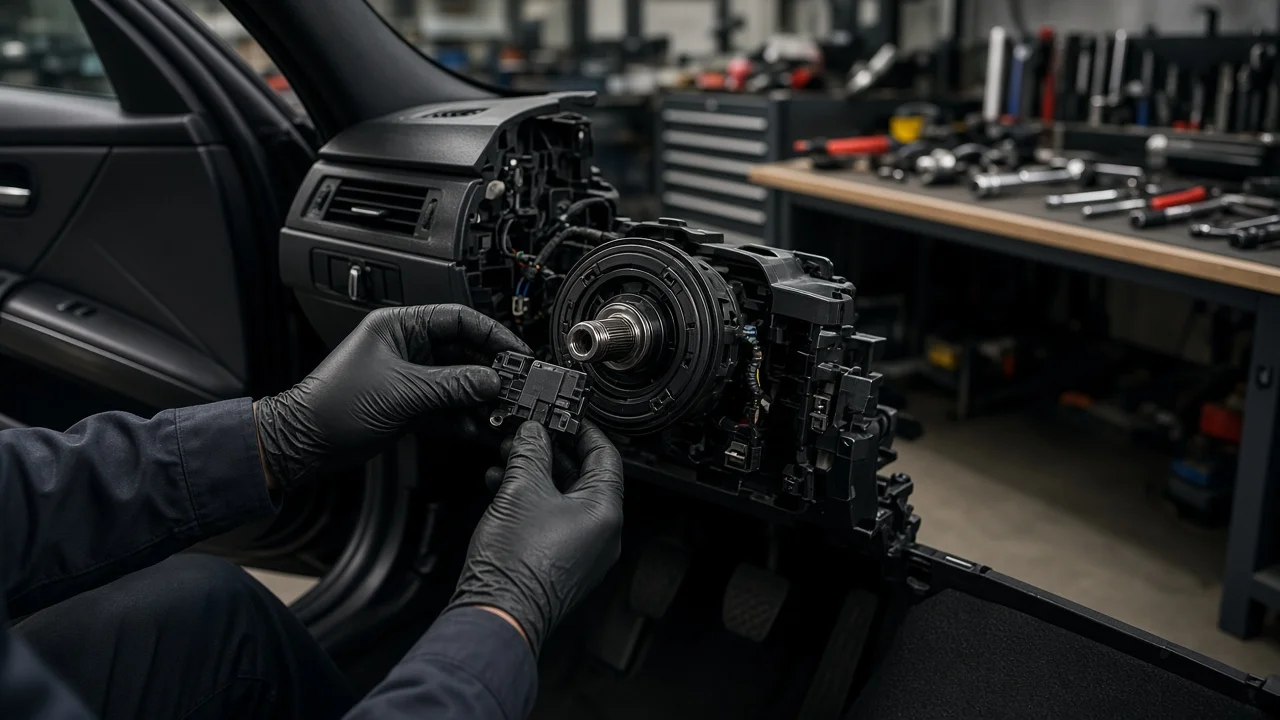
The essential answer is that a BMW E90 steering angle sensor replacement usually involves removing the steering column trim and, depending on the exact build, separating the sensor from the column switch cluster or the lower column area. The sensor measures steering wheel position and rotational rate, supplying data to the dynamic stability control system. When its signal becomes implausible or drops out, the vehicle may set a fault code, disable stability assistance, and illuminate a warning. Replacement restores a clean steering reference, but the new sensor must be initialized so the control module learns the straight-ahead position.
Scope changes if the car has active steering or a motor-driven column, because integrated electronics and additional calibration steps can make the job different from a base steering setup. On many E90 variants the sensor is positioned near the clockspring, while on others it may be integrated into a module where the steering column passes through the firewall. A fault code is evidence of a signal problem, not automatic proof that the sensor has failed, so wiring, power supply, and installation alignment should be considered before condemning the part. Once replaced, a scan tool is normally required to clear adaptations and verify the steering angle reads zero with the wheels centered.