BMW E90 Rear Axle Shafts: Choosing a Compatible Replacement
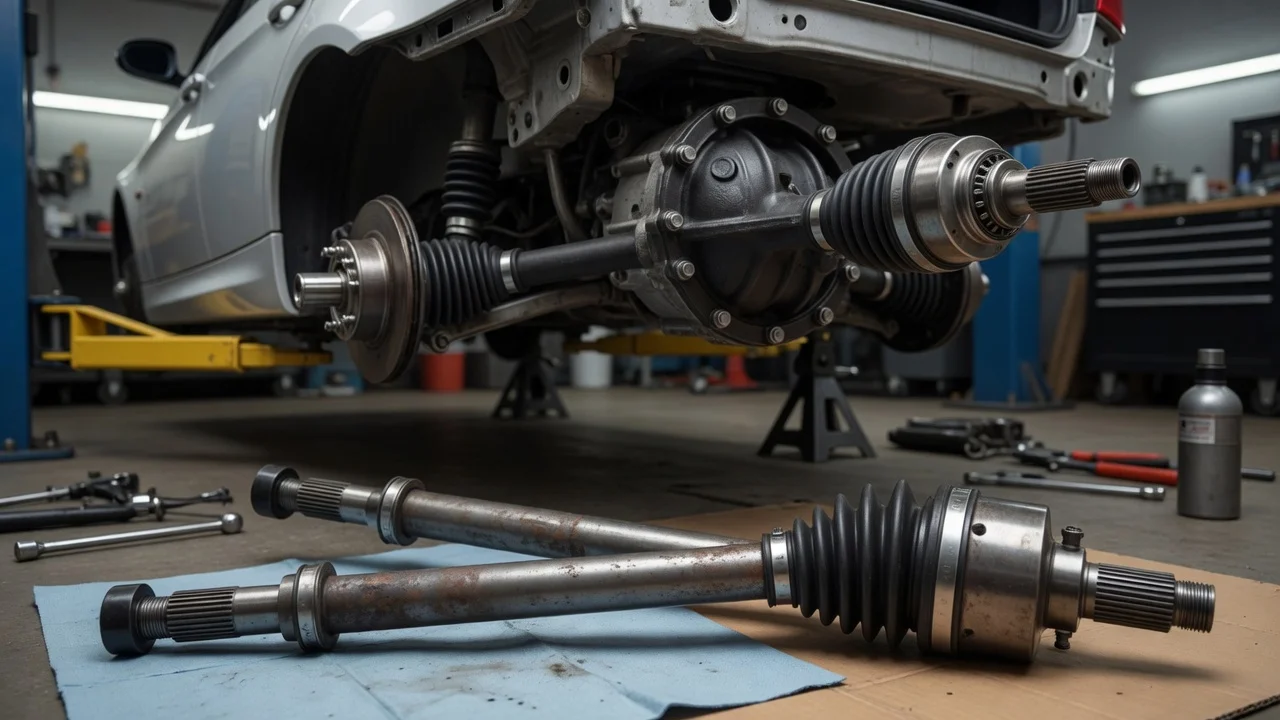
A worn rear axle shaft on a BMW E90 usually shows up as a torn boot, a clunk when pulling away or a vibration that changes with speed. The replacement job itself is familiar to most shops, but the E90 generation covers several engines, transmissions and drivetrain layouts. A shaft that looks identical in a listing photo may not fit your car. This guide explains how to confirm the need, match the part to your exact vehicle configuration and compare the options on evidence rather than labels.
Define the job the product must do
On a rear-wheel-drive E90, each rear axle shaft carries torque from the differential to a rear wheel hub. A constant velocity joint at each end lets the shaft keep turning smoothly while the suspension moves and the wheel travels up and down. The replacement therefore has to do three things: fit the differential and hub interfaces exactly, handle the torque your engine produces and keep its joints sealed and lubricated for the long term. The same generation also includes the E91 wagon, E92 coupe and E93 convertible, and parts are sometimes shared between them and sometimes not, so treat body style as one more detail to confirm rather than an assumption.
Before ordering anything, confirm that the shaft is actually the problem. A freshly split boot caught before grease is lost and dirt gets in can sometimes be handled with a boot kit, but once the joint has run dry or picked up grit, replacing the complete shaft is the usual approach. A clunk on take-off is not proof of a bad shaft either: worn differential mounts, rear subframe bushings or play at the hub splines can produce similar noises. A careful inspection with the car safely raised, checking for torn boots, grease spray and free play, will tell you whether a shaft is needed and which side. Also consider operating conditions: a stock daily driver and a tuned or track-driven car may justify different choices.
Check compatibility
The most reliable way to match a rear axle shaft is a parts catalog lookup by vehicle identification number, not by model name and year alone. Within the E90 range, fitment can depend on the engine, the transmission type, whether the car is rear-wheel drive or all-wheel drive (xi or xDrive), the differential fitted and the production date. The high-performance M3 variant uses its own drivetrain hardware, so never assume a regular 3 Series shaft carries over. Left and right shafts are commonly different lengths and are sold by side, so confirm which one you need and order accordingly.
The interfaces that decide fit are the splined end that passes through the wheel hub, the inner connection to the differential output, the overall length and the size of the joints. The simplest cross-check is to compare the part number from the catalog lookup with any number stamped or labelled on the old shaft, keeping in mind that service history matters: if the car has had a previous replacement, the installed shaft may be an aftermarket unit with a different appearance or marking. When a seller lists fitment only by model name, ask for a cross-reference to the original part number before you buy.
Features that affect the choice
Replacement shafts generally fall into four groups: genuine BMW parts, parts from original-equipment suppliers sold under their own brand, new aftermarket shafts and remanufactured units. Genuine and OE-supplier parts tend to cost more but offer the most predictable fit and finish. New aftermarket shafts vary widely in quality between brands. Remanufactured shafts can be good value, but the quality depends on what was actually renewed, and many carry a core charge that is refunded only when the old shaft is returned in acceptable condition.
Treat labels such as heavy duty, OE quality or premium as claims, not evidence. More useful information includes a stated part number cross-reference, a clear description of whether the joints are new or reconditioned, the boot material, whether a new axle nut and any retaining clip are included, and the length and terms of the warranty. Upgraded performance shafts exist for high-output cars, but they only make sense if your power level or driving actually stresses the stock design. For a standard car used on public roads, a correctly matched shaft built to the original specification is usually the sensible choice.
Limitations and ownership costs
Plan for more than the shaft itself. The axle nut at the hub is typically a single-use part and must be tightened to the manufacturer specifications using the correct procedure, so budget for a new one if it is not supplied. A shaft that has been in place for years can be seized in the hub splines and may need a puller to remove without damaging the wheel bearing. Releasing the inner end from the differential can disturb the output seal and let some fluid escape, so check the seal and fluid level and replace the seal if it was already weeping. Without proper tools, a torque wrench and a safe way to support the car, this is a job for a professional.
A new shaft cannot fix a worn differential mount, tired subframe bushings or a failing wheel bearing, so if those were contributing to noise or vibration, the symptoms may continue after installation. There is no universal replacement interval for rear axle shafts; their life depends on driving style, power output and how quickly boot damage is caught. Checking the boots during each routine inspection in your maintenance schedule is the cheapest way to protect whichever shaft you install. Factor core charges, return shipping and any extra hardware into the real cost when comparing prices.
Build a practical shortlist
Start with the VIN-based part number for the correct side, then gather two or three candidates that list that number as a direct cross-reference. For each one, note whether it is new or remanufactured, what hardware is included, the warranty length, the core charge and the seller's return policy if the part turns out not to fit. Discard any listing that cannot confirm fitment for your engine, transmission and drivetrain combination, however attractive the price.
Between the remaining options, weigh documented fitment and warranty support above small price differences, since a wrong or short-lived shaft costs another round of labor. Keep the old shaft until the new one is installed and the car has been road tested, both to compare parts side by side and to satisfy any core return. Once the right shaft is fitted with fresh hardware and correct torque, regular boot checks will do more for its lifespan than any marketing label on the box.