BMW ABS Reluctor Ring: Fitment for E90 and 1 Series
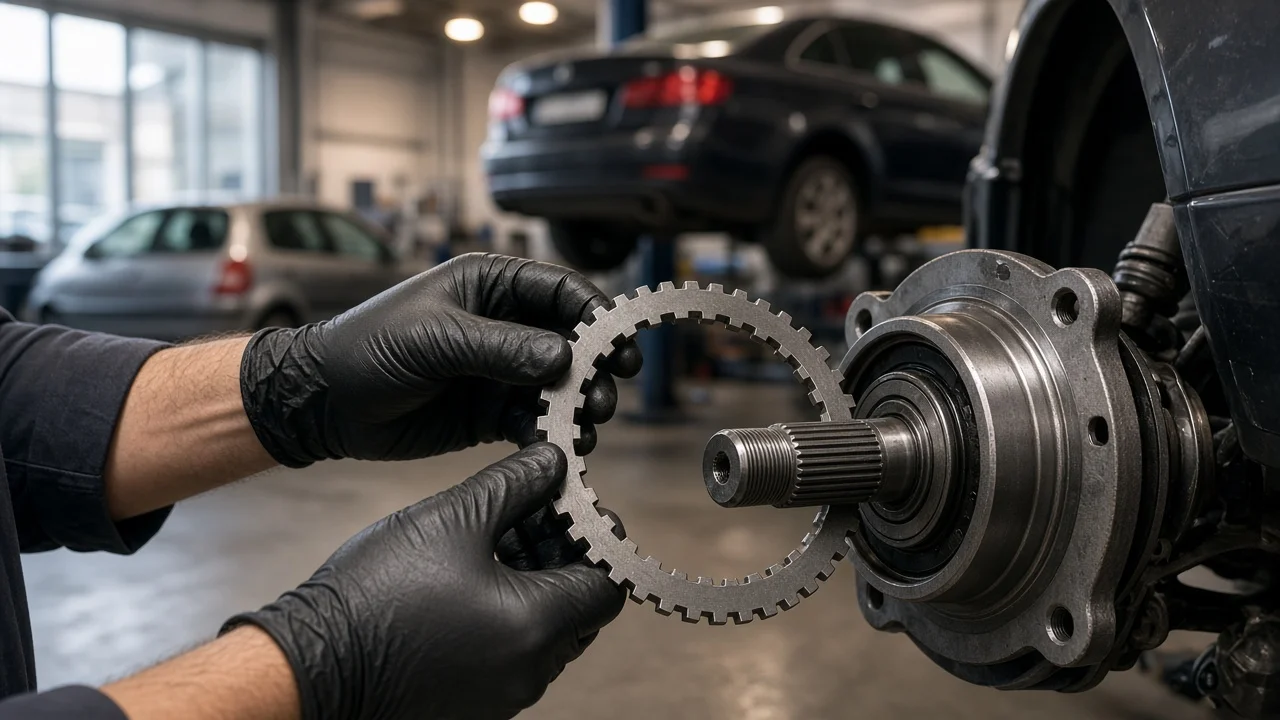
Shopping for an ABS reluctor ring for a BMW E90 or 1 Series usually starts with a warning light and a wheel speed fault code. Before you buy, know that these cars do not all use the same kind of speed encoder, and on some axles the ring is not sold separately at all. This guide covers how to confirm fitment, what to inspect and when the job belongs with a brake specialist.
Short answer: fitment depends on axle and drivetrain
The E90 3 Series and the E8x 1 Series (E81, E82, E87 and E88) share much of their chassis engineering, so many brake and suspension parts overlap. That does not make every reluctor ring interchangeable. The correct part depends on which axle you are working on, whether the car is rear-wheel drive or xDrive, the production date and the component the ring is mounted on. On many of these cars the front speed signal comes from a magnetic encoder built into the wheel bearing hub. In that case the repair is a hub assembly, not a standalone ring. Aftermarket rings advertised for both model lines are usually made for one specific location, such as a drive flange or axle shaft. Treat any 'fits E90 and 1 Series' claim as a starting point and check it against the VIN.
A replacement matches the original only if every one of these is the same: type (toothed steel or magnetic), tooth or pole count, inner diameter, width and seating position. If any of them differs, the ABS and stability control module will read an implausible wheel speed and set a fault, even though the part physically fits.
How the ABS reluctor ring works
Each wheel has a speed sensor mounted close to a rotating target. On a toothed ring, the passing teeth and gaps change the sensor signal. On a magnetic encoder, alternating north and south poles embedded in a rubber or plastic band do the same job without visible teeth. The DSC module compares the signal frequency from all four wheels to calculate each wheel's speed. It uses those values to release and reapply brake pressure during an ABS stop and to manage traction and stability control. On these BMWs, the same values also supply vehicle speed to other systems.
Because the module compares the wheels against each other, a ring does not have to be missing to cause trouble. Any of these can produce an erratic signal: a cracked ring, a chipped tooth, a ring that has slipped on its seat, rust swelling between the teeth, or a magnetic encoder coated in metal particles. Typical symptoms are ABS, DSC and brake warning lights, ABS pulsing at low speed on a dry road, and stored codes pointing to one wheel speed signal. The brake pads, caliper and brake fluid circuit are not part of this signal path. The pedal can therefore feel normal with a ring fault, although ABS assistance may be switched off.
What changes the answer
Drivetrain is the first divider. Rear-wheel-drive and xDrive versions of the E90 use different front hardware because xDrive cars have driven front axles. Do not assume a front hub, bearing or ring listed for a rear-drive car will fit an xDrive car, or the reverse. On the 1 Series, body style and engine can also change brake and hub specifications.
Axle and component matter just as much. Front and rear parts differ, and a ring sold for a drive flange or axle shaft is not the same as an encoder built into a wheel bearing seal. BMW revised parts during the E90 and E8x production runs, so production date affects vehicle fitment. High-performance variants with larger brakes may use different hub or bearing components. Also find out whether the car has had previous repairs: an earlier owner may have fitted an aftermarket hub or bearing whose encoder differs from the factory design.
What the owner can do
Diagnose before buying parts. Read the fault codes with a scan tool that can access the BMW DSC module and note which wheel is reported. Then watch live wheel speed data while driving slowly in a safe place. A wheel that drops out or reads differently from the others narrows the search. Inspect that sensor's wiring and connector, and remove the sensor to check its tip for damage or debris before blaming the ring.
To see the ring you will usually remove the wheel, and depending on the location, the caliper and brake rotor as well. Support the caliper so it does not hang on the hose, and do not open the hydraulic system unless the job requires it. Look for cracks, missing or flattened teeth, corrosion and looseness. A magnetic encoder looks like a smooth band, so check it for cuts, swelling and stuck metal fragments. While the brakes are apart, measure pad friction material and rotor thickness against the wear limits in the service information.
When ordering, give the supplier the VIN, and compare the new part side by side with the old one before installing it. Press a ring on squarely with the correct tool; never hammer it on by one edge. Install a magnetic encoder with its coded side facing the sensor. After the repair, clear the codes, confirm that all four wheel speeds agree in live data, and road-test at low speed before normal driving.
Limitations and next step
This guide cannot confirm fitment for an individual car. The reliable reference is BMW parts and service information looked up by VIN; aftermarket listings vary in accuracy. Take tooth counts, torque values and pressing procedures from that service information, not from memory or a seller's description.
Stop driving and arrange professional service if a red brake warning stays on, the pedal feels soft or travels further than usual, the car pulls under braking, or a wheel bearing is noisy or loose. Those signs point beyond a speed signal fault. A workshop with press tools and BMW-capable diagnostics is also the better choice for pressing rings onto flanges or shafts, replacing hub units, or a car whose ABS and stability control stay disabled after the parts are changed.