BMW E46 Fuel Filter: Location, Symptoms and Replacement
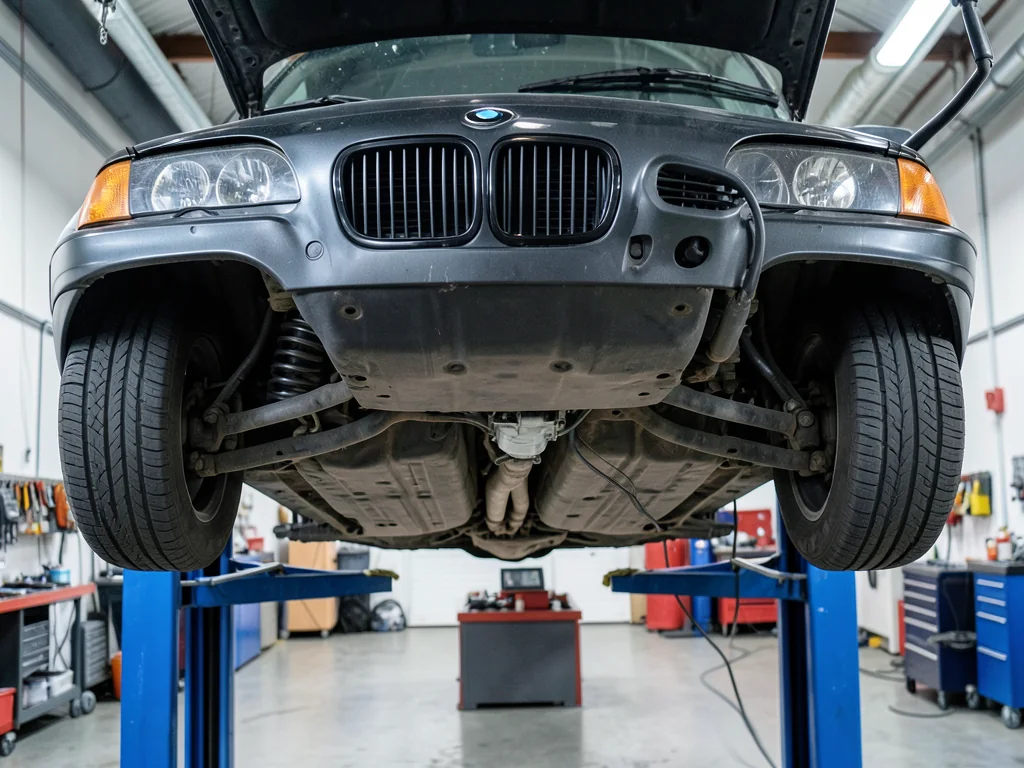
The E46 fuel filter sits in the fuel delivery path and traps contaminants before they reach the engine. Owners usually want the location, what a restricted filter can feel like, and how replacement is handled on this chassis. The correct fuel filter on an E46 depends on model year, engine, fuel type, and market, so identification, safe locating, symptom reading, diagnosis, and workshop replacement all start from that car's configuration rather than a single shared layout.
Identify the Fuel Filter Fitted to Your E46
The filter's job is to keep rust, sediment, and other contaminants out of the fuel delivery system so injectors, rails, and related components see cleaner fuel. On an E46 that role is the same in principle, but the hardware is not. Inline housings, integrated assemblies, and pressure regulator arrangements can differ, so one catalog picture is not a match for every car. Confirm model year, engine family, gasoline or diesel fuel type, and the market the car was built for before treating any location note or replacement sequence as yours.
VIN identification is the practical way to lock the correct filter configuration. A dealer or independent using BMW parts information can read the vehicle identification number against the catalog and see the filter, lines, and regulator features specified for that build. Vehicle-specific service documentation then describes how that assembly is mounted and serviced. Treating one filter, one regulator layout, or one replacement procedure as applicable to every E46 is a common source of the wrong part, mismatched fuel line connections, and unnecessary extra work.
Locate the Filter Using Vehicle-Specific Information
Location is established from the same vehicle-specific information used to identify the part, not from a shared mental picture of every 3 Series. Service literature for that VIN and engine describes which side of the underbody, how far forward of the tank, and which fuel line connections belong to the filter housing. Landmarks such as the rear subframe, tank straps, and nearby brake or exhaust routing help a technician orient the car once the documented position is known. Diesel and gasoline layouts can differ, as can cars built for different markets.
A protective underbody cover frequently hides the filter, so an owner standing beside the car may see only panels and no housing. An online photo cannot confirm the location or plumbing on a particular E46, because lighting, trim, and a similar-looking chassis do not prove the same filter restriction path or regulator arrangement. Keep owner observations to safely accessible areas such as the engine bay, filler neck, and visible underbody edges from ground level. Underbody inspection that requires the vehicle to be raised belongs on suitable professional lifting equipment, not on improvised stands.
Recognize Symptoms That May Indicate Restricted Fuel Flow
A restricted filter can starve the rail of fuel when demand rises. Hard starting, hesitation under load, a flat feeling during acceleration, loss of power on hills, or stalling after idle can all appear when fuel delivery cannot keep up. Those complaints are not proof the filter is clogged. Ignition misfires, air metering faults, a weak pump, a failing pressure regulator, or contaminated injectors can produce the same drivability pattern. Treat the symptom as a reason to investigate fuel delivery, not as a diagnosis of the filter itself.
Useful notes include when the problem shows, whether it is cold or hot, recent fuel work, warning lights, and any available maintenance history. Filter restriction often feels worse as load increases, but that pattern still overlaps with pump wear and intake leaks. Fuel odor, visible leakage around lines or the housing, or repeated stalling in traffic are different: stop driving and arrange professional assessment. Continuing to operate a leaking fuel system or a car that dies under load creates fire and safety risk that a later filter change will not undo.
Confirm the Cause Before Scheduling Replacement
A filter that looks dirty on the outside does not prove an internal restriction, and a clean shell does not prove the media is open. Symptoms alone cannot establish that the element is the bottleneck. Professional fuel pressure testing and delivery testing compare pump output, residual pressure, and volume against specifications for the exact vehicle. Those readings, taken with the correct adapters and the engine in the documented test states, separate a starved rail from a regulator that cannot hold pressure or a pump that cannot meet demand.
Stored fault codes add diagnostic context. Lean mixture, pump, or rail-pressure codes can appear when delivery is weak, but a fault code is evidence to interpret, not proof a part has failed. Manufacturer-dependent codes still require vehicle-specific confirmation of freeze-frame data and related tests. Documented maintenance history and applicable BMW service guidance help decide whether replacement is due, because no single mileage figure covers every E46 engine and market. If pressure and volume are within specification, swapping the filter out of convenience will not correct an ignition or air-metering fault.
Understand the Replacement Process and Final Checks
Workshop replacement follows a controlled order: confirm the part against VIN identification, prepare the vehicle, replace the filter using the applicable service procedure, then verify operation. Fuel pressure, flammable liquid, and underbody access make owner-level disconnection or pressure-release work a poor choice. Orientation of the housing, the arrangement of fuel line connections, and any pressure regulator features must come from vehicle-specific documentation, because installing a filter backward or mixing regulator hardware can recreate the same fuel delivery complaint the job was meant to cure.
After installation, a professional leak check at the connections is the first operational proof the job is sealed. Starting, idle quality, and loaded drivability should then be compared with the original complaint before the car returns to use. Persistent hesitation or stalling means the filter was not the only issue, and diagnosis should continue through pump, regulator, ignition, and air metering. Removed fuel and the old filter need appropriate disposal; they are not household waste. A completed repair is one that holds pressure, stays dry, and restores the delivery the engine needs.