BMW E46 ABS Wheel Speed Sensor: Choosing a Compatible Replacement
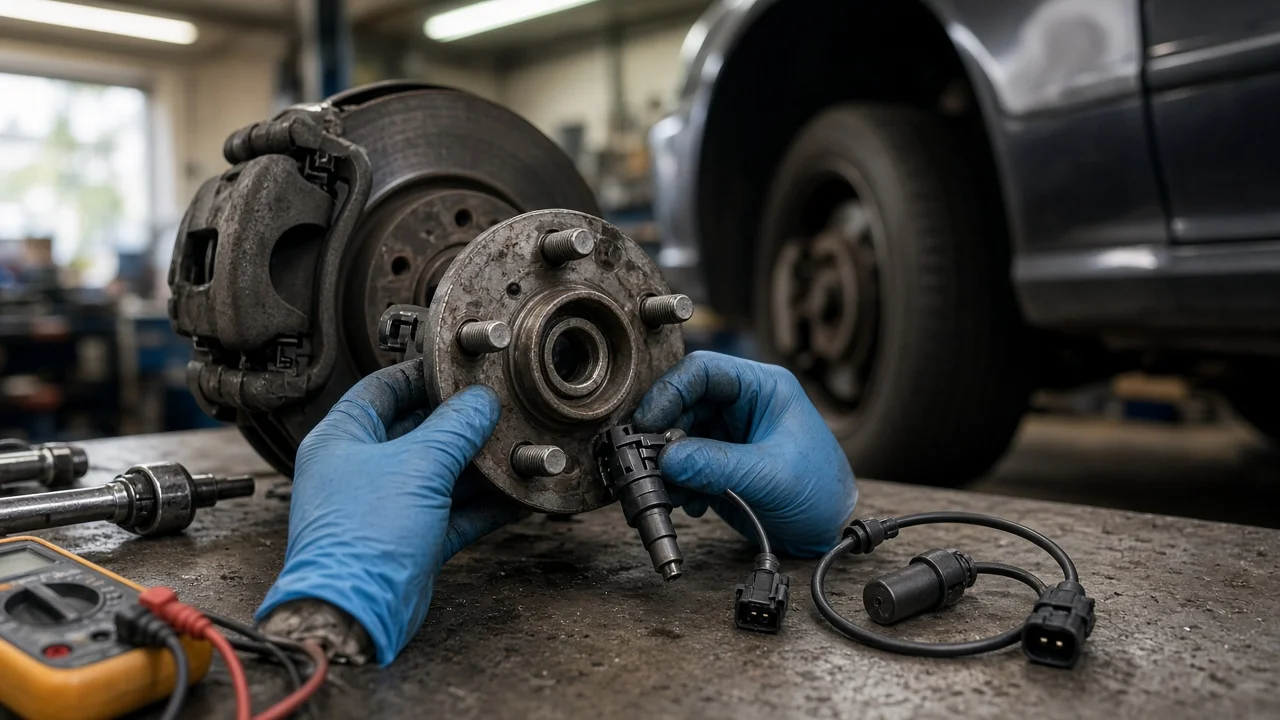
When an E46 3 Series lights up its ABS and traction or stability control warnings, a failed wheel speed sensor is a common cause, but not the only one. Choosing a replacement that actually fits means confirming which corner has failed, which sensor version your car uses, and whether the part matches the original connector and cable routing. This guide covers that process from a brake technician's point of view.
Define the job the product must do
Each sensor reads a toothed or magnetic ring that rotates with the hub and reports that wheel's speed to the ABS control unit. The unit compares all four signals to detect a wheel about to lock or spin, then modulates brake pressure and, on cars with traction or stability control, engine torque. When one sensor fails or sends an implausible signal, the system usually switches off anti-lock and stability functions and turns on the warning lights. Ordinary braking normally still works, but the wheels can lock in a hard stop, especially on wet or loose surfaces.
Before buying anything, confirm the fault. Read stored codes from the ABS or DSC module with a scan tool that can access BMW chassis modules; many basic OBD-II readers only see engine codes. A good code identifies the corner and the fault type, such as an open circuit or an implausible signal. If your tool shows live data, compare the four wheel speeds while rolling slowly: a reading that drops out or disagrees with the others points to that position. Implausible-signal faults can also come from a damaged tone ring, wheel bearing play, debris on the sensor tip or chafed wiring, none of which a new sensor will cure. Also be realistic about your constraints: tools, a safe way to lift the car, time, and whether a seized sensor would push the job toward a shop.
Check compatibility
The E46 platform covers sedans, coupes, convertibles, wagons, the hatchback Compact, the M3 and all-wheel-drive xi models, and BMW revised braking and stability hardware during production. Sensor fitment can differ by axle, by side, and by variant. The xi models use different front hub and drivetrain hardware, and the Compact uses a different rear suspension design from the other body styles, so a listing that simply says E46 is not enough. The most reliable approach is a VIN-based parts lookup to get the original part number for the exact position, then checking that any replacement either carries that number or lists it as a direct cross-reference.
Then compare the physical interfaces: the shape and diameter of the sensor head, the mounting tab and bolt hole, the overall cable length, the number and placement of grommets and clips, and the connector shape and pin count. Front and rear sensors typically have different cable lengths, and a cable that is too short will be strained while one that is too long can rub on the tire or suspension. If the old sensor's part number is still legible, note it. Do not confuse the ABS sensor with the brake pad wear sensor, which clips into the pad's friction material and only reports pad wear. Replacing one will not clear a fault in the other.
Features that affect the choice
Replacements generally come from three sources: the supplier that made the original part, established aftermarket brands, and low-cost unbranded sellers. The useful evidence is concrete: an original part number cross-reference for your position and variant, product photos showing a connector and cable layout identical to yours, molded strain reliefs and grommets in the right places, a sealed sensor head, and a clearly identified manufacturer with a warranty you can actually claim. Labels such as OE quality, premium or direct fit are marketing claims, not proof. Direct fit only means something when the listing names the axle, side and model variant it applies to.
The main trade-off is price against electrical consistency. A sensor can be dimensionally correct yet produce a signal the control unit treats as implausible, which brings the warning lights back and costs a second repair. A recognized supplier reduces that risk but does not eliminate it. Also check whether the part includes a new retaining bolt and whether the connector latches firmly. A loose or poorly sealed connection can corrode and cause intermittent faults that look like a failed sensor.
Limitations and ownership costs
Installation is usually straightforward but can be stubborn. With the car safely lifted and supported and the wheel off, you unclip the cable along its route, remove the retaining bolt and pull the sensor from its bore. Corrosion often seizes older sensors, and they can break during removal, leaving the head stuck in the hub carrier. Clean the bore carefully and seat the new sensor by hand, never with a hammer. Route the cable exactly as the original so it clears moving suspension parts and the tire. The job does not open the hydraulic system, so no brake fluid bleeding is needed. If you remove the caliper or brake rotors for access, refit them to the manufacturer's torque specification and confirm a firm pedal before driving.
With the wheel off, inspect the brake pads and rotors against the vehicle-specific wear limits and look for leaks at the caliper. A new sensor cannot fix a failing ABS control unit, broken wiring, a damaged tone ring or a worn wheel bearing, and control unit faults are also a recognized cause of warning lights on these cars. Budget for a capable scan tool or a diagnostic fee, clearing codes, and possible wiring repair. If the red brake warning light stays on, the fluid level is low, the pedal feels soft or the car pulls or grinds when braking, stop using it and have it professionally serviced. Those symptoms are not sensor faults.
Build a practical shortlist
Before adding a BMW ABS wheel speed sensor to your cart, check each candidate against this list. The failing position has been confirmed by fault code and, ideally, live wheel speed data. The original part number comes from a VIN-based lookup, not a generic model search. The candidate lists that number or a clear cross-reference for the same axle, side and variant. Its connector, cable length and grommet positions match the old part or reliable reference photos. The manufacturer is identifiable, with stated warranty terms. The seller accepts returns for incorrect vehicle fitment.
You do not need to replace sensors in pairs. Replace the one that failed unless another position also shows faults or its cable was damaged during the work. After installation, clear the codes and test drive. If the same fault returns at the same corner, inspect the wiring, connector, tone ring and bearing before buying another sensor. A second identical part rarely solves a problem the first one did not.