BMW E36 Brake Booster Vacuum Hose: Choosing the Correct Part
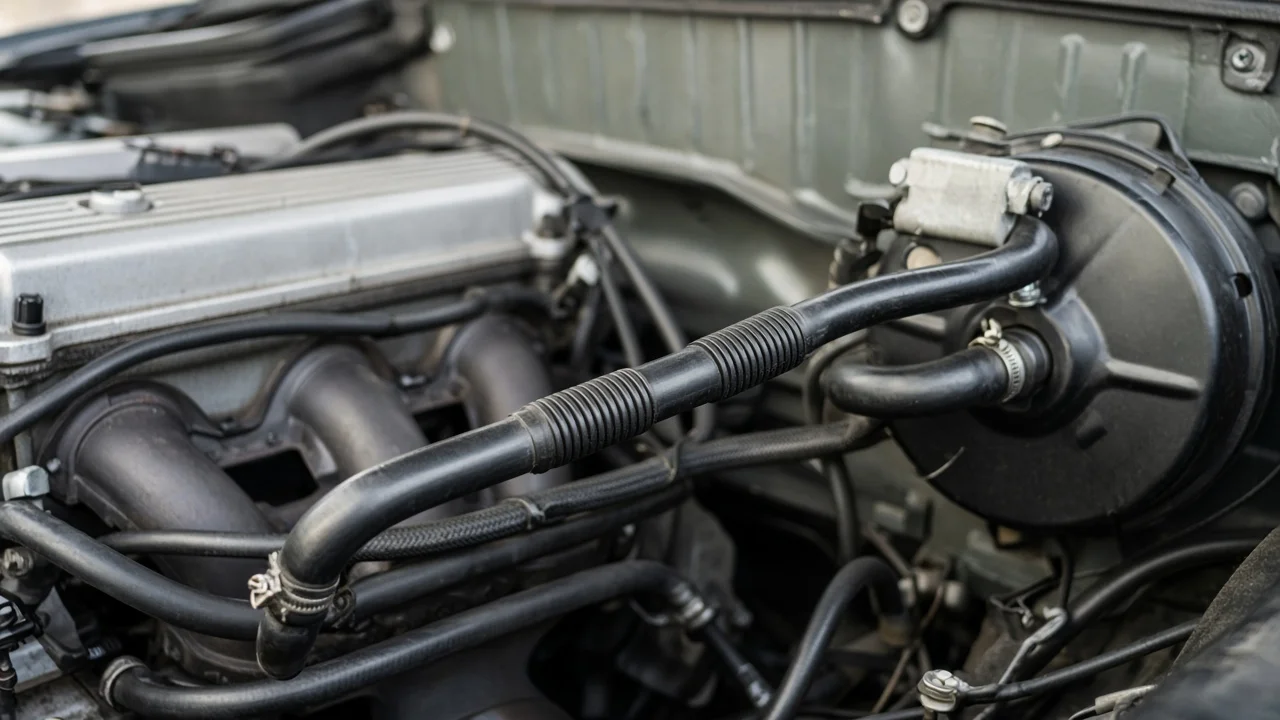
The hose that carries vacuum from the intake manifold to the brake booster is a small, inexpensive part, but it has a large effect on how a BMW E36 stops. When it cracks, collapses or loses its one-way valve function, the pedal turns hard and the engine may idle poorly. This guide covers how to identify the right replacement for your car, which features matter, and what a new hose cannot fix. Any change in braking feel deserves prompt diagnosis before the car returns to daily use.
Define the job the product must do
A vacuum brake booster uses engine vacuum to multiply the force you apply to the pedal. On gasoline E36 models, the booster hose connects the intake manifold to the booster, and a one-way check valve in that line holds vacuum inside the booster when the engine is off or when manifold vacuum drops under heavy throttle. The hose has to stay airtight, resist collapsing under vacuum and tolerate years of engine-bay heat and oil vapor. A part that looks right but softens or kinks will give the same complaint you started with.
Before buying anything, confirm the hose is actually the problem. Typical signs of a leaking or failed booster vacuum line include a hard, high-effort pedal, especially on the first presses after startup, a hissing sound near the booster or behind the intake manifold, a high or unstable idle, and lean fuel trim codes on OBD-II cars. Inspect the hose for cracks at bends, swollen or soft sections and loose ends. Air should pass through the check valve in one direction only. A leaking booster diaphragm or a failing master cylinder can produce similar symptoms, and a new hose will not cure either. If the pedal sinks toward the floor or braking power drops noticeably, stop driving the car and have the brake system professionally inspected.
Check compatibility
The E36 was built with several engine families, and the booster hose differs between them. Four-cylinder cars, such as those with M42 or M44 engines, place the manifold connection in a different location from six-cylinder M50, M52, S50 and S52 cars, so hose length, bends and fittings vary. Body style, model year, market and production date can also change the part. Right-hand-drive cars mount the booster on the opposite side of the engine bay, which changes routing entirely, and diesel E36 models outside the US draw vacuum from a mechanical pump rather than the intake manifold. Treat any listing that claims to fit every E36 with suspicion and confirm vehicle fitment with a VIN-based catalog lookup.
Beyond the catalog result, compare the physical interfaces with the part on your car. Check the inner diameter at each end, whether the connections are push-on, clamped or molded elbows, and whether the check valve is a separate inline piece or built into a hose assembly. Note the rubber grommet where the line enters the booster, since a hardened grommet leaks even with a perfect new hose. The check valve must be installed with its direction marking pointing toward the intake manifold, because air flows out of the booster toward the engine. A valve fitted backward will leave the booster with no assist at all.
Features that affect the choice
The most practical difference between options is a preformed, molded hose versus straight bulk hose cut to length. A molded hose holds its shape around tight bends without kinking, which matters in the cramped space behind an E36 intake manifold. If you use bulk hose, it must be rated for vacuum service with adequate wall thickness or reinforcement. Fuel line and heater hose are not substitutes, because a hose that is not built for vacuum can flatten as soon as the engine idles.
Material and origin are more useful evidence than marketing labels. Terms like heavy duty or performance mean little unless the seller states the compound, reinforcement and operating range. Rubber formulated for heat and ozone resistance is the usual choice. Silicone hoses are sold for this job, but plain silicone does not tolerate oil vapor well, so check that any silicone option is lined or rated for that exposure. An original-equipment or OE-supplier part, or one with a published cross-reference to the number your catalog lookup returns, gives the strongest assurance of correct shape and fit.
Look closely at the check valve if one is included. A clearly molded direction arrow, a sound housing and a valve that seals reliably in reverse are worth more than a low price. A sticking or weak valve lets booster vacuum bleed off, so the first pedal application after the car sits feels hard even though the hose itself is sealed. Kits that include the grommet and correct clamps save a second order when an old fitting turns out to be brittle.
Limitations and ownership costs
Replacing the hose is usually a straightforward job, but access varies. On some six-cylinder cars, the manifold connection sits low and toward the back, and reaching it may mean removing the air intake or other components. Plastic fittings on older E36 engines become brittle with age and can crack when an old hose is pulled off, so budget for related parts. While you are there, inspect neighboring vacuum and breather lines, because one leak is often accompanied by others of similar age. After installation, check the result: with the engine off, pump the pedal several times to use up stored vacuum, hold steady pressure and start the engine. The pedal should move down slightly as assist returns. Then listen for hissing and confirm the idle has settled.
A new booster hose restores assist; it does not restore stopping power lost elsewhere. It will not help if the brake pads are at their wear limits, the brake rotors are below minimum thickness, the brake fluid is old and contaminated, or a caliper is sticking. Pedal assist only multiplies your effort; actual braking depends on the condition of the friction material and the hydraulic system. The hose is an inexpensive part compared with most brake work, but rubber ages, so inspect it at routine service and replace brake fluid at the interval in your vehicle-specific service information.
Build a practical shortlist
Narrow the options with a short checklist. Confirm the engine code, body style, model year and steering side from the VIN, then keep only parts that match that lookup. Compare length, bends and end fittings against the original hose. Make sure a check valve is included or already present in your line, and that its direction is clearly marked. Look for a stated material suited to vacuum, heat and oil vapor, plus an OE number cross-reference. Check whether the grommet and clamps are included, and whether the seller accepts returns if the fitment proves wrong.
Rank the remaining choices by fitment certainty first, then by material and kit completeness, and only then by price. Generic star ratings say little about whether a hose suits your particular engine and drive side. If the pedal is still hard, the hissing continues or braking performance stays poor after a correct hose and check valve are installed, the booster or master cylinder needs professional diagnosis before the car is driven again.