BMW E30 Brake Booster Vacuum Hose: Choosing the Correct Part
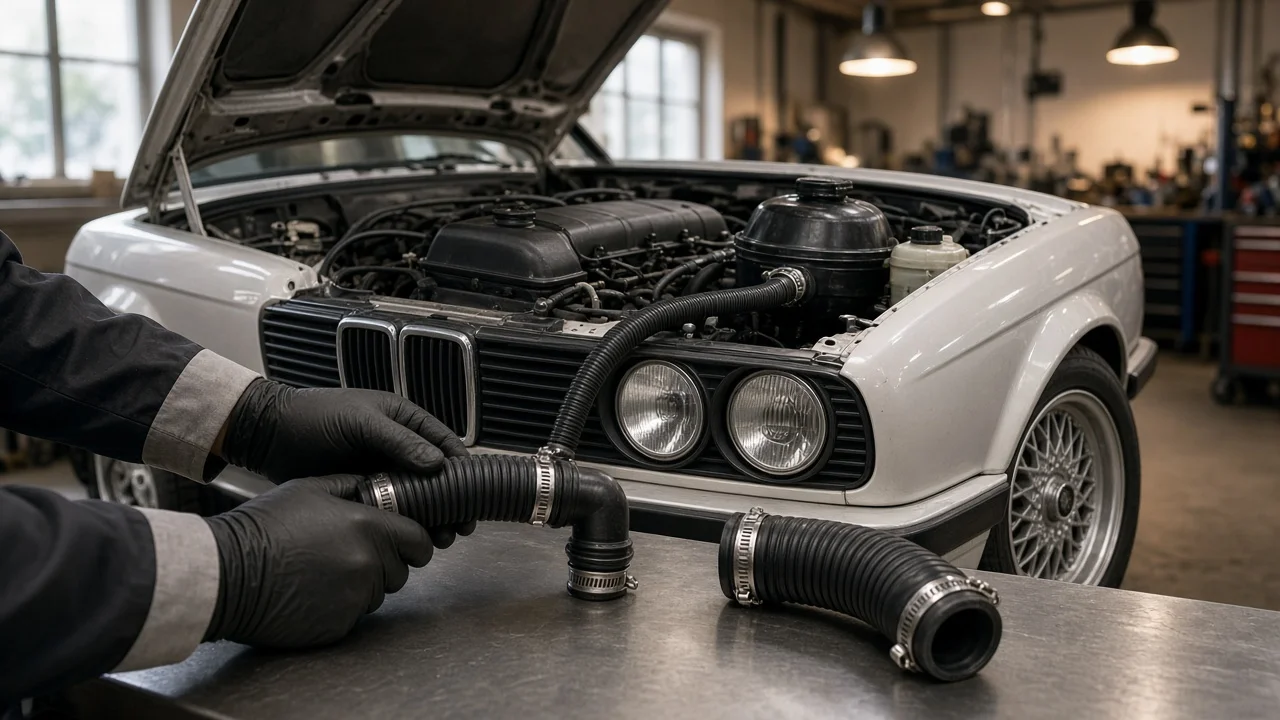
On a BMW E30, the brake booster vacuum hose is a short run of rubber with an important job. It carries engine vacuum to the booster so the pedal needs normal effort. When the hose cracks or collapses, or its check valve fails, you get a hard pedal, a hiss in the engine bay or an unstable idle. This guide explains how to choose a replacement that fits your car and does the job. It also covers the symptoms a hose cannot fix.
Define the job the product must do
The vacuum hose connects an engine vacuum source to the brake booster. The booster is the large round canister between the pedal box and the master cylinder. It uses the pressure difference across its diaphragm to multiply the force from your foot. A one-way check valve keeps vacuum stored in the booster when the throttle opens wide or the engine stops. On gasoline E30 models, the vacuum source is the intake manifold. Engines that produce little usable manifold vacuum, such as diesels, typically rely on a separate vacuum pump. Their hose layout is different, so a hose from a gasoline car is not a direct substitute.
Before shopping, be clear about what you need the part for. A daily driver with a cracked original hose needs a correct, durable replacement that routes exactly like the factory part. A restoration may justify a molded hose that matches the original shape. A modified car may need custom routing, a different port size or an added vacuum reservoir, and a standard catalog hose may not solve the problem. Examples include an engine swap or individual throttle bodies without a shared plenum. Also consider where the hose runs. A hose that sits near exhaust heat or oil mist needs more heat and oil resistance than one on a clean, cool route.
Common signs of a failed hose include: • a hard or high pedal; • a hissing sound in the engine bay; • an unstable or raised idle caused by the vacuum leak; • a pedal that loses assist soon after the engine is switched off; A hard pedal means much longer stopping distances. If braking feels compromised, stop using the car and have the system inspected before driving it again.
Check compatibility with your E30
Start with the exact vehicle, not just the chassis code. The E30 range used several engine families: the M10, M40 and M42 four-cylinders, the M20 six-cylinder, the S14 in the M3, and diesel engines. Manifold port location, hose length and bend shape can vary between these engines. Routing can also differ between left-hand-drive and right-hand-drive cars. Confirm the engine, production date and steering side. Then match the part through a parts catalog using your VIN, or use the number printed on the old hose if it is still legible.
Next, check the connection points. Measure the inside diameter at each end instead of guessing from photos. A loose fit on the manifold nipple or the booster connection is itself a vacuum leak. Also check three details on each candidate: • whether the hose has preformed bends; • whether the check valve is built into the hose, supplied separately or fitted at the booster; • what type of clamps hold the ends; Be skeptical of a listing that says only 'fits all E30' without naming engines or steering side.
If the check valve is inline, install it so air can flow only from the booster toward the engine. Most valves carry an arrow, which should point toward the vacuum source. A valve fitted backwards leaves the booster with no assist at all. To test a removed valve, blow through it. Air should pass when you blow from the booster side and be blocked when you blow from the engine side.
Features that affect the choice
The main choice is between a molded, preformed hose and straight bulk vacuum hose cut to length. A molded hose holds its bends without kinking and stays clear of hot or moving parts, as the factory part did. Bulk hose is cheaper and easy to find, but it must be vacuum-rated and correctly sized. A tight bend in thin-wall hose can flatten under vacuum and choke the booster supply. Ordinary heater or fuel hose is not a safe shortcut unless it is specifically rated for this use.
Hose construction matters more than color or branding. A reinforced wall resists collapse under vacuum. A compound that resists oil and fuel vapor lasts longer near the intake, where crankcase ventilation can leave oily residue. Silicone handles heat well, but plain silicone tends to swell and weaken with oil exposure; lined versions address that. Labels such as 'heavy duty', 'premium' or 'OE quality' are not evidence on their own. Useful evidence includes an original part number cross-reference, a stated material and vacuum rating, the dimensions, and whether the check valve and clamps are included.
Pay attention to the clamps. Original-style hoses may use crimped or spring-type clamps. Worm-drive clamps are easy to install, but they can cut into soft hose if overtightened, and an oversized clamp may not seal at all. Choose clamps sized for the outside diameter of the new hose.
Limitations and ownership costs
A new hose restores the vacuum supply and nothing else. It will not fix any of these problems: • a booster with a torn diaphragm; • a worn master cylinder; • old or contaminated brake fluid; • a sticking caliper; • brake pads or brake rotors past their wear limits; • glazed friction material; A quick test helps separate a supply problem from other faults. With the engine off, press the pedal several times to use up stored vacuum. Hold steady pressure, then start the engine. The pedal should sink slightly as assist returns. If it does not, and the new hose and check valve are sound, the booster needs further diagnosis. A hiss near the pedal itself usually points to the booster rather than the hose. Use the service information and specifications for your exact car when judging other brake components.
Replacement is usually a modest job. Access at the manifold can be tight on some engines, though, and old hose often sticks firmly to its fittings. Budget for a few extras: • a new booster grommet, if your car uses one and it is hard or cracked; • a check valve, if one is not included; • fresh clamps; While the area is open, inspect the nearby vacuum lines, because aged rubber elsewhere can cause similar idle problems. After installation, check for leaks with the engine running, confirm a steady idle and repeat the pedal test before driving.
Rubber vacuum hose ages with heat cycles and ozone exposure, so treat it as a maintenance item rather than a lifetime part. At routine service, squeeze the hose along its length. Look for cracking at the bends and ends, softness, swelling or a shiny, oil-soaked surface. Replace it at the first sign of deterioration rather than waiting for the pedal to go hard.
Build a practical shortlist
To narrow your options, write down your model, engine code, production date and steering side. Then check each candidate against the same questions: • Does the listing or catalog match your exact engine and steering side, not just the E30 chassis? • Does the inside diameter match your measured ports? • Is the hose preformed to the original shape, or will bulk hose need bends that could kink? • Is the material stated, reinforced and suitable for oil vapor and engine-bay heat? • Is a check valve included, and is its flow direction marked? • Are suitable clamps supplied, or do you need to buy them?
Prefer candidates that answer these questions with specific data, such as an original part number cross-reference, dimensions and material. Listings that rely on general quality claims are weaker. If two hoses meet every requirement, the deciding factors are usually fit and durability rather than price alone. Keep the old hose until the new one is installed and tested, so you can compare length, bends and end shapes side by side. If the pedal is still hard after a correct hose and check valve are fitted, stop driving the car and have the braking system diagnosed rather than trying more parts.