BMW E30 Brake Booster Check Valve: Choosing the Correct Part
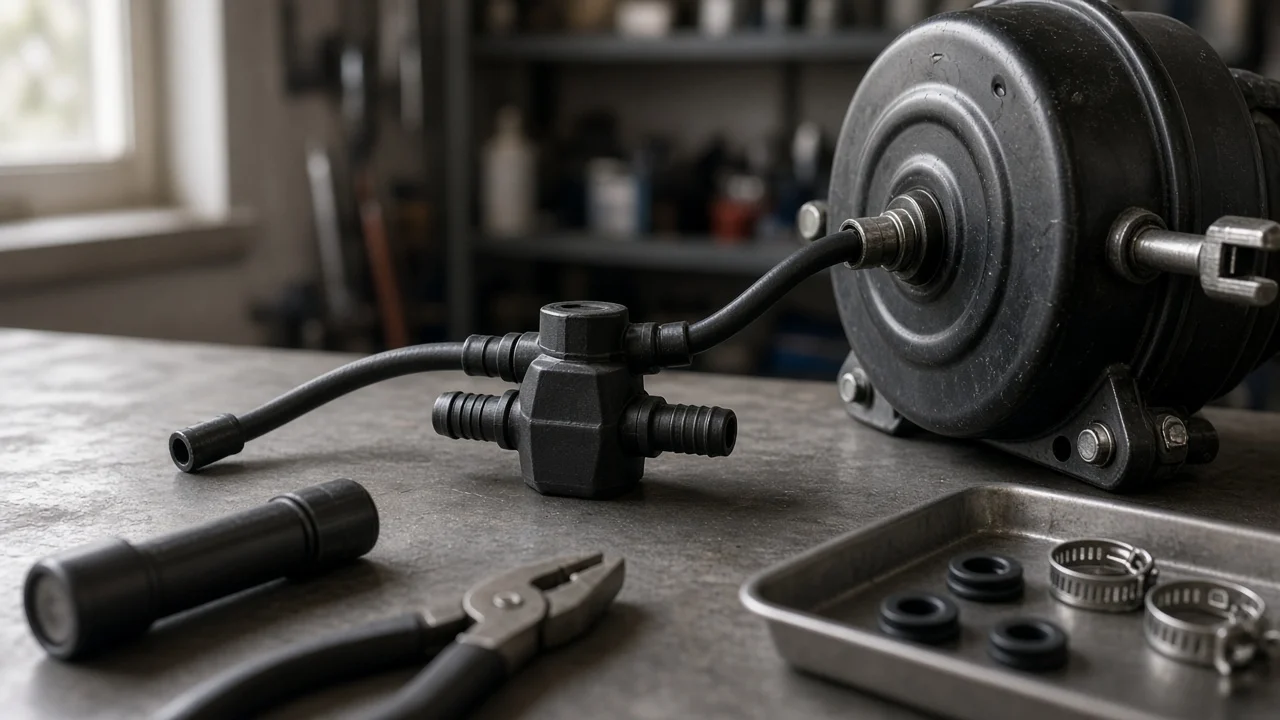
On a BMW E30, the brake booster check valve is a small one-way valve in the vacuum line that feeds the brake booster. When it fails, the pedal can feel hard, assist can fade soon after the engine stops, and idle quality can suffer. This guide explains how to confirm the valve is the culprit, how to match a replacement to your car, and what the part can and cannot fix.
Define the job the product must do
The valve lets air flow out of the booster toward the engine's vacuum source and blocks flow in the other direction. This keeps a reserve of vacuum in the booster when vacuum drops, for example under heavy throttle or right after shutdown. It also shields the booster from pressure pulses in the intake. On gasoline E30 models, the vacuum comes from the intake manifold. Diesel versions get it from an engine-driven vacuum pump instead, so the parts in that line differ.
Before you buy, confirm that the symptoms point to the valve. Start with the engine off. Pump the pedal several times to use up the stored vacuum, hold light pressure, then start the engine. The pedal should sink slightly as assist arrives. Next, run the engine for a minute, switch it off, wait, and press the pedal. A healthy system usually gives at least one or two assisted applications. If assist disappears right away, the valve, hose or booster may be leaking. You can bench-test the removed valve with a hand vacuum pump. Vacuum applied to the engine side should draw air through, and vacuum applied to the booster side should hold steady. Three symptoms suggest a torn booster diaphragm instead, which a new valve will not cure: a hard pedal with the engine running, a hiss near the pedal, or a rough idle that changes when you press the brake.
Check compatibility
E30 production spanned many years and engines, from four-cylinder 318i variants through the six-cylinder 325 range, the M3 and the diesels, and the vacuum plumbing was not identical across them. Depending on the version, the valve may sit inline in the hose or work together with a fitting and grommet at the booster shell. Inspect your own car rather than assuming a layout. Before you search, note the exact model, engine, build date and market, and be wary of any listing that only says it fits the E30.
Compare the interfaces physically. Check the inside diameter of the hose at each end, the length and routing of the line, whether you need an elbow or a straight body, and which end faces the booster. Most valves carry an arrow or a marked side, so follow the manufacturer's marking. A cross-reference from the part number on the old valve, or from the factory parts catalog, is stronger evidence of vehicle fitment than a seller's vehicle selector. If the hose is hard, cracked or oil-soaked, replace it and its clamps at the same time.
Features that affect the choice
Valves differ in only a few ways that matter. Genuine and original-supplier parts are built to the factory specification and usually match the original hose layout. Quality aftermarket valves can work well when the listing gives a part number cross-reference, the body shape and the port sizes. Universal inline valves also exist, but they leave you to match diameters, direction and mounting. Any adapter they need adds joints that can leak.
Housing material matters because the valve lives in a warm engine bay and is exposed to oil vapor from the intake. Aged plastic turns brittle and can crack when you pull the hose off. On a new valve, look for intact barbs with no casting burrs that could cut the hose. Labels such as heavy duty, performance or upgraded mean little on their own. Look instead for stated fitment, dimensions, a clear flow-direction marking and a return policy that covers incorrect fitment.
Limitations and ownership costs
A check valve only restores the vacuum seal between the engine and the booster. It does not fix: • a leaking booster diaphragm; • a failing master cylinder; • old or contaminated brake fluid; • a sticking caliper; • brake pads and brake rotors that have reached their wear limits; If the pedal sinks toward the floor, the car pulls to one side, or the friction material is glazed or thin, the problem is in the hydraulic or friction system. It needs separate diagnosis using the vehicle's service information.
Installation is usually simple. Release the clamps, note the old valve's orientation, fit the new valve and hose, secure the clamps, and recheck assist with the engine running. Ownership cost is mostly the valve, a length of suitable vacuum hose, clamps and possibly the booster grommet, all of which age together. Inspect the line whenever you do other brake work. If the pedal stays hard or assist is inconsistent after the repair, stop driving the car and have a qualified technician inspect the braking system. Do the same if you are unsure the system is sound.
Build a practical shortlist
Narrow the options with a short checklist rather than brand rankings. Confirm that the listing names your E30 model, engine and production range, ideally with a part number that matches your old valve or the parts catalog. Check that the body shape, port diameters and direction marking match the part you removed. Then decide whether to buy the valve alone or with new hose, clamps and grommet, based on the condition of those parts.
Next, compare the practical details: the material and finish of the barbs, whether the instructions show the correct orientation, and whether the seller accepts returns if the fitment turns out wrong. Keep the old valve until the new one is installed and tested. After fitting, repeat the engine-off reserve test and the start-up pedal test. If both pass and the idle is steady, the valve has done its job. If either fails, continue diagnosing the booster and hoses before driving the car.