BMW Brake Pad Replacement Cost: Parts and Labor
What BMW brake pad replacement usually costs
There is no single BMW brake pad replacement price. The bill is the sum of pads, related wear parts, and labor, and it changes with the model, axle (front or rear), pad grade, shop type, and whether rotors or wear sensors are replaced at the same time. A pad-only job on one axle is the lower bound; a four-wheel job with rotors, sensors, and dealer labor is the upper bound. Published national averages and shop quotes were not supplied for this article, so treat any figure you receive as a quote for a specific vehicle, not a universal BMW rate.
What you are paying for
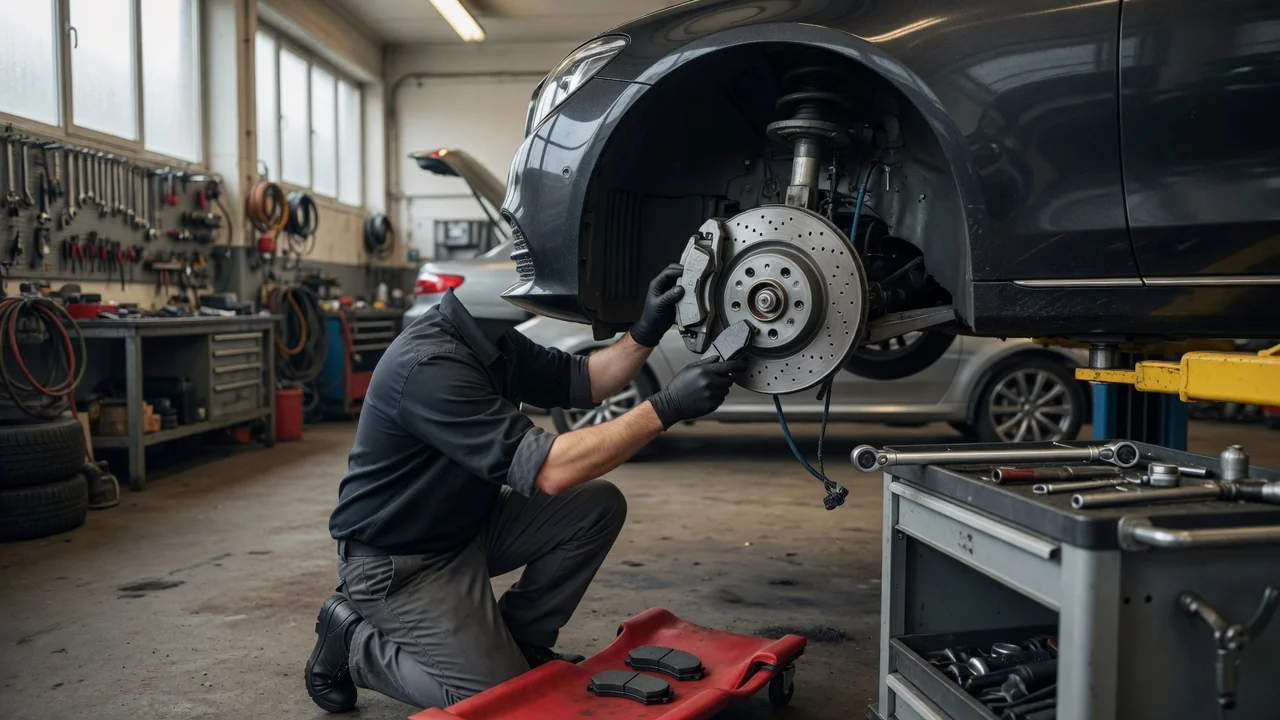
A complete pad replacement is more than four friction pads. BMW braking systems commonly include a pad wear sensor that must be replaced when it has been worn through or when the warning has already triggered. Many jobs also include rotor resurfacing or replacement if the discs are below minimum thickness, scored, or warped. Shops typically add brake cleaner, hardware (clips, shims, or anti-rattle springs where the design uses them), and a small amount of lubricant for caliper slides. Labor covers removing the wheels, unbolting the caliper, seating the new pads, compressing the pistons, resetting the wear warning in the vehicle’s computer when required, and a road test or bedding procedure.
Parts that commonly appear on the invoice: friction pads for one axle or both; pad wear sensor(s); rotors if they fail inspection; caliper hardware and slide-pin lubricant; brake fluid if a bleed is needed after piston compression or if the fluid is due. Labor that commonly appears: wheel removal, caliper service, piston reset (and electronic parking-brake retraction on many later BMWs), sensor reset, and inspection of hoses, calipers, and remaining rotor thickness.
Conditions that change the total
Model and generation matter. A compact 3 Series or 1 Series generally uses smaller, less expensive pads and rotors than an X5, X7, 7 Series, or M car. High-performance and M models often specify unique pad compounds, larger rotors, and sometimes different caliper hardware, which raises both parts and labor. Front pads usually cost more and wear faster than rears because they do more of the stopping work. Replacing pads on both axles in one visit costs more in parts but can save a second labor visit if both ends are near the wear limit.
Pad choice is the next large swing. Original-equipment (OE) or OE-equivalent pads are typically priced above economy aftermarket sets and are specified to match the car’s ABS, stability control, and noise targets. Ceramic and low-dust compounds can cost more than basic semi-metallic pads. Labor is similar across pad grades for the same axle; the parts line is what changes. Independent shops often charge less labor than a BMW dealer and may offer a wider parts mix. Dealers more often fit genuine BMW pads and sensors and follow factory procedures, including electronic parking-brake service on models that need a scan tool to retract the rear calipers.
Rotors are the condition that most often turns a modest pad job into a large bill. If the discs are above the stamped minimum thickness and within runout limits, pads alone may be enough. If they are not, shops usually replace rotors in pairs on that axle. Two-piece or drilled/slotted rotors on performance models cost more than solid one-piece discs. A seized caliper, damaged slide pins, or a broken wear-sensor harness adds parts and time that a routine pad swap does not include. Regional labor rates also differ; the same book hours cost more in a high-cost city than in a lower-cost market. Exact hourly rates and book times for each BMW were not supplied here.
Parts versus labor
On a straightforward pad-only axle, labor is often a large share of the invoice because the pads themselves are a relatively small kit and the work still requires lift time, caliper service, and a sensor or parking-brake reset. When rotors are added, the parts line can overtake labor. Wear sensors are inexpensive compared with pads and rotors but are easy to overlook when comparing quotes. Ask each shop to itemize pads, sensors, rotors (if any), miscellaneous hardware, and labor hours so you can compare like with like. A quote that looks cheaper may omit rotors, sensors, or a four-wheel inspection.
How to get a quote that matches your car
Give the shop the year, model, chassis code if you have it, engine, and whether the car is an M or other performance variant. State which axle is worn and whether the pad-wear warning is on. Ask whether the quote is pads only or pads and rotors, whether the wear sensor is included, and whether an electronic parking-brake service tool is required. Confirm whether the pads are genuine BMW, OE-equivalent, or a named aftermarket brand, and whether the price is per axle or for the whole car. If you already have a parts list from a dealer or catalog, match pad and rotor part numbers to the exact model year and brake package; BMW often used more than one brake size on the same model name.
Have the rotors measured against the minimum thickness stamped on the hat or edge of the disc before you approve a rotor replacement. Replacing pads on a disc that is under specification is unsafe and shortens pad life. If only one axle is due, still ask for a measurement on the other axle so you can decide whether to do both while the car is on the lift. After the job, the wear warning should be cleared, the pedal should feel firm, and the car should not pull or vibrate under moderate braking once the pads have been bedded in according to the pad maker’s instructions.
Choosing a next step
If the wear indicator is on or the pads are at or near the wear mark, plan replacement on that axle rather than waiting for metal-on-metal contact, which damages rotors and raises the bill. Collect two or three itemized quotes—typically a dealer and at least one independent shop that works on BMWs—and compare parts brand, rotor policy, sensor inclusion, and warranty on parts and labor. If you prefer genuine BMW pads and a factory procedure, the dealer quote is the relevant benchmark even when it is higher. If you want a lower parts cost with equivalent function, an independent shop using a documented OE-equivalent pad is a common alternative. Do not use a single unverified dollar range as your budget; use a written quote for your VIN or for the exact year, model, and brake package.
Gaps: this article does not include verified parts prices, labor hours, dealer versus independent averages, or model-by-model totals, because those figures were not supplied as source evidence. Local quotes remain the only reliable number for a purchase decision.