BMW Brake Pad Replacement Cost
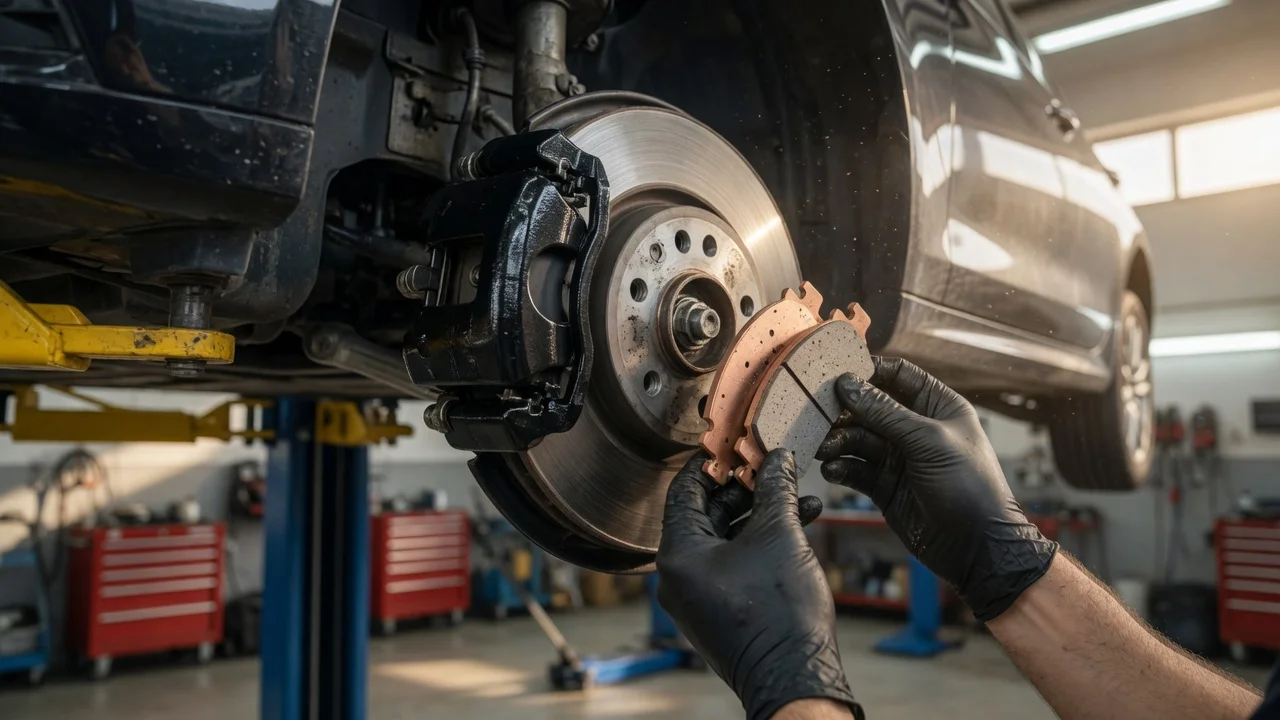
BMW brake pad replacement is billed as parts plus labor, and the total moves with the model, model year, axle, pad type, and whether rotors, wear sensors, or hardware are replaced at the same time. A pads-only job on one axle is the lower end of the range; a four-wheel job that also machines or replaces rotors, sensors, and related hardware is the higher end. Exact current prices are not included here, so treat any shop figure as a vehicle-specific quote rather than a published rate.
What the bill is actually paying for
A brake pad is the friction material that presses against the rotor (the metal disc that turns with the wheel) to slow the car. Replacement means removing the caliper hardware, swapping the worn pads, and putting the system back together so the pads sit square, the pistons retract and extend freely, and the warning system still works. On many BMWs a pad wear sensor is part of that job: it is a small probe that contacts the pad and triggers a dash warning when the material is thin. Shops often replace the sensor with the pads because the old one is already worn or has been disturbed.
Labor is charged for inspection, pad swap, sensor work if needed, caliper service, and a road check. Time goes up when rusted hardware, seized slide pins, an electronic parking brake that must be put in service mode, or a rotor that is too thin or too scored to reuse is found after the wheels are off. Those findings are the usual reason a pads-only estimate becomes a larger invoice.
Conditions that change the price
Axle: front pads usually wear faster than rear pads because they do more of the stopping. A front-only job costs less than replacing both axles. Quote each axle separately if wear is uneven. Pad specification: BMW applications are not interchangeable across the lineup. A compact sedan, an X-series SUV, and an M model can use different pad shapes, compounds, and sensor layouts. Match the part to the VIN, model year, market, trim, and brake package, not to a generic “BMW pad.”; Rotor condition: if the rotor is below its minimum thickness, cracked, heavily grooved, or warped enough to cause pedal pulse, it is replaced or, where the shop still offers it, machined. Rotor work is often the largest add-on. Wear sensors and hardware: many cars use one or two sensors per axle. Anti-rattle clips, bolts, and slide-pin boots are inexpensive as parts but add labor if they are seized or missing. Electronic parking brake: some later BMWs hold the rear calipers electrically. The shop must put the system in service mode with a scan tool before the rear pads come off. That step adds diagnostic time that a conventional cable parking brake does not. Shop type: a BMW dealer typically uses original-equipment pads and posts a higher labor rate. An independent shop that specializes in European cars may use OEM, OEM-equivalent, or aftermarket pads at a lower combined rate. Quality still depends on the pad brand and whether the rotor and sensor are done correctly. Where you live: labor rates and parts availability vary by region. A quote from one market does not transfer to another.
Pads only versus pads and rotors
A pads-only replacement is appropriate when the rotor is still above its stamped minimum thickness, the braking surface is reasonably even, and there is no vibration under braking. Many BMW rotors are designed as a wear item with the pads. If the rotor is already near the limit, installing new pads on a thin or uneven disc can bring noise, a long pedal, or a comeback for rotor replacement soon after. Ask the shop to measure rotor thickness and to write the reading on the estimate. If they recommend replacement, ask whether they are replacing the rotor because it is below spec, because it is scored, or as a bundled “always replace both” policy. The first two are condition-based; the third is a package choice you can accept or decline after seeing the measurements.
How model, year, and trim affect the parts
BMW uses several brake families even inside one model name. A 3 Series with the base brake package does not necessarily take the same pad as a 3 Series with a sport or M Sport brake, and an M car uses a different setup again. Wheel size, performance package, and whether the car has an electronic parking brake all change the pad, sensor, and caliper combination. Market also matters: a car built for one region can differ from the same-looking model sold elsewhere. The reliable way to order parts is the VIN plus the axle (front or rear). If two trims of the same year are listed with different pad part numbers, treat that as an unresolved difference until the VIN confirms which one you have.
What a useful quote should list
Ask for a written estimate that separates pad set, wear sensor(s), rotor(s) if recommended, hardware, shop supplies, and labor hours by axle. Have the shop note whether the pads are original-equipment, OEM-equivalent, or aftermarket, and whether the rotors are measured or assumed. A quote that only says “brakes” without those lines is hard to compare. If you are deciding between dealer and independent, put the same VIN and the same scope (pads only, or pads and rotors, one axle or both) in front of both shops so the difference is labor rate and parts brand rather than a different job.
Confirm the axle or axles included. Confirm pad brand and whether it matches the car’s brake package. Confirm sensor count and whether sensors are included. Ask for rotor thickness versus the minimum stamped on the disc. Ask whether an electronic parking brake service procedure is required. Ask whether a scan tool will clear pad-wear or brake warnings after the job. Ask whether a bedding or break-in drive is part of the handover.
When replacement is due
Replace pads when remaining friction material is at or near the wear limit, when the pad-wear light or message is on, or when inspection shows cracking, glazing, or uneven wear that the caliper cannot correct. A squeal from a wear indicator is a warning, not a mileage schedule. Driving style, vehicle weight, wheel and tire size, and how much highway versus city use the car sees all change how long a set lasts, so interval claims without those conditions are not a substitute for measuring the pads. If the warning is on, plan the work soon; running a pad to the backing plate can score the rotor and turn a pad job into a pad-and-rotor job.
Choosing a next step
If the wear light is on or a shop has already measured thin pads, get two VIN-based quotes with the same scope and compare pad brand, rotor plan, and labor. If you only have a dash warning and no inspection yet, start with a visual check of pad thickness and rotor condition, including the inner face of the pad, which often wears first. If you are budgeting before a service visit, plan for pads, sensors, and the chance of rotors on the axle that is worn, and treat four-wheel replacement as a separate decision after both axles are measured. Do not mix pad compounds left to right on the same axle, and do not reuse a damaged sensor. After the work, a firm pedal, a quiet stop, and a clear warning light are the checks that the job matches the estimate.