BMW Automatic Transmission Fluid Change: Requirements and Procedure
Before you start
A BMW automatic transmission fluid change is not the same on every model. The required fluid type, fill volume, pan or filter design, and fill procedure depend on the transmission fitted to the car. Many modern BMWs use ZF automatic transmissions, but other units also appear across the range. Before ordering parts or beginning work, verify the exact transmission model from the vehicle data or the identification tag on the gearbox. The repair instructions and correct fluid specification must match that transmission.
Plan for a physically involved job that runs on the vehicle itself, not through software. The car must be raised safely and level, with the transmission at a specified temperature range for the final level check. You need a drain or fill plug tool, a suitable pump or filler for the new fluid, a replacement drain or fill plug seal where applicable, and a drain pan large enough for the old fluid. For transmissions with a replaceable filter or pan-integrated filter, obtain the correct filter and pan gasket or sealing kit before starting.
Confirm whether your BMW has a transmission fluid dipstick or only a fill plug. Many automatic transmissions are checked from below through the fill opening, while some older units may have a dipstick tube. If the procedure requires monitoring transmission fluid temperature, use a diagnostic tool capable of reading the transmission oil temperature. Do not guess the temperature before the final fill level check, because the level target changes with heat expansion.
Step-by-step instructions
Use the repair information for the specific transmission rather than transferring settings from another BMW model. The following order applies to the common fill-plug design where the transmission is filled from below.
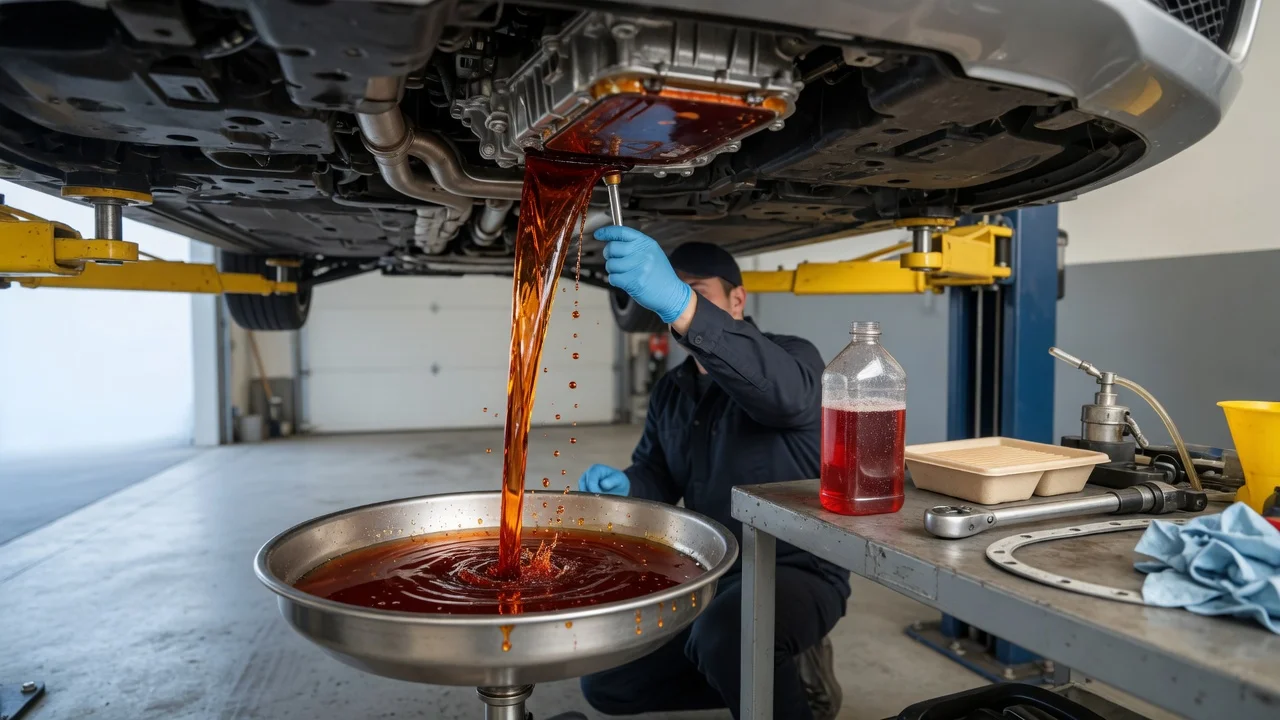
Prepare the correct quantity and type of automatic transmission fluid. BMW refers to approved fluids for the relevant transmission rather than one universal automatic fluid, so different gearboxes may use different products. Warm the transmission briefly according to the repair instructions, then raise the car securely on a level surface and remove the underbody shielding needed for access. Position a drain pan and remove the drain plug if fitted. Some designs drain only when the plastic fill tube or level tube is removed from the oil pan. Allow the old fluid to drain completely. Remove the oil pan and replace the pan gasket if the service includes the pan. On transmissions with an integrated filter in the pan, replace the oil pan itself. On designs with a separate replaceable filter, remove and replace the filter using the specified torque values. Refit the oil pan and drain plug with new sealing parts where required. Hand-tighten first, then use a torque wrench to the published tightening specification. Fill the transmission with fresh fluid through the fill opening using a suitable pump. Add the initial quantity listed for the transmission, but do not treat that amount as the final level. Start the engine and move the selector through the positions with the brake applied, or follow the exact selector movement and temperature procedure for that gearbox. With the engine running and the transmission at the required temperature, open the fill or level plug. Add fluid until it begins to run out of the opening, then refit the plug when the level is correct.
The exact procedure can differ. Some ZF automatic transmissions use a fill from below, while other BMW gearboxes may be filled from above. A version difference in the transmission software does not replace the physical level-setting step. Always keep the old fluid contained and record the drained volume as a rough reference, but rely on the level-setting procedure rather than the drained amount.
Check the output
After the fill plug is refitted, inspect the pan and plug area for leaks with the engine running. Wipe the surfaces clean and check again after a short period. The transmission should engage drive and reverse without noisy or delayed shifts, but a fluid change is not a repair for an existing fault.
The expected result is a transmission at the correct fluid level with no visible leakage from the pan, drain plug, fill plug, or cooler lines that were disturbed. If a diagnostic tool was used, confirm that the transmission oil temperature reached the specified range during the final level check. There is no universal volume that proves success, because residual fluid, cooler contents, and pan design affect how much new fluid is taken.
Fluid appearance has limits as a diagnostic signal. Dark fluid can indicate age or heat exposure, but color alone does not confirm internal damage. If the drained fluid contains visible metal particles or a burnt smell, record that condition and consider having the transmission inspected. A normal drain and refill does not remove all fluid held in the torque converter and cooler, so replacement is partial unless the service specifically includes flushing equipment and a procedure approved for that transmission.
Common problems and next steps
Fluid level set at the wrong temperature: this produces an underfilled or overfilled transmission. Repeat the final level check with the engine running and the transmission oil temperature within the specified range. Using the wrong fluid or mixing products: check the approved fluid for the exact transmission model. Do not assume that another BMW automatic fluid is interchangeable. Leak from the pan or drain plug after reassembly: remove the sealing part, check that the old gasket did not remain stuck to the mating surface, and refit with the correct torque. Unable to fill smoothly: use a clean pump with a hose that fits the fill opening. Keep the new fluid container and filling equipment free of dirt because automatic transmissions are sensitive to contamination. Uncertain transmission identification: confirm the unit from the vehicle order data, the transmission tag, or the repair information before ordering the filter, pan, or fluid.
If the transmission was already slipping, banging into gear, or showing a fault before the fluid change, a fill service is unlikely to correct that behavior. After completing the fluid change, drive the car gently and observe that the transmission reaches operating temperature without leaks. If a warning light, diagnostic trouble code, or abnormal shift remains, seek a qualified BMW or transmission specialist rather than continuing to add fluid or repeating the service.