BlueDevil Coolant Stop Leak: Suitability and Use
Direct answer
BlueDevil Coolant Stop Leak is an aftermarket liquid sealer intended to stop or reduce small coolant leaks from the cooling system without draining the coolant or disassembling the engine. It is marketed for use in radiators, heater cores, head gaskets, freeze plugs, and other cooling system components, but its practical suitability depends on the type, size, and location of the leak. The product cannot repair every coolant leak, and vehicle applicability can vary by engine, cooling system design, and the specific failure. Because product formulations and instructions may change, confirm the current bottle instructions and compatibility before adding it to your vehicle.
What the product is
BlueDevil Coolant Stop Leak is a chemical sealing additive rather than a replacement part. It is added to the cooling system, where it is intended to flow with the coolant and form a seal at the site of a small leak. Some BlueDevil coolant leak products are described as permanent or long-term sealers, while other stop-leak products are temporary fixes. The supplied material does not include a verified current ingredient list or engineering test data, so the exact sealing mechanism should be treated as manufacturer-described rather than independently confirmed here.
Common uses
Vehicle owners often consider BlueDevil Coolant Stop Leak for these situations:
A small radiator leak that leaves drips or a low coolant level without a visible major failure. A suspected minor head gasket seepage that is allowing coolant loss or combustion gases into the cooling system. A leaking heater core that produces a coolant smell or light film inside the cabin. A small leak at a hose connection, freeze plug, or other cooling system joint where replacement is difficult or immediate repair is not possible.
When it may be suitable
The product is most likely to be a practical short- to medium-term option when the leak is small, the cooling system is otherwise in serviceable condition, and the source is difficult to access or repair immediately. It may also be used as a stopgap while arranging a proper repair. The supplied information does not provide a verified leak-size limit, so a slow drip or minor seepage is a more realistic candidate than a visible stream of coolant or a failed radiator tank.
Limitations and cautions
BlueDevil Coolant Stop Leak is not a guaranteed repair for all coolant loss. It is generally not the appropriate fix for a broken radiator or hose, a failed water pump seal that is actively leaking, a cracked engine block, a severely failed head gasket, or coolant mixed with engine oil. Adding stop leak can also introduce solid or reactive material into the cooling system, which may affect heater cores, small coolant passages, thermostats, and cooling system sensors in some vehicles. The supplied material does not include confirmed compatibility data for every engine or cooling system configuration.
A coolant leak should be diagnosed before treatment. A low coolant level can also result from an external leak, an internal engine leak, a faulty radiator cap, or normal evaporation in some systems. If the coolant is contaminated, the engine is overheating, or the leak is large, stop leak is not a replacement for mechanical diagnosis and repair.
Typical use procedure
The exact procedure varies by product version, so follow the instructions on the bottle being used. A common sequence is:
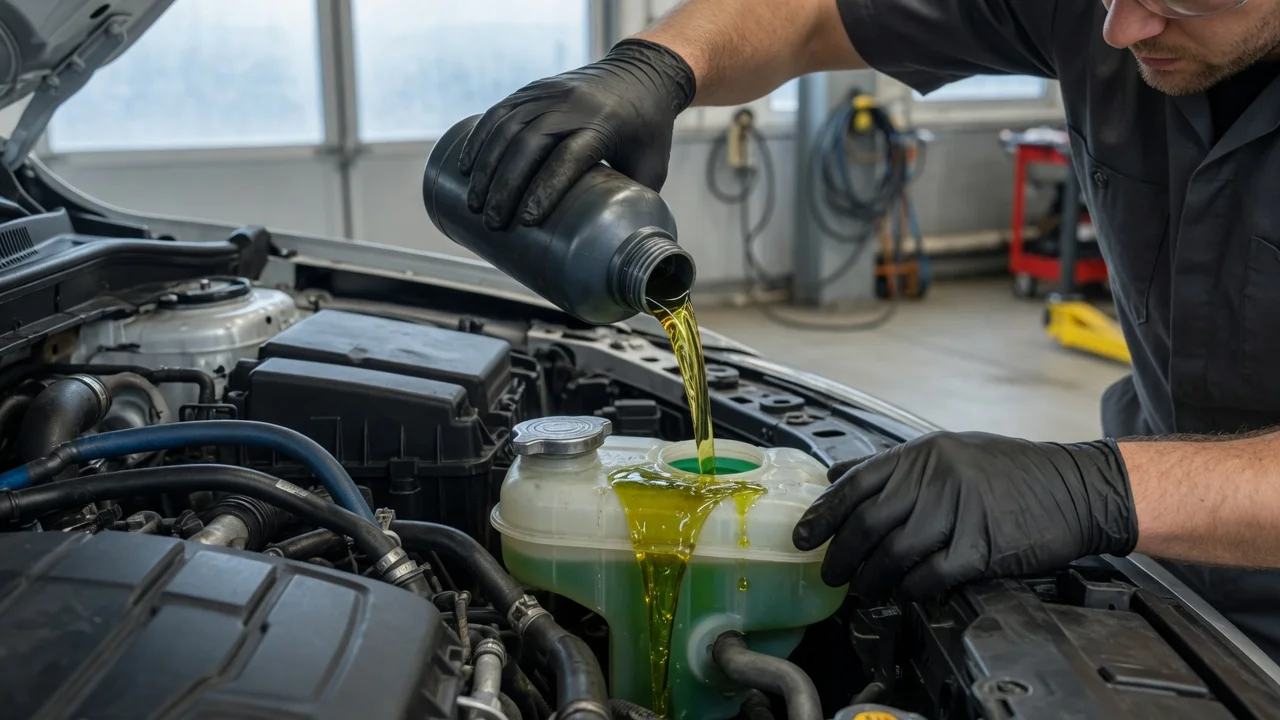
Allow the engine to cool and check the coolant level and condition. Make sure the radiator or coolant reservoir is low enough to accept the product without overflowing. Shake the product if the bottle directs this. Add the specified amount to the radiator or coolant reservoir as instructed. Top off with the correct coolant for the vehicle if required. Run the engine for the time or temperature specified on the label, usually with the heater on to circulate coolant through the heater core. Recheck the coolant level after the system cools and monitor for continued leakage.
What to check before use
Confirm the product version is intended for the type of coolant in the vehicle. Check the bottle instructions for any restrictions on diesel engines, aluminum radiators, heater cores, or specific cooling system designs. Verify that the cooling system does not already contain incompatible stop-leak or sealant products. Find and assess the actual leak source rather than treating an undiagnosed low coolant level. Confirm the engine is not overheating and the oil is not visibly contaminated with coolant.
Information gaps
The supplied coverage does not include a current verified ingredient list, maximum leak size, exact compatibility chart, or vehicle-specific fitment data for BlueDevil Coolant Stop Leak. Material uncertainty remains about long-term durability, effects on modern cooling system components, and compatibility with all coolant types. Vehicle owners should treat the manufacturer's current label as the controlling source for compatibility, dosage, and safety.
Practical bottom line
BlueDevil Coolant Stop Leak can be a useful temporary or convenience repair for a small, identified coolant leak in an otherwise healthy cooling system, but it is not a universal fix. Diagnose the leak first, follow the current bottle instructions, and monitor the cooling system afterward. If the leak continues, the coolant becomes contaminated, or the engine overheats, stop using the additive approach and have the cooling system inspected and repaired mechanically.