Bilstein Suspension Lift Kits for Pickup Trucks: Selection and Fitment
The Short Answer
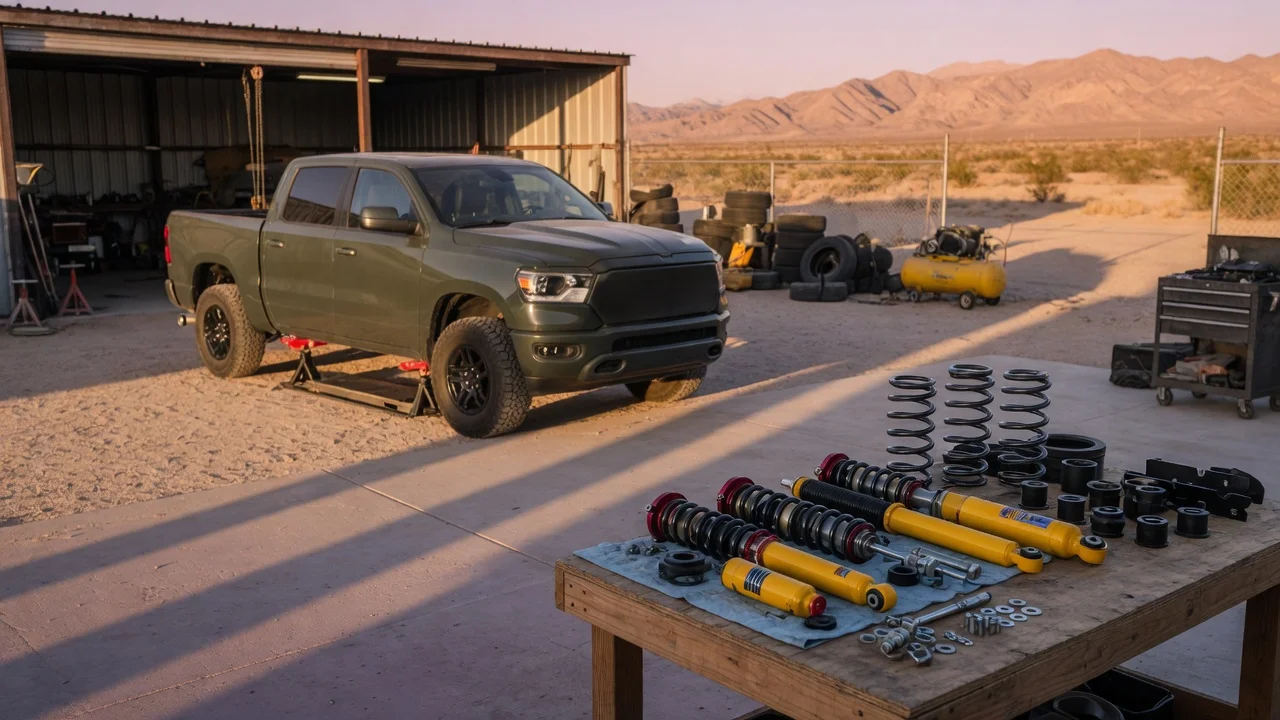
Bilstein suspension lift kits primarily raise a pickup truck through upgraded dampers and, depending on the kit, supporting coil or leaf-spring hardware. The material condition that changes the answer is fitment: not every Bilstein lift option is available for every truck, and the same product can behave differently across cab, bed, engine, trim, and model-year combinations. Treat the exact vehicle configuration as the first selection filter before comparing ride quality, height, and installation needs.
What a Bilstein Lift Kit Actually Changes
A suspension lift raises the frame and body relative to the axles by changing suspension components. On many independent-front-suspension pickups, front lift is achieved at the coilover or strut assembly, where ride height and damping are packaged together. Rear lift is usually handled separately with taller springs, blocks, or add-a-leaf components, while Bilstein dampers control suspension movement.
Damping is the main change a Bilstein damper brings to the system. The damper converts suspension motion into heat, reducing repeated bouncing after a bump. A lift adds height, but the damper tuning determines how controlled the truck feels over broken pavement, dips, and loaded highway driving.
Fitment Comes Before Anything Else
A lift kit is not a universal part. Compatibility should be checked against the exact model year, market, cab style, bed length, drivetrain, engine, and factory suspension option. Important differences include two-wheel drive versus four-wheel drive, air suspension versus conventional springs, and factory off-road packages that may already change spring rates or damper length.
The supplied data does not include a complete application chart, so specific fitment must be confirmed for the intended vehicle before purchase. When a catalog listing conflicts with another source, treat that as an unresolved difference and verify it against the vehicle's actual suspension configuration rather than assuming the more common fitment applies.
Choosing the Right Height and Component Combination
Decide first what the truck needs to clear, carry, or correct. A mild front-leveling setup may be enough if the goal is removing forward rake and fitting slightly larger tires. A taller full lift changes approach, breakover, and departure angles more substantially, but also creates larger demands on steering, driveshaft, brake-line, and suspension geometry.
Items to identify before selecting a kit: • Model year, cab, bed, drivetrain, and engine; • Factory suspension type, including air ride if applicable; • Intended tire diameter and wheel offset; • Whether the truck carries a heavy bumper, winch, or constant load; • Local inspection or modification restrictions
Ownership Trade-offs
A taller suspension changes more than appearance. Steering alignment must be reset after installation, and added height can affect front-end geometry. Larger tires increase rotating mass and may require speedometer correction, gearing changes, or trimming. Driveline angles, brake-line routing, and suspension travel should also be evaluated as part of the total modification, not treated as separate afterthoughts.
Ride quality depends heavily on matching the spring and damper package to the vehicle's use. A damper tuned for a loaded truck can feel firm when empty, while a damper tuned for comfort may be less controlled during heavy towing. These behaviors are trade-offs rather than automatic improvements.
Installation and Post-Install Checks
Installation complexity varies by kit and vehicle. A preassembled coilover may reduce labor compared with reusing factory springs, but compressed springs still require appropriate tooling and careful handling. Four-wheel-drive and air-suspension vehicles can add steps for axle shafts, sensors, brackets, and calibration.
After installation, confirm: • Torque on all suspension and steering fasteners; • Brake-line and sensor routing at full suspension travel; • Correct alignment settings; • Headlight aim after ride-height change; • No contact between tires and body or suspension components
Bottom Line
Choose a Bilstein suspension lift kit by matching the exact truck configuration first, then select the height and component combination that supports the intended tires, load, and driving conditions. Specific availability, pricing, and complete fitment data are not provided here, so verify the vehicle application before committing to a kit.