Bike tire bead types: wire vs folding (aramid)
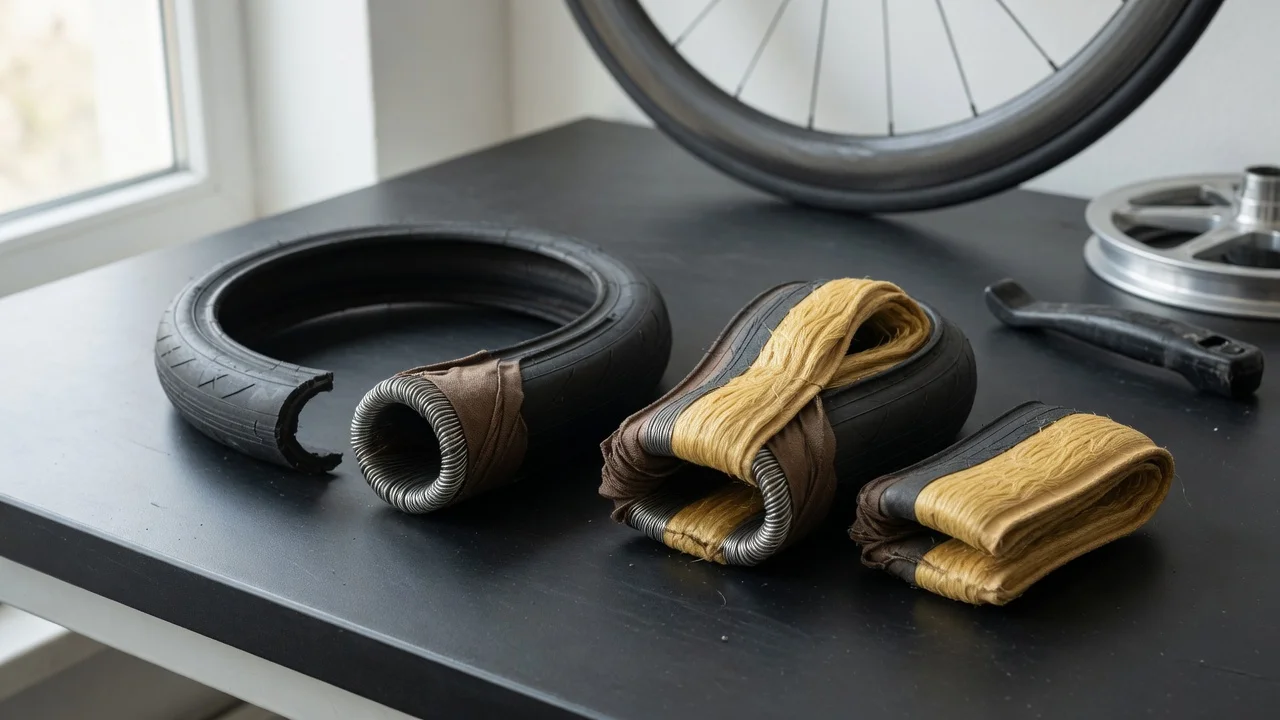
What is a bike tire bead?
The bead is the stiff inner edge on each side of a bicycle tire. It seats into a channel called the bead seat inside the rim. Air pressure pushes the bead outward against the rim hook, creating the mechanical lock that keeps the tire in place under cornering, braking and acceleration loads. The bead also carries the tensile force that resists the tire blowing off the rim at pressure.
The immediate answer: wire versus folding beads
Bike tire beads are generally made in two forms. A wire bead uses a steel cable or bundle inside the bead edge. A folding bead uses aramid fiber, commonly known by the brand name Kevlar, instead of steel. The functional hold on the rim is similar, but wire beads are heavier, cheaper and hold a coiled shape, while folding beads are lighter, easier to pack and more flexible.
What is a wire bead bike tire?
A wire bead tire has a continuous steel wire loop molded into each edge. Steel is inexpensive and stable, so these tires usually cost less and hold their shape well. The main trade-off is weight: steel beads add rotational mass compared with aramid. Wire bead tires are also typically shipped and stored coiled in a loop because the steel does not fold cleanly without risking permanent kinks.
What is a folding bead bike tire?
A folding bead tire replaces the steel loop with flexible aramid fiber. This reduces weight at the rim edge and allows the tire to be folded or rolled into a compact shape for storage, travel or retail packaging. Folding bead tires cost more because aramid is a more expensive material and production is less basic. The flexible bead can sometimes feel slightly less rigid during installation, but once inflated it seats in the same way as a wire bead.
Clincher versus wire bead: are they different things?
Clincher is a rim and tire system, not a bead material. A clincher tire has two beads that hook under the rim edge, and it uses a separate inner tube. Both wire bead and folding bead tires are usually clincher tires. The distinction is the bead material: steel for wire, aramid for folding. The terms overlap because the most basic clincher tires have wire beads, but a folding bead tire is still a clincher.
Wire bead versus folding bead: practical comparison
Factor|Wire bead|Folding bead; Bead material|Steel cable|Aramid fiber such as Kevlar; Weight|Heavier|Lighter; Price|Usually lower|Usually higher; Packing|Stays looped; bulky|Folds small; good for spares; Installation|Firm shape|More pliable; Rim fit|Same clincher profile|Same clincher profile; Best for|Budget use, training, commuting|Performance, touring spares, travel
Choosing between wire and folding beads
If cost and durability under basic use are the priority, a wire bead tire is the common practical choice. If lower rotating weight or easy packing matters more, a folding aramid bead is worth the extra cost. Both types seat on the same clincher rims and can carry similar pressures when the tire size and rim width are compatible. Check the sidewall pressure range and bead seat diameter, such as 700c or 29 inch, before buying.
Limits of the comparison
The difference between the two bead types is mainly in material, weight, price and storage behavior. It is not a difference in fundamental retention strength or rim compatibility for a correctly matched tire. Some tires described as folding may still use a small steel reinforcement elsewhere, but the bead itself is the defining element. Tubeless bicycle tires also use a bead, but that system and its sealing requirements are outside this comparison.