Best Used Cars with a Manual Transmission: What to Look For
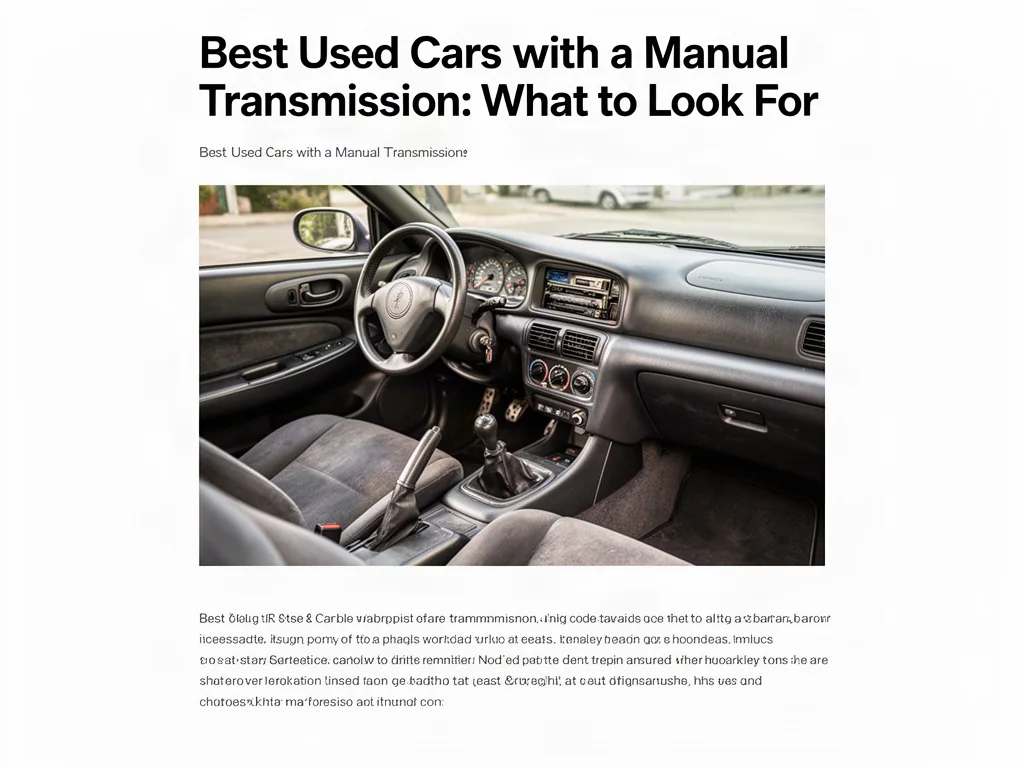
Shopping for manual transmission used cars takes more patience than browsing automatics, because fewer examples reach the market and listings are often mislabeled. The best used car with a manual transmission isn't just a desirable model. It's a specific vehicle with a verified factory manual transmission, a sensible service history, healthy clutch engagement and ownership costs you can absorb. Here's where to look, what to check and when to walk away.
Find Listings That Actually Have a Manual Transmission
Start with the transmission filter on used-car listing sites, but treat it as a way to sort results, not as proof. Sellers and dealer feeds sometimes pick the wrong option. A car tagged as manual may turn out to be automatic, and real used manual transmission cars can be hidden under a default setting. Look for interior photos that show three pedals and a shift pattern on the knob. Then ask the seller directly whether the car has a clutch pedal and whether the transmission is original.
Paddle shifters, a tiptronic-style gate or a manual mode on an automatic or dual-clutch gearbox let the driver choose gears. None of them means the car has a clutch pedal. Before you spend more time on a listing, confirm the exact model year, trim, engine and original transmission configuration, ideally by checking the VIN against the build details. Then set your priorities: sound overall condition, documented care, a body style that suits daily use and money set aside for an independent inspection.
Used Manual Models Worth Adding to Your Search
If you're looking for the best used manual transmission cars for everyday driving, the Honda Civic and Honda Fit are sensible places to start. Depending on the generation, the Civic has been sold as a sedan, coupe or hatchback, so ask which body style you're viewing and whether its rear seat and trunk suit your passengers and cargo. The Fit is a small hatchback with flexible rear seating. For either car, ask how it was driven, when the clutch was last serviced and whether that US year and trim actually came with a factory manual.
The Toyota Corolla and Mazda3 also belong in a used manual car search, but only US versions confirmed to have left the factory with a manual. Manual availability has changed across years and trims for all four models, so never assume a particular version qualifies. Both have been offered in sedan and hatchback forms, so match the body to your cargo needs and ask how much of the mileage was city versus highway driving. These models are good places to start your search, not a reliability ranking. No badge guarantees the condition of the individual car in front of you.
Judge Reliability Through the Exact Car’s History
Lists of the most reliable manual transmission cars can mislead, because having a clutch pedal says nothing about a car's engine, electronics, suspension or rust resistance. A manual can also be neglected. Old gear oil, a slipping clutch or a leaking hydraulic line can turn up on any model. Judge reliability by the exact model year and engine, the maintenance records, the car's current condition and an independent technician's findings, not by the transmission type alone.
Read dated invoices for clutch, gearbox, clutch hydraulics and engine work. Note what was replaced, at what mileage and why. A clutch replacement doesn't prove abuse, since clutches wear out with normal use. It doesn't promise years of trouble-free driving either, because parts quality and installation matter. Treat missing records as uncertainty, not an automatic dealbreaker. That means asking more questions, relying more on the inspection and setting aside a larger repair reserve.
Inspect the Parked Car and Ask About Its Use
Before driving, walk around and through the parked car. Wear on the clutch pedal pad, shift knob and driver's seat bolster should roughly match the claimed mileage. Uneven tire wear, mismatched tires or warning lights that stay on after startup all raise questions worth asking. Overdue oil-change stickers or a grimy engine bay may point to skipped maintenance. No single clue settles anything, since a worn knob might just reflect a long daily commute. Look for patterns instead.
Ask how the car was driven: stop-and-go commuting, highway miles, teaching new drivers, track days, or towing if the vehicle is rated for it. None of these answers proves damage, but they tell the inspector what to focus on. Note any fluid spots under the car or a pedal that feels unusually soft, heavy or sticky. Leave leak identification and underbody checks to a qualified technician. Transmission swaps, undocumented modifications and vague repair histories all call for professional review before you go further.
Observe Clutch and Shift Behavior on a Safe Test Drive
Arrange a legal test drive with the seller's approval, and only drive yourself if you're comfortable with a manual. If you're still learning, bring an experienced driver or ask a technician to drive while you ride along. Watch for a smooth takeoff from a stop, clutch engagement that feels the same from one start to the next and gear changes that go in without forcing the shifter. Notice whether shift quality changes as the car warms up, and tell the inspector if it does.
Grinding, trouble selecting a gear, a gear that pops out, vibration on takeoff, a burning smell, whining or other gearbox noise are reasons for more testing, not instant verdicts. Where the clutch engages in the pedal travel depends on the design and adjustment, and one awkward shift may just mean the car is unfamiliar. Don't try stall tests, hard acceleration or anything else meant to provoke a fault, because they risk damage and loss of control. If control or drivability ever feels uncertain, pull over safely and end the drive.
Use an Independent Inspection Before Making an Offer
Before making an offer, book a prepurchase inspection at an independent shop that works on manual cars. Ask it to cover the clutch system, gearbox operation, visible leaks, engine and transmission mounts, brakes, tires, suspension and overall condition. Know the limits: a routine inspection can spot warning signs, but it can't see inside the gearbox or tell exactly how much life the clutch has left. Ask for written local estimates for any work the shop finds, so repair needs become figures you can negotiate with.
Build a realistic budget that covers immediate maintenance, registration, insurance and a reserve for surprises. Use current local quotes, not rough guesses. Pause or walk away if symptoms stay unexplained, the title or ownership papers are missing, or the seller refuses an independent inspection. The best used car with a manual transmission for you is the one whose documented inspection results support the price and whose running costs fit your finances, not the one with the most appealing badge.