Best Budget Overland Vehicles: A Practical Shortlist for Used-Market Buyers
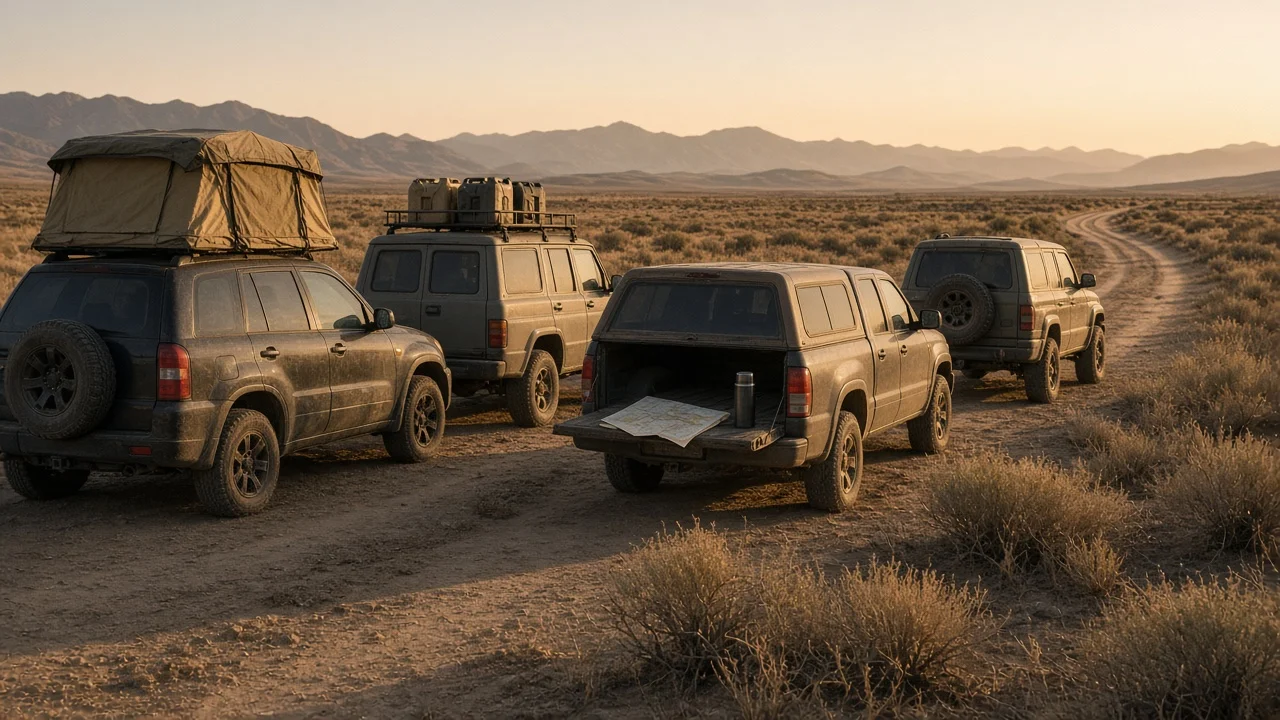
Overlanding means self-reliant travel over long distances, often on unpaved roads, with the vehicle carrying the gear you live out of. A budget overland vehicle does not need to be new or specialized. It needs to be durable, simple enough to keep running far from a dealer, and well supported by spare parts and accessories. This guide covers vehicles commonly chosen for that role in the US used market and explains why each one belongs on a shortlist.
How This List Was Built
This is a selection, not a complete inventory of every capable vehicle. Entries were included because they are sold in meaningful numbers in the US, are mostly older models now bought used, and have a clear reason to suit overland use: rugged construction, a four-wheel-drive system with low range, strong parts availability, or a large aftermarket for racks, armor and suspension upgrades.
The list is grouped by vehicle type rather than ranked. A fair ranking would need comparable data on purchase prices, reliability and running costs, and that data was not available for this guide. Prices also vary widely with mileage, condition, region and modifications, so no price figures are given. Check current local listings to see what your budget actually buys.
Terms Used in This Guide
Body-on-frame: the body sits on a separate steel ladder frame. This construction is common in trucks and traditional SUVs and is generally tolerant of heavy loads and rough use. Unibody: the body and frame are a single structure. This is typical of cars and crossovers, and it is usually lighter and more comfortable on pavement. Solid axle: a single rigid axle housing connects the wheels on one end of the vehicle. It is simple and strong, and it lets the wheels move up and down a long way over uneven ground. Independent front suspension (IFS): each front wheel moves separately. This usually rides and handles better on the road. Low range: an extra set of reduced gearing in a four-wheel-drive transfer case. It gives slow, controlled crawling on steep or rocky terrain. Part-time 4WD: four-wheel drive is engaged only when needed and should generally not be used on dry pavement. Full-time 4WD or AWD: all wheels are driven all the time. AWD (all-wheel drive) systems often have no low range, which is the key difference from traditional 4WD for off-road use.
Midsize Body-on-Frame SUVs
Toyota 4Runner (Older Generations)
Earlier 4Runner generations, especially the third and fourth, are popular overland starting points. They offer body-on-frame construction, low range on 4WD versions, an enclosed cargo area that keeps gear secure, and one of the largest aftermarkets of any SUV. The main drawback is that the 4Runner's popularity can keep asking prices high relative to its age and mileage. Check the frame and underbody for corrosion, particularly on vehicles from road-salt regions.
Lexus GX 470
The GX 470 is a luxury model built on the same platform family as the fourth-generation 4Runner and the Toyota Land Cruiser Prado sold in other markets. It combines body-on-frame construction and full-time 4WD with low range, and in the US it was offered only with a V8. Buyers often choose it as a more refined alternative to the 4Runner. Some examples use rear air suspension, so check its condition. Many owners replace a worn air system with conventional springs, so confirm what is fitted on the vehicle you are considering.
Nissan Xterra
The Xterra is no longer in production, but it was designed with outdoor use in mind. It is body-on-frame, offers part-time 4WD with low range, and on some second-generation off-road-oriented trims has a locking rear differential. Some second-generation examples with automatic transmissions are known for a radiator failure that can let coolant contaminate the transmission fluid. Ask whether the radiator has been replaced, and have the transmission fluid inspected before buying.
Compact and Midsize Pickups
Toyota Tacoma (Older Generations)
Older Tacomas offer much of the 4Runner's appeal in pickup form: body-on-frame construction, low range on 4WD versions, and extensive aftermarket support. A bed works well with a topper, rack or camper shell, and it keeps dirty or fuel-related gear outside the cabin. Some earlier-generation Tacomas were subject to frame corrosion campaigns, so check the vehicle's recall and service history by VIN and inspect the frame closely.
Nissan Frontier
The Frontier shares much of its engineering with the Xterra of the same era. It provides a body-on-frame pickup option, with part-time 4WD and low range on 4WD versions. It is often overlooked next to the Tacoma, which may make it easier to find at a lower price. The same cooling and transmission caveat applies to some automatic versions of the related generation.
Ford Ranger (Earlier Generations)
Earlier compact Rangers, sold before the model's gap in the US market, are simple body-on-frame trucks. They were produced in large numbers, which helps parts availability. 4WD versions have low range. They are smaller than current midsize pickups, which limits payload and interior space but helps on narrow trails. Do not confuse these with the later, larger Ranger, which is a different design.
Solid-Axle Jeeps
Jeep Wrangler (TJ and JK Generations)
The Wrangler uses solid axles front and rear, body-on-frame construction and part-time 4WD with low range. That combination makes it very capable on rough trails, and its aftermarket is vast. The trade-offs for overland travel are cargo space and highway comfort. Two-door versions have little room for gear. The four-door JK Unlimited, the first generation with a four-door body, is the more practical choice for carrying equipment and passengers over long distances.
Jeep Cherokee XJ
The Cherokee XJ is a unibody SUV but uses solid axles front and rear. Its 4WD versions were offered with both part-time and full-time systems with low range. It is compact, light for its class and supported by a large parts and aftermarket network. Because production ended long ago, every example is old. Rust in the unibody structure and the general condition of wear items matter more than mileage alone.
AWD Crossovers and Wagons for Lighter Use
Subaru Outback and Forester
Not every overland route needs a trail rig. For graded dirt roads, forest service roads and long highway stretches, an Outback or Forester can be a reasonable budget choice. Both are unibody vehicles with full-time AWD and good ground clearance for passenger vehicles. Neither has a low-range transfer case, and both have fewer heavy-duty suspension and tire options than trucks and body-on-frame SUVs. That makes them better suited to moderate terrain than to steep, rocky trails. Service history matters on older examples, so ask for records.
Quick Comparison
Vehicle | Construction | Drive system (4WD/AWD versions) | Main trade-off; Toyota 4Runner (older generations) | Body-on-frame | 4WD with low range | Strong demand can keep prices firm; Lexus GX 470 | Body-on-frame | Full-time 4WD with low range | V8 only; air suspension upkeep where fitted; Nissan Xterra | Body-on-frame | Part-time 4WD with low range | Radiator and transmission issue on some automatics; Toyota Tacoma (older generations) | Body-on-frame | Part-time 4WD with low range | Open bed needs a topper or rack; check frame history; Nissan Frontier | Body-on-frame | Part-time 4WD with low range | Shares the Xterra-era cooling caveat on some automatics; Ford Ranger (earlier generations) | Body-on-frame | Part-time 4WD with low range | Smaller payload and cabin; Jeep Wrangler TJ / JK | Body-on-frame, solid axles | Part-time 4WD with low range | Limited cargo in two-door versions; highway comfort; Jeep Cherokee XJ | Unibody, solid axles | Part-time or full-time 4WD with low range | Age and unibody rust; Subaru Outback / Forester | Unibody | Full-time AWD, no low range | Better suited to graded roads than hard trails
Choosing Among Them
Start with the terrain you expect to drive and how much gear you will carry, not with a particular model. If your trips mostly follow graded backroads, an AWD crossover or a lightly equipped midsize SUV may be enough. If you plan on rough, steep or remote trails, prioritize low range, durable construction and parts availability. On any of these used vehicles, condition matters more than the badge. Check for frame and underbody rust, signs of hard off-road use, previous modifications and open recalls before comparing listings.
This guide does not include current prices, fuel economy figures, payload ratings or reliability statistics, because no verified data was supplied for those comparisons. Confirm the specifications for the exact model year, engine, drivetrain and trim you are considering, and use local market listings to judge what counts as a budget price in your area.