Battery-Powered and Cordless Car Heaters: What's Realistic
Shoppers searching for a battery car heater, cordless car heater, or battery operated portable heater for car often expect a compact unit that warms a stranded cabin without the engine. True battery powered cabin heating is constrained by stored energy, heater power draw, and how quickly heat leaves glass and body panels. Distinguishing occupant warming from battery warmers, checking cordless claims, and using safer emergency options while waiting for help keeps expectations realistic.
What a Battery Car Heater Listing Actually Describes
A listing labeled battery heater for car, car heater with battery, or heater for car battery can describe three different products. One is a cabin air heater meant to warm interior air. Another is a personal warming product such as a heated pad or wrap. A third is a device that warms the vehicle battery itself so the starting system stays more cooperative in cold weather. Those categories are not interchangeable, and the product title alone rarely settles which one is on offer.
A battery warmer, sometimes sold as a car battery heater or portable car battery heater, serves the battery pack or starting battery and does not heat occupants. Its electricity may come from a wall outlet, a vehicle accessory socket, or another supply that must be confirmed separately from the name. For occupant warmth and emergency use, the useful question is whether a battery operated car heater, battery powered heater for car, or cordless heater for car actually heats people, and from which source.
Why Battery Capacity Limits Cabin Heating
Sustained cabin heating takes continuous energy because heat keeps leaving through glass, body panels, and air exchange every time a door opens or ventilation runs. A battery powered car heater or car battery powered heater must replace that loss just to hold a modest temperature, not merely to feel warm for a few minutes near the vents. In a parked vehicle, the thermal load is large compared with the energy stored in a typical rechargeable pack or in the starting battery that also has to crank the engine later.
Watt-hours describe stored energy, while watts describe heater power draw. Ideal runtime in hours is usable watt-hours divided by watts, so a high-draw cabin heater empties a pack quickly. That figure is only an estimate: conversion losses, battery protection limits, cold temperature, and other loads reduce what you can actually use. Draining the vehicle starting battery to run a car heater battery operated device can leave the car unable to start. Runtime also does not prove the cabin will feel usefully warm.
How to Check Cordless Heater Claims
A cordless car heater or cordless portable heater for car should be confirmed to contain a battery that actually powers the heating function, not only a display or a small fan. Useful specifications include heating wattage, battery capacity in watt-hours, runtime at the stated heat setting, and permitted operating temperatures. Without those numbers, a battery operated portable car heater or portable battery operated heater for car remains an unverified claim, especially when the listing mixes 12-volt plug language with cordless wording.
A battery-powered fan or a rechargeable control unit does not establish that the heating element of a car heater battery powered unit runs without an external supply. Many portable battery car heater listings still expect a wall charger, a vehicle outlet, or a portable power station for the heat itself. Missing specifications, plus unsupported promises of whole-cabin heating or windshield defrosting from a small pack, are reasons to leave performance unverified rather than assume a cordless portable car heater will clear glass or warm the interior.
Electrical Limits for Portable Heaters in a Car
Portability does not make a portable battery heater for car or portable heater for car battery suitable for use inside a vehicle. Check the device instructions and the vehicle owner's manual before plugging anything in. Heater power draw must stay within the documented accessory outlet rating, wiring accessories, and power source limits. A portable power station used with a portable car heater battery operated unit needs adequate continuous output and usable capacity, plus manufacturer approval for the temperature and enclosed environment where it will sit.
Place the heater away from upholstery, floor mats, and loose items that can cover intakes or rest against a hot surface. Stop use if plugs, cords, or outlets show damage, unusual heat, or a burning smell. Do not improvise wiring modifications, direct battery hookups, fuse bypasses, or homemade adapters to force a battery portable car heater to run. Electrical faults belong with a qualified technician, because overloading a socket or bypassing protection can damage the vehicle and create a fire risk.
Staying Warm While Waiting for Roadside Help
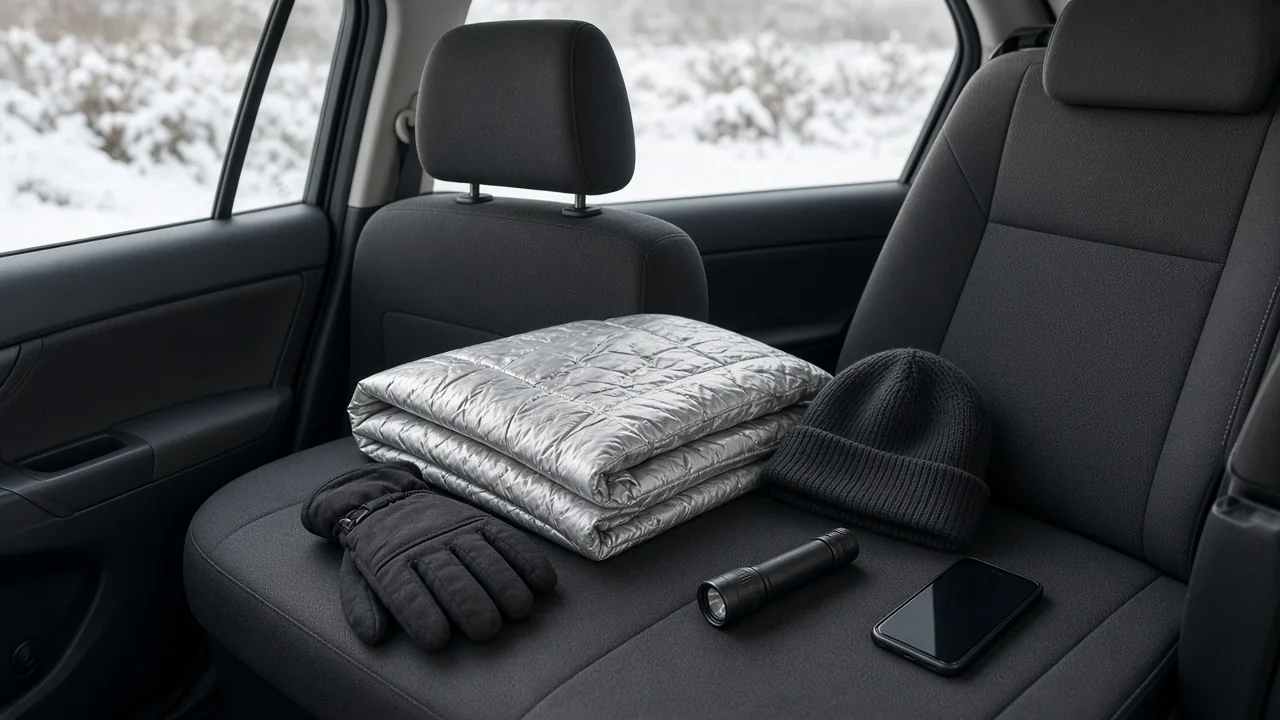
When a breakdown leaves occupants waiting in the cold, the first steps are contacting roadside assistance or emergency services as conditions require, sharing the vehicle's location, and conserving phone charge for updates. Dry layers, a hat, gloves, and blankets reduce heat loss, and insulating yourself from cold seats and floor pans keeps more warmth in the body. An emergency car heater or emergency heater for car cannot replace that call, and waiting for help is not the moment to treat a heater as the plan.
Fuel-burning portable heaters, grills, candles, and camping stoves must not be used inside a vehicle because of fire and carbon monoxide. Never run an engine in a garage, snowbank, or other enclosed space, and do not rely on engine heat when snow may block the exhaust or damage is suspected. Confusion, slurred speech, and unusual drowsiness need urgent help. Those signs matter whether or not a battery operated heater for car is present, and they are not solved by adding another heat source.
Planning for Personal Warmth and Clear Windows
Blankets, insulated clothing, and a stocked cold-weather emergency kit provide personal warmth without depending on continuous electrical power from a car heater battery or a cordless portable car heater. A heated blanket or heated garment can add localized warmth when used according to its instructions, including any limits on unattended use or sleeping. Those products still draw power, so battery capacity and permitted temperatures matter, but they heat the person rather than trying to condition the whole cabin air mass.
Personal warming products do not establish adequate windshield visibility. Ice, fog, and frost on glass still require the vehicle's defrosting system or another method the manufacturer supports, and driving must wait until the view is clear. If factory heating or defrosting already fails, diagnose that problem before winter travel rather than counting on a portable battery heater for car as a backup. When the cause is unknown, professional testing is the practical next step, because a fault in the climate system is evidence to interpret, not a reason to improvise heat in the cabin.