Bad Inner Tie Rod Symptoms and Checks
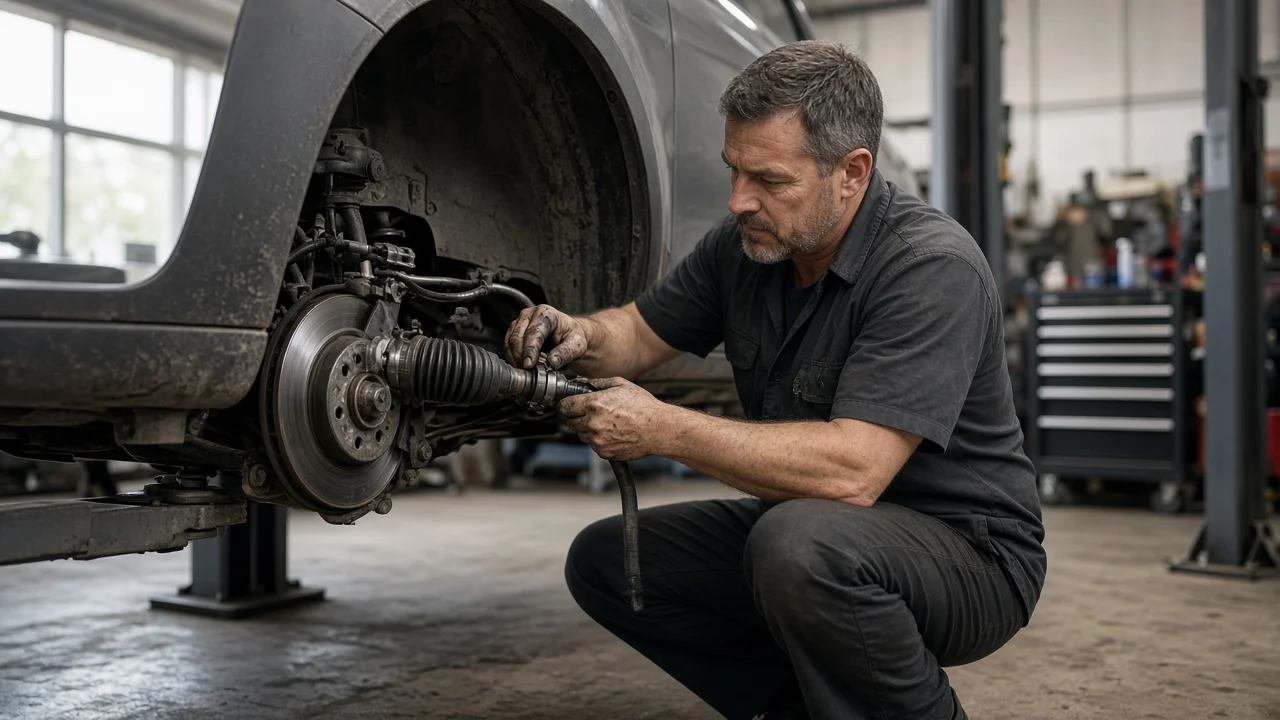
The inner tie rod connects the steering rack to the outer tie rod end. It sits hidden under the rubber bellows boot on each side of the rack. When its ball socket wears, steering loses precision, but the signs overlap with several other front-end faults. This guide covers how to tell if an inner tie rod is bad: which symptoms point to it, what else can cause them, which checks you can safely do yourself, and when a technician should confirm the diagnosis.
Establish the symptoms
The most common symptoms of a bad inner tie rod are loose or vague steering, extra free play at the steering wheel before the car responds, and a tendency to wander on straight roads so you keep making small corrections. Many owners also report a dull clunk or knock felt through the steering wheel when turning at low speed, crossing bumps or changing direction in a parking lot. Over time, worn joints can let toe shift as the car moves, which shows up as feathered or uneven wear on the inner or outer tire edges and sometimes as a steering wheel that no longer sits centered.
Before checking anything, write down when the problem appears. Note whether it happens going straight, turning, braking or over rough pavement, and whether it changes with speed. Record any associated signs, such as noise, vibration, pulling or tire wear, and which side seems affected. Recent changes matter too: a pothole or curb strike, new tires, a wheel alignment, or other suspension or steering work done shortly before the symptoms started. This record narrows the list of suspects and is useful to any shop that inspects the car later.
Distinguish plausible causes
Inner tie rod symptoms are not unique, so treat them as a starting point rather than a verdict. A worn outer tie rod end produces almost identical looseness and wandering. The difference is location: play at the outer joint near the steering knuckle points to the outer end, while play inside the boot at the rack points to the inner joint. Worn steering rack mounting bushings or loose rack mounting points can let the entire rack housing shift, which feels like tie rod play but shows movement in the housing itself. Internal rack wear and a worn intermediate steering shaft coupler can also add free play at the steering wheel.
Other components cause similar complaints. Worn ball joints and wheel bearings can create clunks and wander, but they usually show play when the wheel is rocked top to bottom rather than side to side. Worn control arm bushings can cause pulling and tracking changes under braking. Tire problems, uneven pressures or an alignment that is simply out of specification can cause wandering and uneven wear without any worn joint at all. A clunk that occurs only over bumps and not when turning the wheel weakens the case for a tie rod; a knock that appears when the steering wheel is rocked with the car stationary strengthens it.
Checks in a useful order
Start with safe observations that need no lifting. Inspect tire wear across the tread on both front wheels and confirm tire pressures. Look at the rack boots for tears, loose clamps or wetness; a damaged boot lets dirt and water reach the inner joint, and fluid inside the boot on a hydraulic rack points to a rack seal leak rather than a tie rod fault. With the car parked on level ground, engine off and wheels straight, gently rock the steering wheel a short distance each way and notice how far it moves before the front wheels begin to respond.
A dry-park check comes next. With the car on its wheels, have a helper rock the steering wheel back and forth while you watch and feel each joint in turn. Grip the rack boot so you can feel the inner joint through the rubber; a distinct clunk or movement there while the rack itself moves smoothly suggests joint play in the inner tie rod. Then compare by feeling the outer tie rod end and the rack housing at its mounting points. Stay clear of moving parts and never place your hands where they could be pinched.
Checks with the wheel off the ground require proper vehicle support: use the manufacturer's lift points, a suitable jack and rated jack stands on firm level ground, and never work under a car held only by a jack. With the wheel raised, push and pull at the 3 and 9 o'clock positions to look for steering-related play, then at 12 and 6 o'clock for ball joint or bearing play. Some vehicles require removing a boot clamp to see the joint clearly, and confirming toe changes needs alignment equipment. If you lack safe support or experience, leave these steps to a qualified technician.
Interpret the findings
Movement felt or seen at the inner socket while the rack housing stays still is the clearest sign of a bad inner tie rod. If the housing shifts at its mounts, the bushings or mounting hardware are the more likely cause, and replacing the tie rod alone will not cure the looseness. Play isolated at the outer joint points to the outer tie rod end. Play when rocking the wheel top to bottom shifts suspicion toward ball joints or wheel bearings. Uneven tire wear or a wandering feel on its own establishes only that toe is not stable or not correct; it does not identify which part is responsible.
Before buying parts, confirm the worn component with a hands-on check, inspect both sides of the rack, and look for more than one worn part, because front-end wear often occurs in combination. Note whether the boot was torn, since the replacement should include a new boot and clamps. Also consider whether a recent impact may have bent a tie rod; a bent rod can cause an off-center steering wheel without any joint play and still needs replacement.
Urgency and next action
Stop driving and arrange inspection or towing if the steering wheel turns noticeably before the wheels respond, if a loud clunk is followed by a sudden change in steering feel, if one wheel visibly points in a different direction, or if steering becomes heavy, binding or inconsistent. A tie rod that separates can leave the driver without control of that wheel. Even with milder symptoms there is no reliable way to predict how long a worn joint will last, so no remaining safe mileage can be promised. Plan the inspection promptly and limit driving until the cause is confirmed.
When booking the repair, provide the year, make, model, engine and drivetrain, which side seems affected, your record of when symptoms occur, and any recent impacts or steering and suspension work. Replacement involves loosening the jam nut, separating the outer end and unthreading the inner joint from the rack, then tightening fasteners to the manufacturer's fastener specification from the service information for that vehicle. Because the job changes toe, a wheel alignment at the correct ride height is needed afterward to restore straight tracking, protect the tires and set the steering wheel back on center.