Bad CV Axle Symptoms: How to Inspect Noise, Vibration and Play
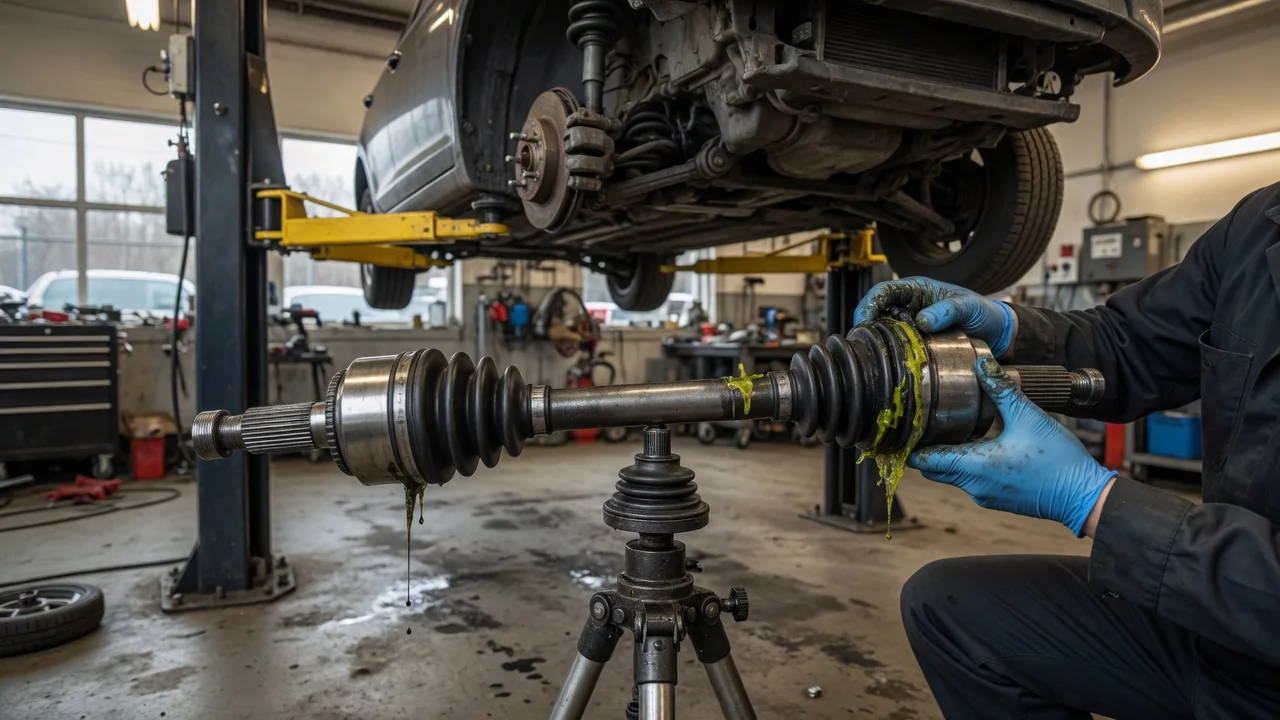
What is the direct answer?
A constant velocity axle, commonly called a CV axle, transfers power from the transmission or differential to the wheel while allowing the suspension to move and the front wheels to steer. A bad CV axle usually reveals itself first as a rhythmic clicking or popping sound during low-speed turns, especially when accelerating. Other common symptoms include grease thrown from a torn CV boot, vibration that changes with speed, and looseness or play when the axle is moved by hand. Because several suspension and driveline parts can create similar noises, the axle should be inspected and the symptoms compared before replacement is assumed.
Common symptoms of a failing CV axle
Clicking, popping or snapping during turns, often more obvious under acceleration; Rhythmic click that follows wheel speed rather than engine speed; Grease splattered inside the wheel area or along the suspension near a split CV boot; Vibration or shaking that increases with road speed and may be felt through the floor or steering wheel; Clunking when shifting from drive to reverse or when taking off from a stop; Visible play when the axle is twisted or moved near the joints
The location and pattern of the noise matter. An outer CV joint is more likely to click during sharp turns, while an inner joint may produce a clunk or shudder during acceleration or gear changes. However, noise alone does not identify the failed component. A worn wheel bearing, loose suspension fastener, failing control-arm bushing or brake hardware issue can mimic some of these signs, so a physical inspection is the useful next step.
What can cause these symptoms, and what check distinguishes them?
A torn CV boot is one of the clearest indicators. The boot holds grease in and keeps water and grit out. Once it splits, grease escapes and contamination enters the joint, accelerating wear and eventually producing play or noise. A wheel bearing, by comparison, more often produces a growl or hum that changes when the vehicle is loaded from side to side in a gentle turn. Brake dust shields, loose caliper hardware and failing strut mounts can also create rotational scraping, rattling or knocking. Comparing when the noise appears in relation to steering angle, acceleration and road speed helps separate an axle concern from these alternatives, but a direct inspection remains necessary.
How to inspect a suspect CV axle
Inspection should be done on a secure, level surface with the vehicle safely supported by jack stands, not left on a jack alone. The parking brake should be applied and the wheels chocked before work begins. If the wheel must be removed, the lug nuts should be loosened slightly before raising the vehicle, then removed after it is supported.
First, inspect each CV boot visually for splits, cracks, loose clamps or wet grease. Check for thrown grease on the inner wheel, control arm, subframe or nearby lines. With the wheel raised, grip the axle near each joint and attempt to move it up and down and side to side; noticeable free play at a joint is a warning sign. Rotate the wheel by hand and feel for roughness or binding that changes with steering angle. Compare both sides; side-to-side differences in play, grease leakage or boot condition can help identify the failing axle.
A small amount of angular movement may be normal for some designs, so play should be judged against the opposite axle or an applicable service specification. Vehicle-dependent tolerance information should come from the service information for the specific make, model and configuration. If a joint shows significant play, a split boot with obvious contamination, or roughness when rotated, the axle is likely due for replacement.
When a CV axle should be replaced
A boot that is split but has not yet allowed the joint to become noisy may sometimes be repaired with a replacement boot and fresh grease, provided the joint is still clean and tight. Once a joint has developed play, roughness or a confirmed clicking noise under load, replacing the axle assembly is the more common and reliable repair. Driving with a badly worn CV axle is unsafe because complete joint failure can leave the vehicle unable to move or cause damage to nearby components. A final decision should follow an inspection of the boot condition and joint play, not only an intermittent noise.
Clicking in turns points toward the outer joint; clunking on acceleration or in gear changes points toward the inner joint, but only a direct inspection of the boots and joint play can confirm which component has failed.