Bad Car Thermostat Symptoms: How to Identify a Stuck Thermostat
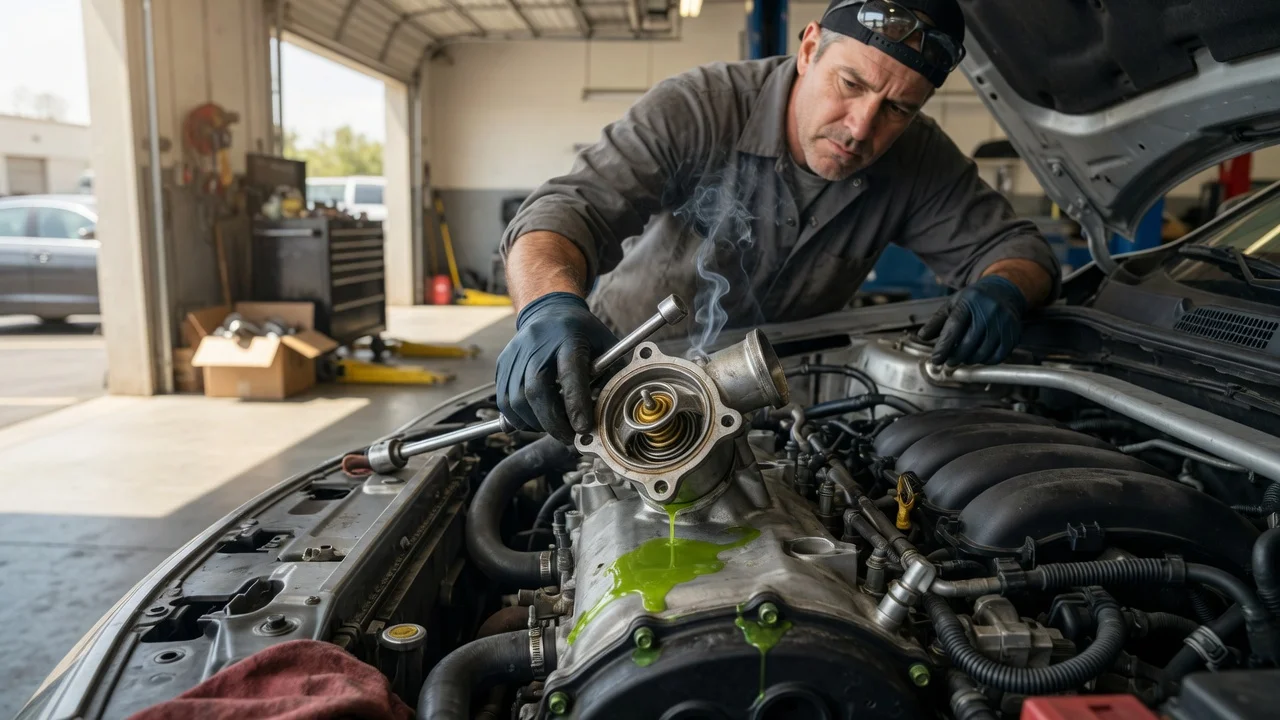
Before you start
The thermostat controls how much coolant flows between the engine and the radiator. A thermostat that fails can get stuck open or stuck closed, and each condition changes the symptoms. Checking it does not require a paid service. You may need a basic understanding of the cooling system and enough time for the engine to warm up and cool down safely.
Work only on a cool engine. The cooling system can be under pressure, and opening components while the engine is hot can release hot coolant. Have a drain pan and gloves ready if you plan to inspect fluid or parts.
Step-by-step instructions
Watch the temperature gauge from a cold start
Start the engine and let it idle while you watch the instrument cluster.
Note how quickly the temperature gauge climbs. On most vehicles it should rise steadily, then settle near the normal operating range.
If the gauge stays low or takes much longer than usual to reach normal range, the thermostat may be stuck open.
If the gauge climbs above the normal range or into the hot zone, shut the engine off and let it cool. That can point to a thermostat stuck closed.
Compare the upper and lower radiator hoses
With the engine warmed up and coolant flowing normally, both the upper and lower radiator hoses should usually feel warm, though not identical.
If the upper hose is hot and the lower hose stays noticeably cooler for a long time, the thermostat may not be opening properly.
If both hoses warm up quickly from a cold start, the thermostat may be stuck open.
Use caution around moving belts, fans and hot surfaces. Keep hands and clothing clear of the fan, and do not remove the radiator cap while the engine is warm.
Check heater behavior
Set the heater to the warmest setting and the fan to a low speed.
With a healthy thermostat, the cabin should begin to warm after the engine has run for a few minutes.
Very slow cabin heat combined with a low or slow-moving temperature gauge is another sign of a stuck open thermostat.
Check the output
A useful check is whether the engine reaches a stable normal operating temperature and stays there under light driving. If the gauge settles in the normal range and the heater works as expected, the thermostat is likely doing its job. If the temperature remains too low, overheats, or changes erratically, the thermostat is one possible cause but not the only one.
This inspection does not provide a mechanical proof of thermostat position. Removing and testing the thermostat in hot water can give a more direct answer, but that is a repair task rather than a quick check.
Common problems and next steps
Stuck open thermostat
A thermostat that stays open lets coolant circulate too freely. The engine may take longer to warm up, the temperature gauge may run low in cool weather, and the heater may produce weak heat. Fuel economy and engine wear can also be affected because the engine runs below its intended temperature for longer.
Stuck closed thermostat
A thermostat that stays closed blocks normal coolant flow. The engine can overheat quickly, especially under load. If the gauge enters the hot zone, stop driving as soon as it is safe and let the engine cool before inspecting the cooling system.
Other causes to consider
Low coolant, a faulty temperature sensor, a blocked radiator, a failing water pump, or a blown head gasket can create similar symptoms. Check the coolant level when the engine is cold and look for leaks before replacing the thermostat. If the warning light or temperature gauge shows overheating and you are unsure of the cause, have the cooling system diagnosed before continuing to drive.