Bad 4L80E TCC Solenoid Symptoms: How to Tell and What to Check
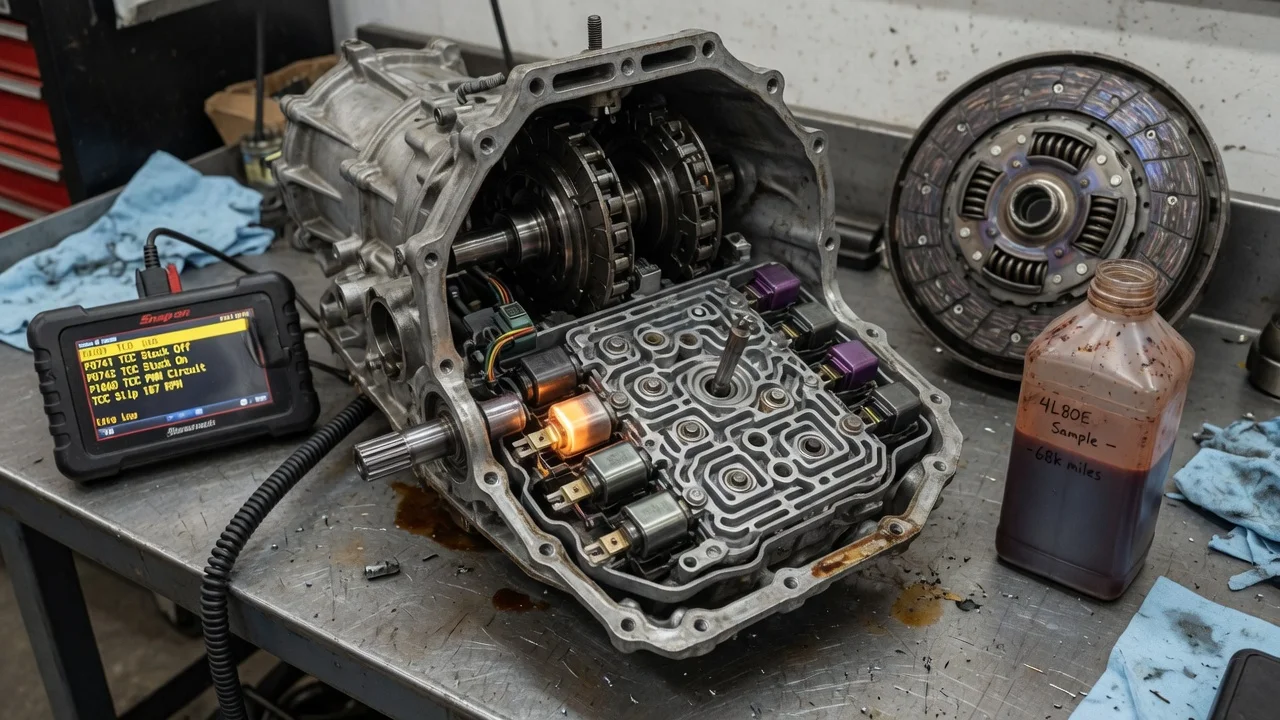
The torque converter clutch (TCC) solenoid in a 4L80E controls when the converter locks up, so a fault usually shows at cruising speed or when coming to a stop. The same signs can also come from wiring, sensors, the valve body, the fluid or the converter itself. This guide shows how to record the symptoms, separate the likely causes and decide what to check before buying parts.
Confirm the transmission and setup
The 4L80E is a GM heavy-duty four-speed automatic used in full-size trucks, vans and SUVs from the early 1990s into the 2010s. Depending on model year, converter lockup may be controlled by an on/off solenoid, a pulse-width-modulated (PWM) solenoid, or both. The wiring, diagnostic codes and replacement parts differ between these versions. Confirm the transmission type from the VIN, the identification tag on the case or the service records. Also note whether the vehicle has an aftermarket converter, valve body kit or engine tune, because those changes alter shift behavior and lockup strategy and affect parts fitment.
Establish the symptoms
Lockup normally happens in the upper gears once the fluid is warm and the throttle is steady. If the converter clutch never applies, engine speed is higher than usual at highway cruise, the drive feels slightly loose, fuel economy drops and the transmission fluid runs hotter. If the clutch applies when it should not, or will not release, the engine can lug at low speed or stall as the truck rolls to a stop, much like stalling a manual transmission. Other common complaints are a shudder when lockup engages, which feels like driving over rumble strips, and lockup that cycles on and off at steady speed. A check engine light may or may not appear with any of these.
Write down when the problem occurs: speed, gear, engine and outside temperature, light or heavy throttle, and whether you were towing or hauling. Note whether it started suddenly or gradually. Also note anything that changed recently, such as a fluid service, a pan gasket, an electrical repair, a battery replacement, new tires or a tune. A clear service history and repeatable conditions make every later check more meaningful.
Distinguish plausible causes
A failed solenoid is only one possibility. An open or shorted solenoid winding usually causes a complete loss of lockup and an electrical code. A solenoid that sticks or leaks internally can cause partial apply, slipping or failure to release. Those symptoms overlap with valve body problems such as a sticking converter clutch apply valve. The internal harness and the pass-through connector on the case are frequent trouble spots on this transmission. A connector that weeps fluid or shows corrosion points to a wiring cause rather than the solenoid itself.
Sensor and switch inputs matter too. The computer releases lockup when the brake switch signals, so a misadjusted or faulty brake switch can prevent or interrupt apply. Bad throttle position, vehicle speed or temperature signals can also confuse the lockup strategy. Low, burned or incorrect fluid weakens apply pressure. A worn converter clutch lining causes slip and shudder that no solenoid will fix; dark fluid with a burnt smell or heavy debris in the pan points toward wear. An engine misfire under light load at cruise can feel exactly like converter shudder. Misfire codes or a rough-running engine make a transmission cause less likely.
Checks in a useful order
Start with the checks any owner can do safely. Check the fluid level and condition using the procedure for your vehicle. On a 4L80E this is normally done with the fluid at operating temperature, the engine running and the vehicle level. Top up only with the fluid specification listed for that truck. Note the color and smell, and look for leaks at the pan and around the electrical connector on the side of the case. Confirm that the brake lights work and turn off when the pedal is released. Have the stored and pending diagnostic codes read, including the freeze frame data showing speed, gear and temperature when each code set.
The next stage needs a scan tool with live data. Ideally a passenger watches the data while the driver concentrates on the road. Compare the TCC command with the reported converter slip speed. If the computer commands lockup and slip stays high, the command is reaching the solenoid but the clutch is not holding. Electrical tests such as measuring solenoid resistance at the case connector and checking power, ground and the control circuit require the factory specification and wiring diagram for your model year. Dropping the pan to inspect the internal harness, testing line pressure or evaluating the valve body is work for a qualified transmission technician.
Interpret the findings
Each result narrows the problem; none settles it on its own. Suppose there is an electrical circuit code but the solenoid measures within specification at the case connector. That points to the external wiring, the connector or the computer, not the solenoid. If the reading at the connector is out of specification, it still has to be repeated directly at the solenoid, because the internal harness or pass-through connector may be at fault. A slip or performance code with a confirmed lockup command and good electrical readings shifts suspicion to fluid condition, the valve body, the solenoid's sealing or the converter clutch.
Stalling at stops without misfire or idle control faults suggests lockup that is not releasing. Whether the cause is the electrical command, a stuck solenoid, the valve body or the converter still needs testing. Shudder that continues while lockup is commanded off, or that appears alongside misfire data, points away from the converter clutch. Before replacing anything, confirm that the suspect part explains every recorded symptom and code. If you replace a solenoid only because one symptom matched, the real fault and the heat it creates may remain.
Urgency and next action
Stop driving and arrange a tow if the engine stalls when coming to a stop, especially in traffic. A stall can reduce power steering and brake assist. Also stop if the transmission slips badly, overheats, smells burnt, leaks fluid steadily or shows a temperature warning. Lost lockup on its own is less immediately dangerous, but it raises fluid temperature, especially when towing. Reduce the load and limit driving until the problem is diagnosed. There is no reliable way to predict how far a vehicle can safely go with a converter clutch fault.
When you contact a shop, bring the VIN, model year and transmission identification, all codes with their freeze frame data, and your notes on when the symptom occurs. Include the fluid level and condition and the service history, including any aftermarket converter, valve body or tuning changes. Repair options range from replacing the solenoid or internal harness through the pan, to valve body work, to converter replacement, which requires removing the transmission. Ask the technician which tests confirmed the recommended part, so the repair addresses the verified cause.