B0338 to B0385 Body Codes Explained: Meanings and Diagnostic Steps
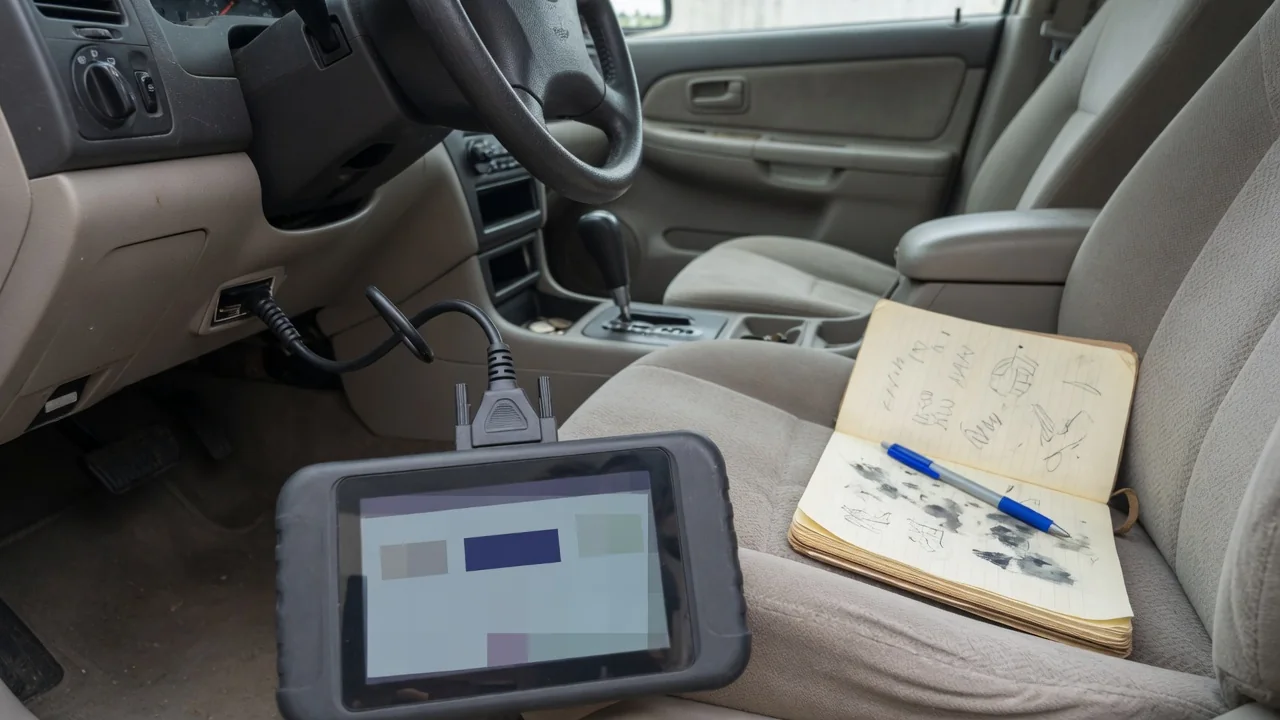
When a scanner displays B0338, B0341, B0365, B0371, or B0385, the generic code often raises more questions than it answers. Body-system faults in the B03xx range frequently carry manufacturer-specific definitions, so a basic reader may show only a number while the actual problem lives in a door module, climate circuit, lighting system, or restraint network. Interpreting these codes safely requires confirming the exact meaning for the vehicle, then watching how the code behaves before replacing any component.
How B03xx Body Codes Work and Why Their Meanings Vary by Manufacturer
The letter B at the start of a diagnostic trouble code identifies a body-system fault, and the digits that follow narrow the problem to a specific monitored circuit or function. Many drivers see these codes on a generic scan tool and assume every B0338 means the same thing in every car, but that is not how manufacturer-defined diagnostics work. The body control module sets the code based on its own software, so the same number can describe different sensors, actuators, or network conditions from one brand to another.
A basic code reader may provide only the short identifier, while an enhanced scan tool can display the full failure description, status bytes, and sometimes a subcode that changes the diagnosis entirely. Because the Body Control Module frequently acts as a gateway for lighting, security, climate, and power accessories, a VIN-specific lookup is the only reliable way to match the code to the actual system. Guessing from a global list can send a diagnosis toward the wrong harness, connector, or control unit.
B0338: Confirming the Vehicle-Specific Definition Before Diagnosis
B0338 has no dependable universal definition, so the first step is to determine what the vehicle manufacturer says the code means for the exact year, model, and equipment level. Once the definition is confirmed, note whether the code is current or stored, because a stored fault may reflect an old condition that is not active now. Record any subcodes, freeze frame data, and other trouble codes that set at the same time, since those details often reveal the operating conditions present when the module detected the problem.
A safe initial observation is to identify which body feature misbehaves and whether the fault appears consistently or only occasionally. Watch for warning messages, inoperative courtesy lights, odd door lock behavior, or climate control glitches that happen alongside the stored B0338. Keep in mind that the code identifies a circuit or condition the module detected, not necessarily a failed part. A wiring harness that rubs against a bracket can produce the same stored code as a sensor with poor internal contact.
B0341: What to Check Once You Know What the Manufacturer Means
B0341 must be verified against the manufacturer's documentation before any repair is attempted, because its meaning changes between vehicles and even between trim levels on the same model. Reading codes from all modules, not just the engine or powertrain unit, is important because a shared power-supply or communication fault can make B0341 look like a local body problem. If another module reports a low-voltage code or a lost communication event, the real issue may sit in a junction block or a weak battery connection.
Low-risk checks include measuring battery voltage after the vehicle has sat overnight, examining terminal tightness, and looking for recent electrical work or accessory installations that pinched a wire. A code that appears shortly after a jump start or battery replacement often reacts to a momentary voltage spike or a ground path that did not get reconnected. Replacing a body module, sensor, or actuator based only on the number B0341 without confirming its local definition and reading companion codes usually wastes money and leaves the fault untouched.
B0365: Recording Symptoms and Separating Intermittent from Active Faults
B0365 cannot be interpreted safely without verifying the vehicle-specific meaning first, and the next useful step is to separate an active fault from an intermittent one. Clear the code only after recording its description and any related data, then operate the vehicle long enough to see whether it returns immediately or waits for a particular trigger. A code that sets again within one drive cycle points to a hard fault, while a code that reappears only after days of normal use suggests a connection that fails under specific conditions.
Recording the conditions that line up with the fault can be more valuable than the code itself. Note whether the B0365 appears after rain, during cold mornings, when the driver's door is slammed, after seat movement, or following a washboard road that flexes a harness. Moisture intrusion, cold solder joints, and worn wire insulation often produce body codes that come and go with temperature or vibration. Clearing the code without noting these details erases the diagnostic trail a technician could otherwise use to test the right circuit.
B0371: Interpreting the Code Alongside Other Stored Faults
B0371 requires a vehicle-specific definition before any conclusion, and reading it alongside other stored faults often changes the direction of diagnosis. When several body codes set together, a shared power supply, common ground splice, or network interruption may be the real cause rather than multiple independent failures. A scan report showing B0371 plus a lost communication code for the driver's door module and a low-voltage code from the instrument cluster suggests looking at a shared connector or a weak battery under load.
Practical details worth noting include which module reported B0371, whether a warning lamp illuminates at the same time, and whether any features are disabled while the fault is active. If the code originates from the body control module but the observed symptom sits in a seat memory function, the path between the two may run through a low-speed data bus. When multiple modules and body codes point to the same area of the vehicle, structured testing with a wiring diagram and a digital multimeter becomes necessary instead of educated guesswork.
B0385: Safety-Related Possibilities and When to Stop and Get Help
B0385 must be looked up in the manufacturer's information before any practical step is taken, because the code number alone does not reveal whether the fault involves a convenience feature or a critical safety device. If the verified definition points to an airbag circuit, seat belt pretensioner, or other restraint component, the owner should not unplug, probe, or ohm-test those parts. Restraint system wiring carries special connectors and low-energy squib circuits that can be damaged or accidentally deployed by improper test equipment.
A warning lamp tied to a safety system means that system may not protect occupants as designed until the fault is properly diagnosed and cleared. When handing the vehicle to a technician, provide the full code description, the date and driving conditions when the light first appeared, any symptoms noticed, and any recent repairs or collision history. That information can shorten the diagnostic path and reduce the chance that the shop will need to recreate an intermittent fault that happened weeks earlier.
A General Diagnostic Approach for B0338–B0385 and When Professional Testing Is Needed
A structured approach for B0338 through B0385 starts by identifying the vehicle accurately, retrieving all codes with enhanced descriptions from the body, chassis, and powertrain modules, and then checking basic conditions like battery health and terminal tightness. A basic code reader may show the five-digit number but cannot display the manufacturer-specific definition, subcodes, or freeze frame data that guide the next test. Professional scan tools access the body control module's live data, self-test results, and status flags that many inexpensive handhelds ignore.
Confirming a wiring, connector, or module fault usually requires the factory wiring diagram, specified test procedures, and a meter that can handle low-current and high-impedance circuits. A dealer or independent shop can also check for technical service bulletins or software updates that may address the stored body code, though no bulletin should be assumed to exist. Signs that professional diagnosis is the right choice include safety-system warnings, several modules reporting faults at once, codes that return immediately after clearing, or any feature failure that makes the vehicle unsafe to operate.