B0020 Through B0030 Airbag Codes: Meaning and Safe Next Steps
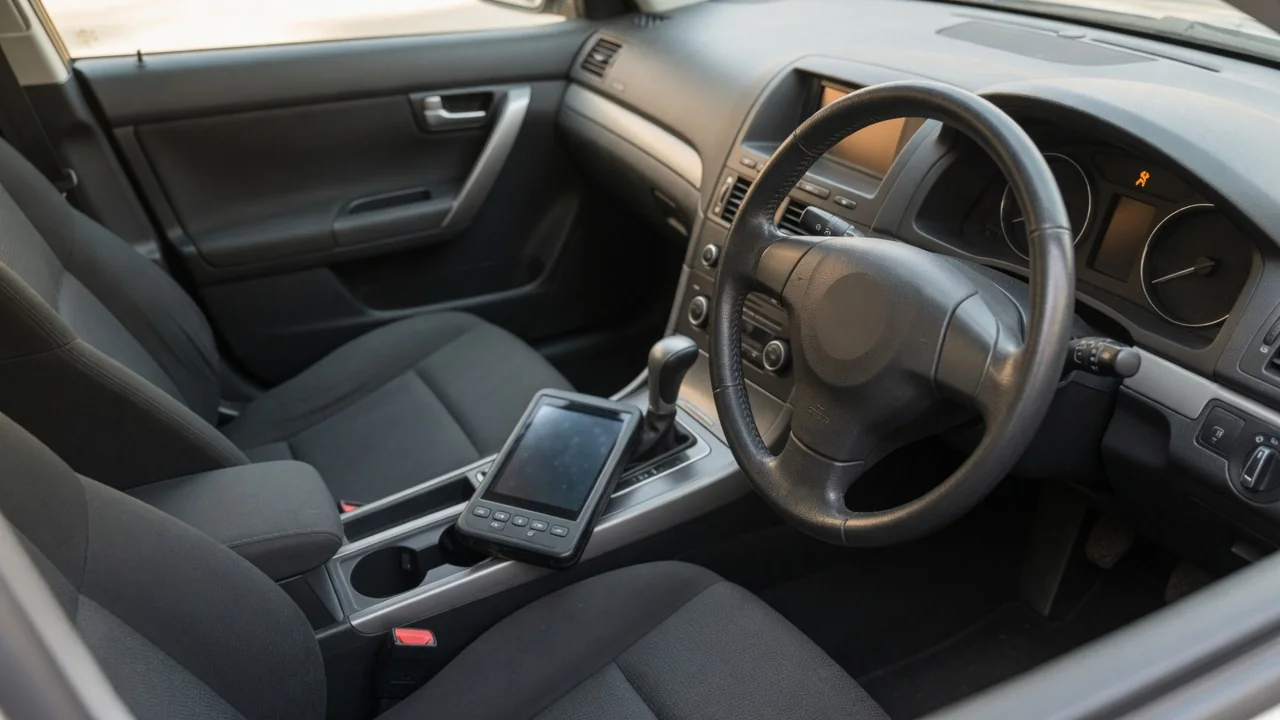
A B0020 code reading on your scan tool can be alarming because it involves the supplemental restraint system, but seeing that number alone does not tell you exactly what is wrong or what part to replace. Side-impact and curtain airbag circuits often share this code family, yet each vehicle defines the fault, circuit, and location differently. This guide explains the B0020 through B0030 range and safe next steps.
Verify the Vehicle-Specific Meaning of B0020 First
Before reacting to B0020 or any nearby code, note the make, model, year, full diagnostic trouble code, failure-type suffix, and the module that reported it. Airbag control modules assign codes based on vehicle-specific deployment circuits, so a number that means the driver's side-impact sensor in one car can refer to the passenger's curtain airbag in another. Manufacturer-dependent definitions prevent a universal interpretation.
The code range commonly covers supplemental restraint system circuits for side-impact airbags, curtain airbags, and their deployment loops. However, a circuit fault does not necessarily mean the airbag assembly is defective. The restraint control module flags an electrical discrepancy, not a failed component. Proper diagnosis uses service information to confirm whether the issue involves wiring, a connector, a sensor, or the inflator itself before any replacement.
Identify the Circuit Named by B0021 Through B0024
Codes like B0021, B0022, B0023, and B0024 remain specific to a vehicle's wiring schematic. They may identify a front or rear side-airbag, a curtain airbag, or a seat-mounted thorax bag, but the number cannot be mapped without the manufacturer's definitions. The full description from a factory-level scan tool should state the device, vehicle side, seating position, and deployment stage if applicable.
A failure-type suffix often follows the base code and narrows the concern to a short, open, high resistance, or performance problem in the deployment circuit. Neighboring numbers do not imply adjacent physical locations; the controller's software assigns code values arbitrarily. Therefore, a technician must confirm the exact circuit named by B0023 before inspecting any connector or harness branch.
Interpret B0026, B0028, B0029, and B0030 in Context
Codes B0026, B0028, B0029, and B0030 each demand a verified definition from the applicable service information. Scanner wording may be abbreviated or misleading, so generic titles like 'side airbag circuit' are not enough. The manufacturer's diagnostic manual will tell precisely which deployment loop, sensor, or indicator circuit the code monitors, and that assignment guides the entire troubleshooting path.
Context matters when these codes appear. Additional restraint codes in the same scan can indicate a shared power or ground fault, while a code stored as 'current' versus 'history' suggests an active fault or an intermittent past event. A technician uses that information to judge whether the fault affects one airbag or multiple restraints, avoiding assumptions like tying every code in this group to a curtain airbag.
Understand the Airbag Warning Light and Protection Uncertainty
An airbag warning light that stays illuminated after the engine starts, returns during driving, or appears intermittently means the restraint system has detected a condition that disabled or limited some protection. The light cannot specify which airbag is affected or whether seat belt pretensioners are also disabled. Only a scan of the restraint control module can identify the diagnostic trouble code and point to a circuit.
If the warning light goes out on its own, the fault may be intermittent, but the underlying condition is not repaired. Stored codes remain in memory and the problem can recur. Follow the owner's manual for warning light instructions, and arrange prompt professional assessment whenever the indicator remains on, as airbag availability may be reduced without any other symptom.
Record Seat, Wiring, and Repair History Without Disturbing Components
Wiring damage, loose connectors, moisture, and previous interior or collision work can all create the type of circuit faults that set B0020-range codes. A seat-mounted side airbag depends on wiring that flexes with seat movement, so repeated forward or backward adjustment can stress conductors or connectors over time even though the seat itself works normally. Note whether your driving position changes frequently.
Record when the warning light first appeared and whether it followed any seat adjustment, deep cleaning, water spill, interior trim removal, or body repair. Useful observations include visible wetness under seats, clearly pinched or damaged wire insulation, or evidence of recent collision work. Do not move seats to try to reproduce the fault, unplug connectors, remove trim, or manipulate restraint wiring, as these actions can set new codes or cause deployment risk.
What Professional Testing and Repair Verification Should Establish
Professional diagnosis should start with a scan tool that can communicate with the restraint module and retrieve the complete code, including the failure-type suffix, without clearing memory. The technician confirms the code definition in factory service information, then follows the prescribed diagnostic procedure to locate the cause—usually a connector, harness segment, sensor, or control module—before deciding on any repair.
Clearing codes alone is not a repair; the fault could return or leave a protection feature inactive. Proper verification includes completing the checks specified in the service procedure, confirming acceptable resistance or signal values where safe, observing correct airbag warning light behavior after repair, and performing a follow-up module scan to ensure no codes return. Deployment circuits must never be probed or powered during diagnosis.