B0010–B0019 Airbag Codes: Meanings, Symptoms, and Safety
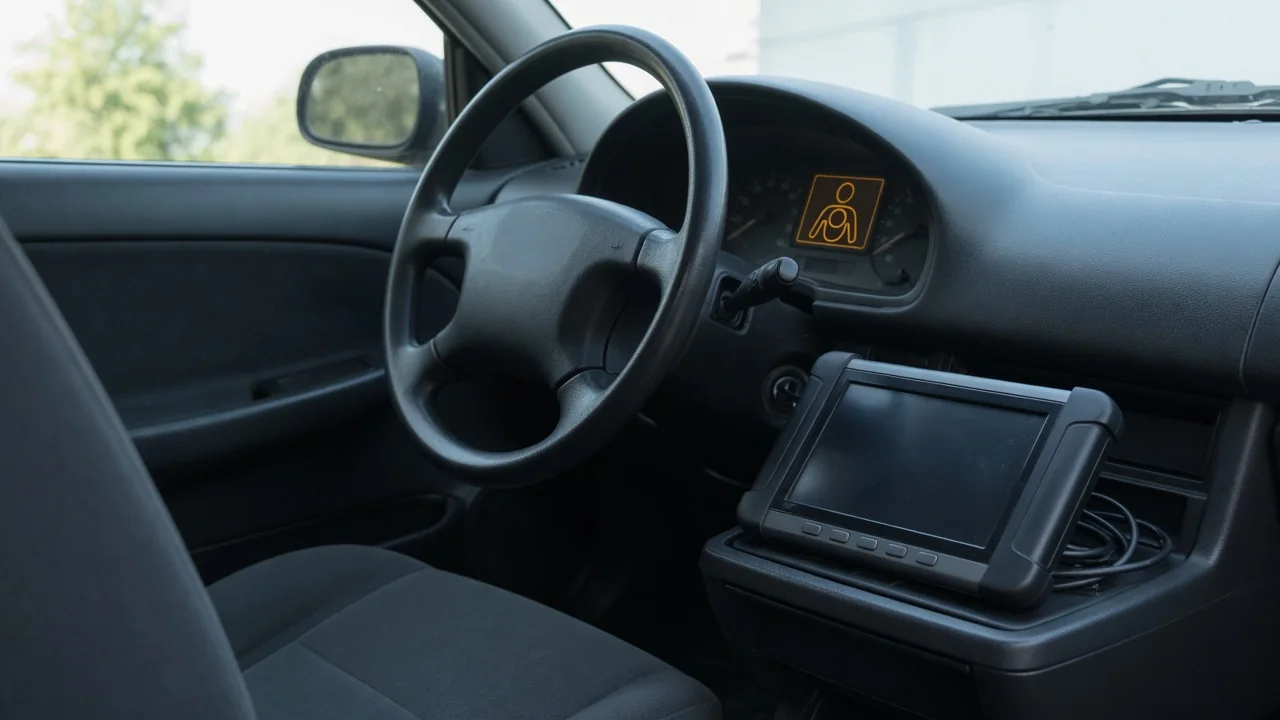
A B0014 code on your dashboard means the supplemental restraint system has logged a fault, but the number alone doesn’t tell you which component is affected or why. The B0010–B0019 family covers many airbag-related diagnostic trouble codes, each defined by the vehicle maker and the restraint control module. Before replacing parts or assuming the car is unsafe, you need the exact failure type suffix and the model-specific definition. The following sections explain how to interpret these stored faults, recognize symptoms, and decide what to do next.
Verify the Vehicle-Specific Meaning Before Interpreting B0010–B0019
The first rule for any B0010–B0019 code is to look up its exact meaning for your vehicle. The same numeric code can stand for different deployment circuits, squib faults, or sensor issues depending on year, make, model, and which module reported it. A B0010 in one SUV might refer to a driver frontal stage 1 loop, while in another it could indicate a passenger seatbelt pretensioner circuit. The failure type suffix—often a two-digit number after the base code—further narrows whether the problem is an open circuit, short to ground, or short to battery. Without that complete entry, any guess is just a guess.
Codes B0010 and B0011 illustrate why vehicle-specific verification matters. In some systems, B0010 is defined as the driver frontal airbag deployment loop, and B0011 is the passenger side. But that pairing is not universal. If a mechanic or forum post tells you B000x loop codes always mean a certain resistance issue, do not transfer that logic to a B001x code. The B000x range has its own diagnostic rules and circuit labels. Always require a service manual entry that includes the applicable vehicle, the exact definition, and any failure-type detail before you accept a cause or begin testing.
Read the Full Entries for B0012 Through B0019
For B0012 and B0013, the complete descriptor might mention a specific restraint device, seating position, or wiring circuit—but only the verified service definition can confirm that. An abbreviated scan tool might show “driver side airbag circuit” while the full entry specifies a seat position sensor or a side curtain squib. The suffix is especially important: a B0012-0B could indicate a different fault condition than B0012-1A. Never assume that numbering proximity means two codes are related; B0012 and B0013 may involve entirely different systems even though they are sibling numbers.
B0014 and B0015 follow the same verification pattern. When a scanner reports B0014, the visible description may read “passenger frontal deployment loop” or simply “restraint system fault,” depending on the tool. The complete factory definition and failure type suffix establish the reported condition, such as high resistance, low resistance, or a short to voltage. B0016, B0017, and B0019 require the same process—do not infer their meaning from neighboring numbers. Even B0018, occasionally grouped within this range, needs its own confirmation. A universal code-to-component chart is risky because airbag wiring and module mappings vary.
Possible Causes Depend on the Confirmed Fault Description
Once you have the confirmed fault description, you can consider plausible causes. Wiring damage is common—frayed insulation under a seat, a pinched harness after interior work, or a corroded connector in a door pillar. Connection problems such as loose terminals or high resistance at a squib plug can trigger a B001x code. Component faults may involve the airbag, seatbelt pretensioner, or a crash sensor, but the code alone does not prove the airbag needs replacement. A circuit fault points to an electrical path problem somewhere along the loop, not necessarily the inflator module itself.
Diagnostic context helps narrow the search. Recent seat work—installing aftermarket covers, repairing a power seat motor, or shampooing carpets—can disturb under-seat wiring. Interior repairs or collision history may leave pinched harnesses or deformed brackets. Water intrusion from a leaking sunroof or body seam can corrode grounding points and cause intermittent B001x faults. A weak battery or charging system issue can sometimes create low-voltage false codes in the restraint module. However, none of these events is proof of failure; they are leads for professional diagnosis. Avoid prevalence claims like “most B0014 codes are caused by…” because no single mechanism dominates across all vehicles.
Warning Signs and Information Owners Can Safely Record
The most common sign of a stored B001x fault is a persistent airbag warning light on the instrument cluster. It may stay illuminated while driving or flash briefly at startup before remaining on. Some vehicles show a restraint-system message in the driver information center, such as “Service Airbag” or “Supplemental Restraint System Malfunction.” Indicator behavior varies by manufacturer—some systems latch the light until codes are cleared, while others turn it off after a self-test passes. You should record exactly when the warning appears and whether it stays on or cycles.
A car that starts and drives normally may still have a disabled airbag or pretensioner, so do not use normal driving behavior as reassurance. The restraint system performs no continuous visible function until a crash occurs. If a B001x code is stored, one or more protective devices might not deploy as intended. You can safely note the exact warning text, the date it first appeared, and any recent events such as seat adjustments, interior cleaning, or battery replacement. Do not remove connectors, probe wires, or strip trim to inspect components—those actions can deploy a device or worsen the fault. Limit your observations to the dashboard display and your own service records.
Can You Drive With a B001x Airbag Fault?
Whether you can drive with a B001x fault depends on the verified code meaning and the vehicle’s warning instructions, not on the numeric code alone. Some faults disable only the passenger airbag, while others affect driver protection or seatbelt pretensioners. In a crash, an unrestrained or improperly restrained occupant faces higher injury risk. The fact that the engine starts and the car moves does not confirm the supplemental restraint system is fully functional. Always follow the owner’s manual guidance for the specific warning you see.
If the airbag light is on because of a collision, airbag deployment, or visible restraint damage, do not continue driving until the vehicle has been inspected and repaired by a qualified facility. Even a minor fender bender can affect crash sensors, wiring, or module logic. Driving with deployed airbags or damaged seatbelts is illegal in many areas and obviously unsafe. For non-collision B001x codes, you may be able to drive to a repair shop, but check the warning text first. If the message says “Airbag Deactivated” or “Restraint System Off,” consider arranging a tow or mobile diagnostic service rather than risking an unprotected trip.
What Professional Diagnosis Should Establish
Professional diagnosis of a B001x code requires a scan tool that can communicate with the restraint control module, not just a basic OBD-II engine-code reader. Generic code readers may show the B001x number but not the full descriptor, failure type suffix, or live data from airbag circuits. A shop should document all stored codes, pending codes, module identifiers, and any associated faults before clearing anything. They must look up the vehicle-specific service definition for each B001x code and follow the manufacturer’s fault-isolation chart for that exact definition.
A technician should also verify system operation after repair—for example, monitor deployment loop resistance, check for intermittent faults during wiring wiggle tests, and confirm that the airbag light extinguishes and no codes return. Clearing the warning light does not establish a repair. Do not ask for or accept bypass procedures, deployment circuit testing with a multimeter, or substitute resistors to fool the module. Those actions can cause accidental deployment or leave the system non-functional. High-level diagnostic work is safe only when performed by trained personnel using vehicle-specific procedures and appropriate tools.