Azzy Transfer Case Linkage: Fitment and Kit Selection
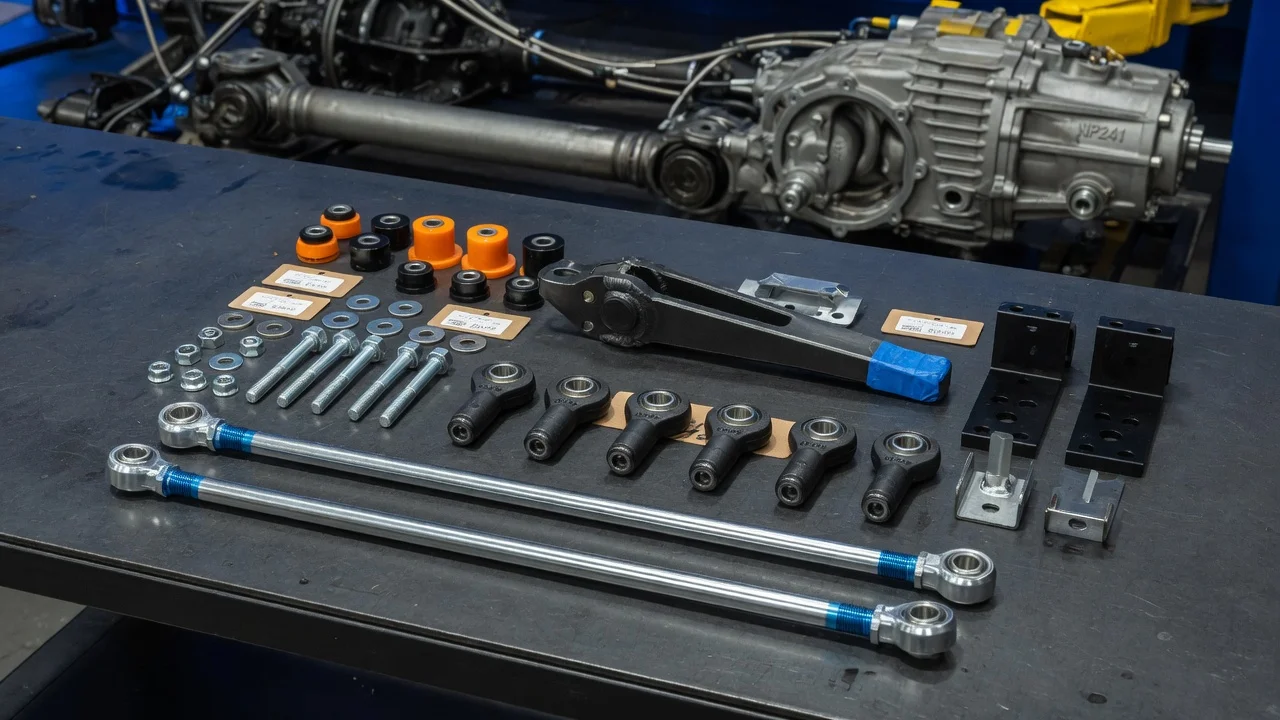
A transfer case linkage is a small assembly with an important job. It turns movement at the shifter into a clean, fully engaged range change at the transfer case. If you are shopping for an Azzy transfer case linkage, the deciding questions are not about the brand name. What matters is whether the kit matches your exact vehicle configuration, any lift or drivetrain changes, and how you actually use four-wheel drive.
Define the job the linkage must do
Start with the problem you are trying to solve, because different problems call for different kits. A worn factory linkage usually shows up as a sloppy shifter, a lever that will not reach low range, or a shifter position that does not match the range the case is actually in. A different problem appears after a body or suspension lift, when the original geometry no longer lines up and the linkage binds or runs out of travel. A transmission or transfer case swap is a third case, where the original parts may not connect the new components at all. A direct replacement kit solves the first problem but may do nothing for the second or third.
Next, consider how you use the vehicle and what constraints you have. A daily driver that sees four-wheel drive a few times each winter has different priorities than a trail rig shifted under load in mud and rock. Think about how much shifter noise and vibration you will tolerate, whether you will install the kit yourself, and what tools and lifting equipment you have. Also confirm that your vehicle uses a mechanical floor shifter. Many trucks with electronic shift-on-the-fly use a switch and an actuator motor, so a mechanical linkage kit does not apply to them.
Before buying, check whether the linkage is actually at fault. With the vehicle safely supported and the engine off, disconnect the linkage at the transfer case lever. Then move the case lever by hand and feel for each detent. If the case still jumps out of range after the linkage has been correctly adjusted, the cause may be inside the transfer case. A new linkage will not cure that.
Check compatibility before you order
Fitment depends on more than year, make and model. Transmission type, transfer case model, cab and body style, and drivetrain options can all change the linkage design. Some vehicles changed parts partway through a model year. The most reliable reference is the identification tag on the transfer case, along with your vehicle documentation and service history. Read the tag instead of guessing from the model name. Then compare that information with the fitment notes and exclusions in the product listing, not just the headline vehicle list.
Then look at the physical interfaces. These include how the lower end of the shifter lever connects, where the pivot bracket mounts, the shape of the transfer case shift arm, the rod length and end style, and the type of retaining clips or pins. Modifications matter a great deal. A body lift raises a body-mounted shifter away from a frame-mounted transfer case. A transfer case drop, motor mount change, aftermarket skid plate or exhaust reroute can also change clearance and angles. If your vehicle is modified, check whether the listing addresses that setup or whether you will need an extension or relocation bracket.
Features that affect the choice
Joint and bushing design is the main trade-off. Rubber bushings like the factory parts isolate vibration and keep the cab quiet but allow more play as they wear. Polyurethane bushings tighten the feel of the shifter and pass along somewhat more vibration. Spherical rod ends can be very precise, but they transmit the most noise and need protection from dirt and water. Adjustability also matters. Threaded rod ends or an adjustable link let you set the shifter so every range reaches its detent at the case, which is especially valuable on lifted or modified vehicles. A fixed-length link is simpler but depends on stock geometry.
Look at what is actually in the box: rods, bushings, brackets, clips, fasteners and written instructions. A kit that leaves out a bracket or bushing can turn a simple job into a second order. Treat labels such as 'heavy duty', 'upgraded', 'OE quality' or 'direct fit' as marketing rather than evidence. More useful information includes a specific fitment list with exclusions, a parts list, clear photos of every component, material and finish details, installation instructions and a return policy that covers fitment mismatches. Owner feedback from someone with your exact configuration is worth more than a high average star rating.
Limitations and ownership costs
Installation usually means working under the vehicle, so it must be properly supported on stands, not just a jack. Old hardware is often seized, and you may need penetrating oil, replacement clips or a new shifter boot that the kit does not include. Adjustment is the step that decides whether the job succeeds. Each shifter position should line up with a fully engaged detent at the case, and the lever should not hit the end of its gate before the case does. After installation, confirm the four-wheel-drive indicator responds correctly, then check engagement during a low-speed test on a loose surface rather than on dry pavement.
Ongoing care is modest but real. Include the linkage in your regular inspection during scheduled maintenance. Check for play, cracked or missing bushings, loose fasteners and missing clips. There is no universal interval, so follow your maintenance schedule and manufacturer specifications. Inspect more often if operating conditions include mud, road salt or water crossings. Know what the part cannot do. A linkage kit will not fix worn shift forks, a stretched chain, damaged detents, or front axle engagement systems that rely on vacuum or electrical actuators. When budgeting, include possible shop labor and small extra parts along with the price of the kit.
Build a practical shortlist
Before comparing kits, write down your transfer case model from its tag, your transmission, your shifter type and every modification that affects the driveline or body height. Then check each candidate against the same points. Does the listing name your configuration, with no exclusion that applies to you? Does it address your lift or drivetrain changes? Which joint type does it use, and does that match your noise tolerance? Can it be adjusted? Is the hardware complete, are instructions included, and does the return policy cover fitment errors? A kit that cannot answer these questions does not belong on the shortlist.
If an Azzy linkage listing does not clearly confirm your configuration, ask the seller before ordering, giving your exact vehicle and transfer case details. Otherwise, choose an option whose stated fitment does match. Once the kit is installed, record the part details and your final adjustment in the vehicle's service history. That record makes future inspections faster and helps a mechanic separate linkage issues from transfer case problems later.