Average Car Mileage Per Year: What Counts as Normal and How to Judge a Used Car
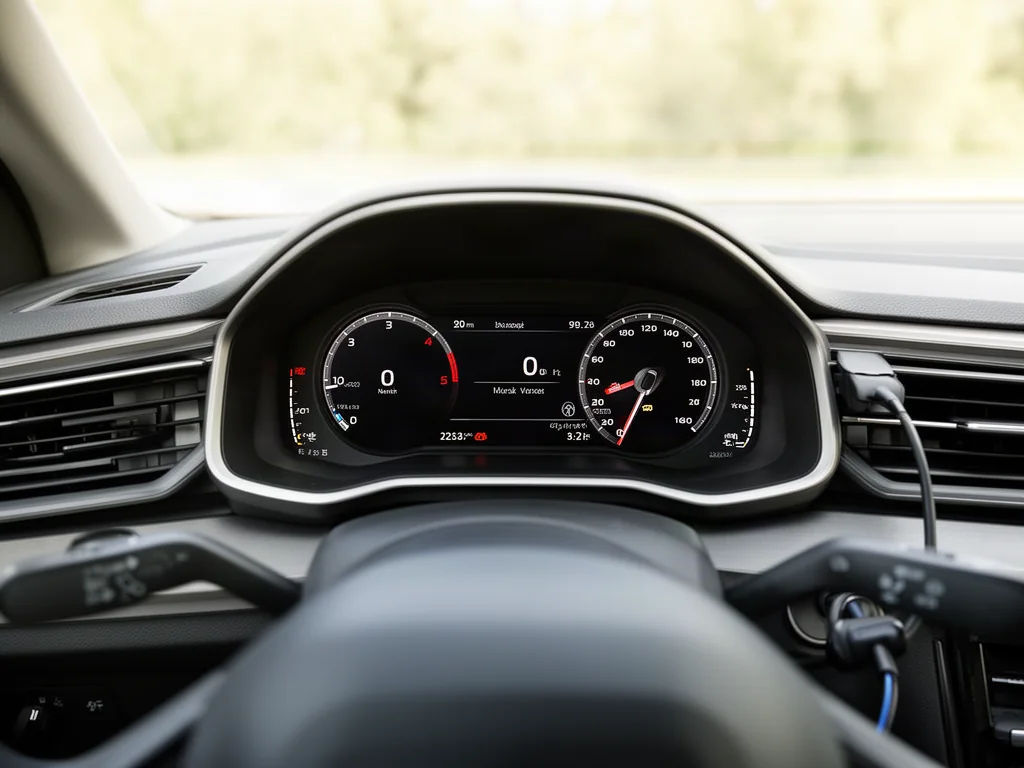
Mileage is one of the first numbers anyone checks on a used car, but the total says little until you compare it with the car's age. Knowing what typical annual driving looks like helps you spot a vehicle that has worked unusually hard or sat unusually long. It also tells you which questions to ask before you buy.
What Average Annual Car Mileage Means in the United States
The average annual mileage for a car in the United States is usually given as somewhere between about twelve thousand and fifteen thousand miles. It is more accurate to treat that as a range than as one exact number, because different data sets and different years give slightly different results. The figure is a statistical midpoint, not a target. It combines daily commuters, rural households that cover long distances, retirees who run a few errands a week, and fleet vehicles that run all day. A perfectly ordinary car can sit well away from the middle.
Estimates of annual driving distance generally come from federal travel surveys, along with insurance, registration, and inspection records that capture odometer readings over time. Each source has blind spots, which is another reason to read the result as a range. The average also changes. Remote and hybrid work cut commuting for many households, changes in fuel prices affect how much people drive, and families with more vehicles spread their miles across several cars. A figure from ten years ago may not reflect how people drive now, so be careful with older numbers.
How to Calculate Expected Mileage From a Car's Age
The quickest way to judge used car mileage is to multiply the car's age by the annual average. Work out the age from the model year and the current year, then apply both ends of the typical range to get an expected window. Take a car that is five years old. At twelve thousand miles per year you would expect roughly sixty thousand miles, and at fifteen thousand roughly seventy-five thousand. A reading of sixty-eight thousand falls comfortably inside that window. A reading near one hundred ten thousand clearly does not.
Model year only approximates age. A car may have been sold late in its model year or registered months after it reached a dealer, so its real time on the road can be shorter than the calendar suggests. Checking a car partway through the year adds another partial year to account for. These small differences rarely change the conclusion, which is why the result should be read as a range rather than a pass or fail number. A reading inside the range is normal. A reading outside it is simply a reason to ask why.
Factors That Push a Driver Above or Below the Average
Many ordinary drivers go well past the national midpoint without doing anything unusual. A long commute, a rural home thirty miles from the nearest grocery store, or a job that involves visiting clients across a region can all push yearly mileage far above average. At the other end, a second household car, a car used only in the city, or a vehicle owned by someone who works from home may cover only a fraction of the typical distance. Neither pattern is a problem in itself. It just shapes the kind of wear you should expect to find.
Commercial use deserves close attention. Former rental, rideshare, fleet, and delivery vehicles often pile up very high yearly mileage, with frequent idling, many different drivers, and constant stop-and-go driving. Some are serviced on a strict schedule and others are run hard, so it matters to identify that history. Low figures can also have explanations worth confirming. A convertible driven only in summer, a car stored while its owner was deployed or ill, or a vehicle parked during a long move can all look low mileage for their age with nothing wrong.
Judging a Used Car's Odometer: High, Low, or Normal for Its Age
High mileage and low mileage only make sense relative to age. A three-year-old car with a large odometer reading raises questions about how it was used. A fifteen-year-old car with very few miles raises questions about how it was stored. How the miles were driven matters as much as the total. Steady highway driving keeps the engine at operating temperature and involves few gear changes or brake applications. It generally causes less wear per mile than short city trips, which bring cold starts, hard braking, and constant acceleration.
When you look at the car, compare the visible wear with the odometer. A worn brake pedal pad, a shiny or cracked steering wheel rim, a flattened side bolster on the driver's seat, or a polished shifter knob on a supposedly low-mileage car should lead to questions. Then compare the reading with service records, title history, and inspection reports to confirm the mileage rose steadily over time. If the history is thin, the car falls outside the expected range, or anything seems inconsistent, a professional pre-purchase inspection will tell you much more than odometer arithmetic alone.
How Normal, High, and Low Mileage Affect Wear, Value, and Ownership Costs
Mileage above the norm for a car's age generally lowers resale value, because buyers assume more of the car's useful life is gone. Mileage below the norm tends to support value. Condition and service history still count for a lot, though. Some wear items track distance closely, including tires, brake pads and rotors, clutches, and suspension parts such as shocks and bushings. Others age with time no matter how much the car is driven. Rubber seals, hoses, belts, and the battery break down over the years, so an older car needs attention in these areas even with modest mileage.
That is why a very low-mileage older car is not automatically a bargain. When a car sits for long periods, the tires can develop flat spots, seals can dry out, fuel can go stale, brakes can corrode, and the battery can run completely flat. Short occasional trips may never fully warm up the engine. Mileage also affects coverage. Factory warranties and lease contracts usually set limits by both time and distance, and the lease allowances are often based on typical annual driving. Before buying, check how much of any remaining warranty still applies at the car's current mileage.
Warning Signs That Reported Mileage May Not Be Accurate
Some signs suggest an odometer may not reflect the car's real use. One is wear on the pedals, seats, steering wheel, and carpets that looks heavier than the reading suggests. A stronger warning is a service invoice, inspection record, or title document that shows a lower figure than an earlier entry. Unexplained gaps where the history suddenly stops are another. Digital odometers can still be tampered with, because the stored reading can be changed with specialized equipment. Title records, service history, and inspection reports remain the most reliable cross-checks because they record readings independently over many years.
Not every discrepancy is fraud. Replacing a faulty instrument cluster can legitimately change the displayed reading. In that case the seller should be able to provide repair paperwork showing when the work was done and what the mileage was at the time. If the history still does not add up, do not rely on the seller's verbal explanation. Have a professional check the car's condition and records, or walk away. Plenty of used cars have clean, consistent mileage histories, so there is little reason to accept doubt about such an important number.