Auxiliary Parking Heaters for Cars: Diesel, Gasoline, and Remote Operation
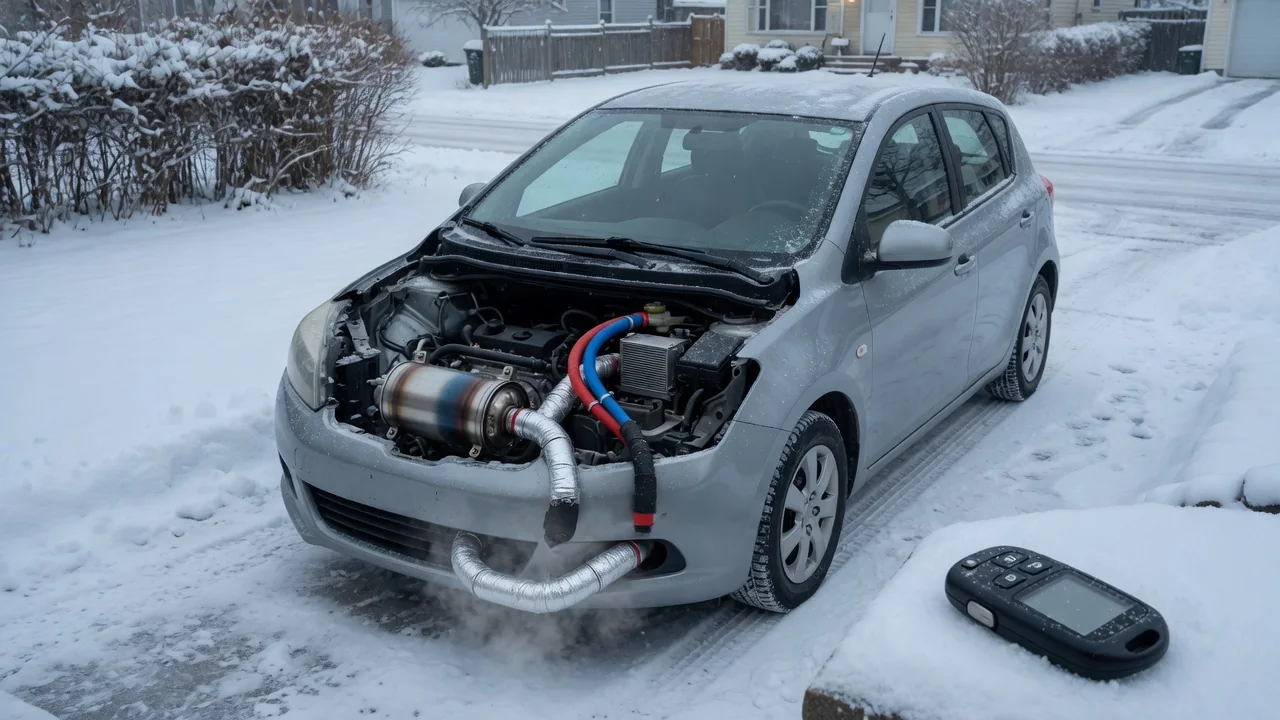
A car diesel heater is a fuel-fired parking heater that warms the cabin or engine without idling. An auxiliary heater for car use may burn diesel or gasoline when the equipment is approved for that fuel, and it may be mounted internally or as an external car heater. A remote controlled car heater starts the heater cycle, not necessarily the engine, unlike electric cabin or engine heaters that use only electrical power.
How Auxiliary Parking Heaters Deliver Heat
A fuel-fired parking heater produces heat by burning a metered amount of diesel or gasoline in a sealed combustion chamber while the vehicle engine can remain off. Electrical power still runs the controller, glow or ignition hardware, combustion and cabin fans, and any coolant circulation pump. That combination is why an aux heater for car duty is neither a purely mechanical stove nor a simple electric element. Combustion air enters a dedicated intake, mixes with fuel, and the resulting heat is transferred to cabin air or to engine coolant, depending on the installed architecture.
Cabin air heating systems blow warmed air into the passenger compartment, so occupants feel heat first. Coolant heating systems warm circulating coolant and can support engine preheating only when plumbing is tied into the engine circuit. Some auxiliary heater car products add heat only while the engine already runs, whereas a parking heater supports independent operation. Electric cabin heaters and engine heaters use electrical power as the heat source rather than burning fuel, so they differ from a diesel car heater or gasoline parking unit.
What a Diesel Heater Needs to Work in a Car
A diesel heater for car installation needs the fuel it is specified to burn, an approved fuel-supply arrangement, a reliable electrical feed, and mounting that matches the unit's approval. The vehicle being diesel-powered does not by itself make a diesel heater car product suitable; the complete heater, lines, pump, and exhaust routing must be approved for that application. Mixing hardware intended for another fuel, or tapping a tank in an unapproved way, can create leakage and combustion hazards.
Heater sizing for a car aux heater depends on cabin volume, insulation, outside temperature, and whether the goal is occupant comfort, windshield clearing, or engine preheating. A professional installer uses those factors to select capacity; warm-up time still varies with weather and how the system is ducted or plumbed, so no fixed interval should be assumed. Even with the engine off, heating consumes fuel and draws battery energy for fans, pumps, and controls. That battery draw can hinder a later start, so electrical loads belong in the installation plan.
Understanding Gasoline-Fueled Parking Heaters
In this context a gas car heater means a gasoline-fueled parking heater, not propane, natural gas, or another bottled gas unless the product is separately approved for that fuel. A gasoline car heater must be equipment designed and approved specifically for gasoline because fuel properties, metering, and combustion hardware differ from diesel. Using the wrong fuel can cause poor burning, deposits, leaks, or unsafe exhaust, so the heater's labeled fuel is the only acceptable supply.
Before buying a gas heater for car installation, confirm the unit's approved fuel, electrical requirements, listed vehicle applications, and installation documentation. Those papers, not a catalog nickname, establish whether the auxiliary heater for car use is legal and safe for the intended vehicle. Ask an installer how fuel will be taken from an approved pickup, where the heater can be mounted with required clearances, how exhaust routing will keep outlets away from openings, and how service access will be preserved. Those questions address integration rather than do-it-yourself repair steps.
Internal, External, and Portable Heater Placement
Internal and external placement describe mounting arrangements, not different heating principles. A car external heater, also called an external heater for car use, is still a fuel-fired unit whose location must match its approval and installation instructions. Combustion air must come from outside the passenger space, and exhaust must stay isolated from cabin air, including paths through windows, sunroofs, or ventilation intakes. An external car heater does not become safe merely because it sits outside the cabin if exhaust can still drift toward those openings.
A portable diesel heater for car marketing does not by itself prove the device is suitable inside a passenger car or for operation while driving. Packaging, a handle, or a 12-volt plug does not replace vehicle-specific approval, secure mounting, and isolated combustion and exhaust paths. Professional installation addresses weather exposure for a car heater external mount, heat clearances around bodywork, protected fuel and electrical connections, and safe routing of heated air or coolant. Unsecured units can shift, leak, or dump exhaust where occupants breathe.
Remote Controls, Timers, and Unattended Activation
A car heater with remote control may use a dedicated fob, a programmable timer, or an app, but those methods exist only when the installed system supports them. Remote activation starts the heater's operating cycle so cabin air heating or coolant heating can begin before occupants arrive. A remote control car heater does not necessarily crank or run the vehicle engine, which is a different function from remote engine start. Confirm what the controller actually commands, because a remote control heater for car use can warm the cabin while the engine remains off.
Before relying on a remote controlled car heater, check how the system reports activation feedback, programmed duration, and operating status on its display or paired device. Range and connectivity vary with antenna placement, battery condition, and surroundings, so no universal distance should be assumed. Unattended start still requires the vehicle to be outdoors, exhaust outlets clear of snow, leaves, or debris, and operating conditions within the manufacturer's limits. A car heater remote control is a convenience feature, not a substitute for confirming that combustion products can disperse safely.
Safe Operation and Signs That Need Professional Attention
Fuel-fired heaters must not run in enclosed garages, carports with poor airflow, or other confined spaces, because exhaust contains carbon monoxide. A carbon monoxide alarm does not make enclosed operation safe; it is a last-line detector, not a license to burn fuel indoors. Safe checks include reading dashboard or controller warnings and looking from outside for blocked intake or exhaust outlets. Do not touch hot housings, exhaust parts, or coolant lines, and do not dismantle the heater to inspect it.
Persistent smoke, raw fuel odors, exhaust entering the cabin, or repeated unexpected shutdowns mean the aux car heater should be stopped and assessed by a qualified technician. Those symptoms are evidence that something in combustion, fuel delivery, exhaust routing, or controls needs investigation; they do not by themselves prove a particular part has failed. Normal shutdown and cooldown follow the manufacturer's instructions so residual heat and remaining combustion products are handled as designed. Fuel-system, combustion, electrical, and coolant testing are professional work, not roadside improvisation.