Automatic Transmission Fluid Change Kits: How to Choose the Right Kit
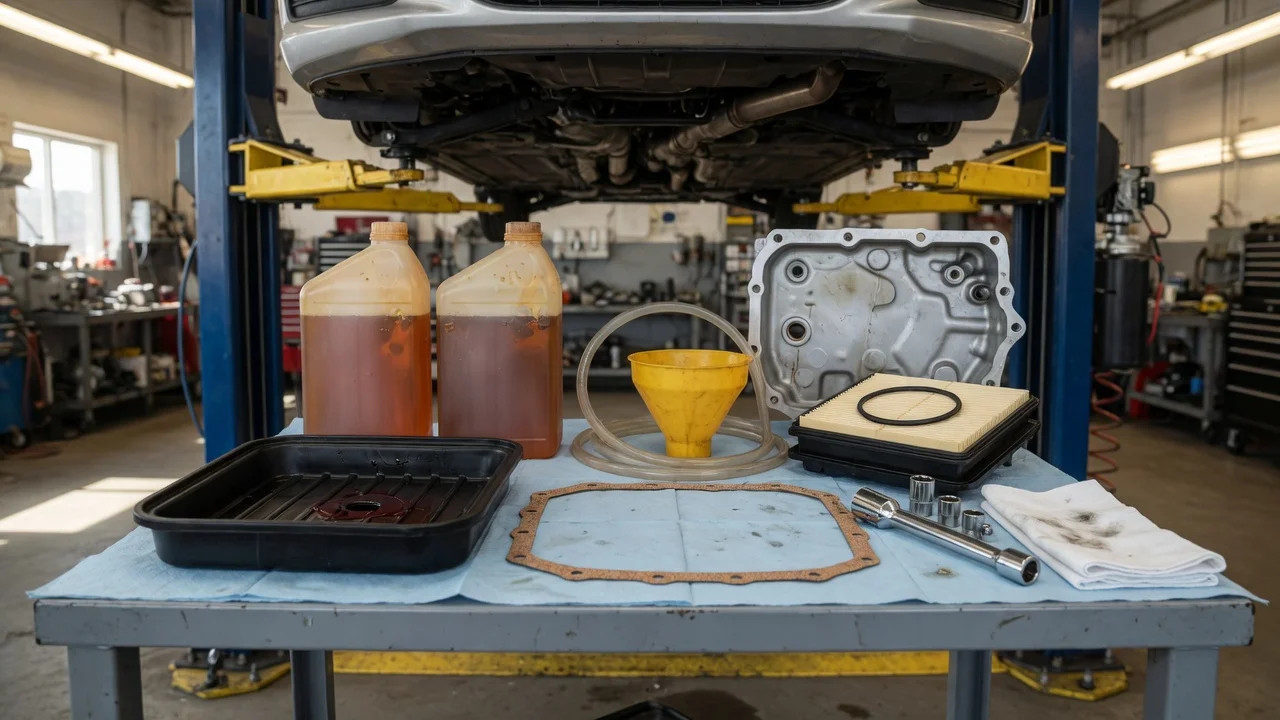
What a transmission fluid change kit is
An automatic transmission fluid change kit is a packaged set of the fluid and service parts used to replace automatic transmission fluid (ATF) on a specific vehicle. The right kit is the one that matches your transmission type, the manufacturer’s fluid specification, the filter and pan seal that transmission actually uses, and the service method you will perform: a drain-and-fill, a pan drop with filter replacement, or a larger-volume fluid exchange.
Fitment is vehicle-specific. A kit sold for one car can be wrong for another even when both are labeled automatic. Conventional torque-converter automatics, continuously variable transmissions (CVTs), dual-clutch transmissions (DCTs), and many hybrid e-CVT units use different fluids and often different filters. If the listing does not name your year, make, model, and transmission, treat the kit as unconfirmed.
Match the kit to the transmission
Choose from the vehicle first, then from the fluid specification. Brand names on a bottle are not a substitute for the spec printed in the owner’s manual or on the dipstick.
Year, make, model, engine, and the transmission code or name when it appears on a build sticker, door jamb, or in the owner’s manual; Transmission family: conventional automatic, CVT, DCT, or hybrid e-CVT; The OEM fluid specification from the owner’s manual, dipstick, or under-hood label. Spec families include Dexron, Mercon, ATF+4, Toyota WS, Honda DW-1, and dedicated CVT or DCT fluids; Whether the oil pan holds a replaceable filter and a service gasket, or the filter sits inside the valve body; How much fluid the intended service will use. A pan drain typically returns only part of the total fill because fluid remains in the torque converter and cooler lines
Later Dexron or Mercon generations are not automatically correct for every earlier application, and some newer factory fills are not backward-compatible with older specs. Multi-vehicle labeling does not by itself prove the fluid meets your OEM specification.
Kit types compared
Kits differ by what they include and by the job they support. Compare them on fitment, fluid spec, parts completeness, and how much of the old fluid the service will actually replace. Costs and capacities vary by vehicle and seller, so use the table as a decision frame rather than a price or volume ranking.
Kit style What it usually supplies Fits this job Main trade-off; Fluid-only pack ATF in a stated volume, sometimes a drain-plug washer Drain-and-fill when the pan filter is not due or is not serviceable from the pan Leaves a large share of used fluid in the converter and cooler unless you repeat the drain; Pan-drop or filter kit Fluid plus pan filter and gasket; often a crush washer Conventional automatics with a replaceable pan filter Requires dropping the pan; messier, and the filter shape must match that transmission; High-volume or exchange pack Extra quarts or liters for a machine exchange or repeated drain-and-fills When you want a higher percentage of new fluid and the method is accepted for that unit Uses more fluid and costs more; some manufacturers caution against high-pressure flushing through the cooler circuit; CVT or DCT kit Fluid, and sometimes a strainer, specified for that design Only the CVT or DCT family it names Conventional ATF kits are the wrong product for these transmissions; OEM service kit Factory-specified fluid and, when offered, the matching filter and seals Highest confidence that friction chemistry and filtration match the original fill Often priced higher and may still omit enough volume for a full exchange
What a complete kit should contain
For a pan-drop service on a conventional automatic, the parts that determine whether the kit is correct are the fluid spec, the filter, and the pan seal. Convenience extras such as gloves or a funnel do not.
Fluid that states the OEM specification, or a licensed equivalent, in enough volume for the job you will do; The pan filter or filter kit for that transmission, if the filter is designed to be replaced from the pan; The pan gasket, reusable rubber seal, or the sealant type the manufacturer specifies. Do not assume RTV if the pan uses a dry gasket, or the reverse; A drain-plug crush washer when the pan has a threaded drain plug; Any pan magnets, pickup-tube seals, or cooler-line O-rings the kit claims to include, verified against your transmission
If the filter is an internal valve-body filter that dropping the pan does not reach, a pan-service filter in the box will not replace it. Confirm filter location from the service information for your transmission before you buy. Kit volume is a purchase check, not a fill instruction. The correct level is set by the procedure in the service manual, often with the engine running and, on sealed units, at a stated fluid temperature. Exact capacities, fill temperatures, and part numbers are not universal.
Fluid specification comes first
ATF is a hydraulic fluid, lubricant, and friction-modifier package. The friction characteristics are tuned to the clutches and bands in a specific transmission family. The wrong spec can cause shudder, delayed or harsh engagement, slipping, or pump and bushing wear.
CVT belt-or-chain units need CVT-specific fluid. Dual-clutch units, including many wet-clutch designs, need DCT-specific fluid. Hybrid e-CVT units often have their own spec. Marketing language that calls a factory fill lifetime does not mean the fluid never oxidizes. Many makers still publish a severe-service interval; towing, taxi use, mountainous driving, and high heat shorten fluid life.
Filter, gasket, and the service you plan
A drain-and-fill needs the correct fluid and, usually, a new crush washer. One drain typically replaces only part of the total fill on many conventional automatics; the rest stays in the converter and cooler. Repeating the drain after a short drive raises the share of new fluid. That fraction varies by transmission, so treat any published third-or-half figures as typical, not a measurement for your vehicle.
A pan drop needs fluid, the correct filter, and the correct pan seal. Inspect the pan magnet and fluid for metal. Heavy debris is a stop condition for a simple fluid change and a reason for diagnosis rather than a kit-only service.
A fluid exchange needs more fluid than a single pan fill. Confirm that the shop or machine method is accepted for your transmission. A kit labeled flush does not authorize a method the manufacturer warns against. On sealed, no-dipstick transmissions, a retail kit can still supply the right fluid and filter, but setting the level may require a scan tool for temperature and a specific overflow-plug procedure. If you cannot follow that procedure, the kit does not make the job a simple driveway service.
OEM kits versus aftermarket packs
OEM fluid and filters give the clearest match to the friction chemistry and filtration the transmission was built with. Vehicle-specific aftermarket kits are convenient when they list your application and include the pan filter and gasket together. Check that the fluid inside is named to your OEM spec, not only ATF or a broad multi-vehicle claim.
Universal or value kits trade price for mismatch risk. They are a poor fit when the listing is vague, the filter looks generic, or the fluid does not state the specification your manual requires. Licensed equivalents, meaning fluid the specification owner has licensed, are a stronger claim than unlicensed compatible-with language. Prefer a stated spec or license over a compatibility list you cannot verify.
Which option fits the intended use
You know the exact model and will drop the pan: buy a vehicle-specific pan-drop kit that lists your transmission, includes the matching filter and gasket, states the OEM fluid spec, and supplies enough fluid for pan refill plus a margin if you will do a second drain. You will only drain and refill: a fluid-only pack in the correct spec is enough if the filter is not due. Add a crush washer if the pan uses one. You have a CVT or DCT: use only a kit and fluid labeled for that CVT or DCT spec. The transmission is sealed or the filter is internal: buy fluid, and any reachable filter, that matches the spec, and plan on the factory fill procedure or a shop that has the scan tool and service information. You tow, drive in mountains, or the fluid is dark, burnt-smelling, or overdue: a pan-drop or exchange that replaces more of the old fluid is the better service than a single drain, provided the transmission is otherwise healthy. The fluid has heavy metallic debris, the unit already slips, or there is a leak you cannot trace: a change kit is not a repair. Diagnosis comes first.
Checks before you buy
The listing names your year, make, model, and transmission, or you can match the filter and gasket to the OEM part numbers. The fluid specification on the bottle matches the manual, not only a similar-sounding older spec. Quantity covers the service you will do. A four-quart kit is not automatically a complete fill. Gasket material matches the pan design. You can still return the kit if the filter does not physically match when the pan is off.
When a kit is not the whole answer
A change kit supplies consumables. It does not set fluid level, adapt shift solenoids, or fix mechanical wear. Work that needs the factory procedure, a temperature-based fill, or interpretation of debris in the pan is qualified service if you do not have the manual, tools, and a legal way to dispose of used ATF in your jurisdiction.
No single kit, interval, or capacity applies across model years, markets, and powertrains. Confirm fitment and the fill procedure from the manufacturer information for your vehicle before you purchase or start the job.