Automatic Transmission Coolers: How They Work and When You Need One
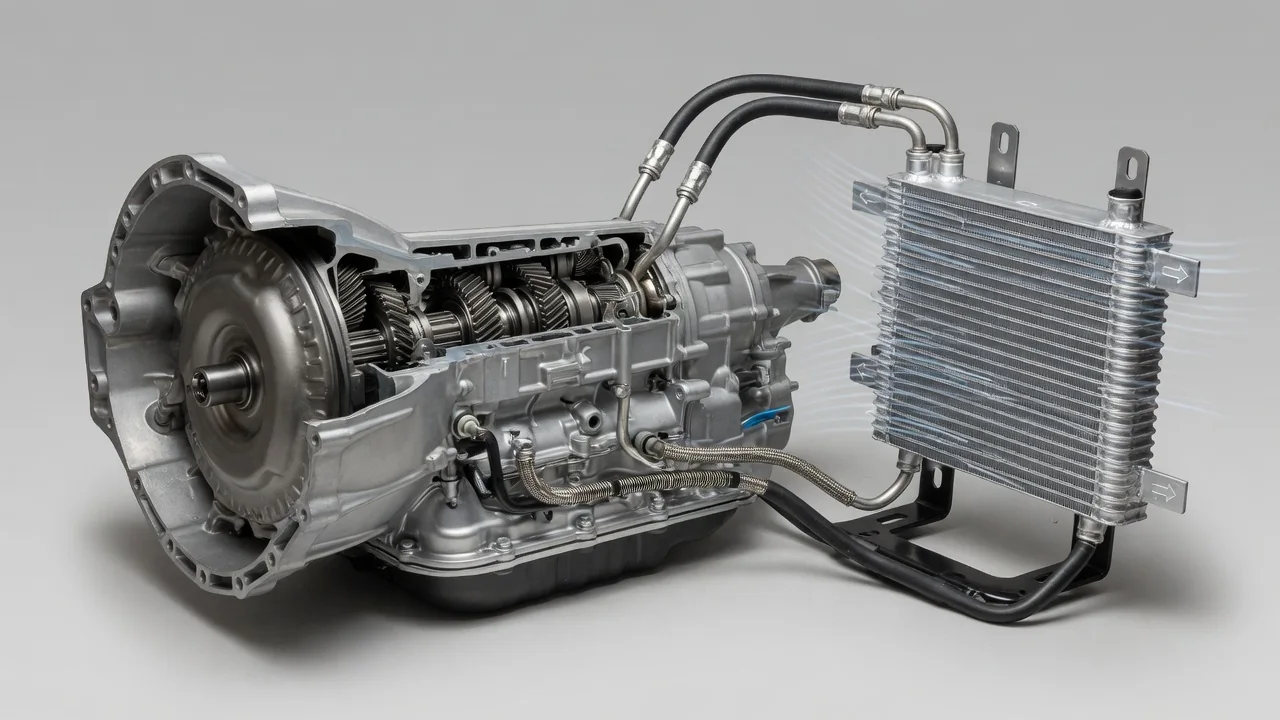
An automatic transmission oil cooler is a heat exchanger that removes heat from circulating transmission fluid so the gearbox can keep hydraulic control and friction materials in a workable range. Automatic transmission coolers and automatic transmission cooling support that job during driving, towing, and other heavy use, but they cannot repair internal damage. Whether factory cooling is enough depends on the vehicle and how it is used.
How an Automatic Transmission Oil Cooler Moves Heat
Inside an automatic transmission, clutch packs, torque conversion, and fluid shear generate heat whenever the vehicle is moving or held against a load. Circulating transmission fluid absorbs that heat and carries it through cooler lines to a heat exchanger. An automatic transmission oil cooler then transfers energy from the hot fluid into another medium. On some vehicles that medium is engine coolant inside a radiator heat exchanger. On others it is outside air passing over a dedicated cooler core. Dual arrangements exist as well.
Heat rejection depends on three practical conditions: how much fluid is flowing, how much airflow reaches the cooler, and how cool the receiving coolant or air already is. Slow traffic, a blocked grille, or a heat exchanger already running hot all reduce the temperature difference that drives heat out of the fluid. Automatic transmission oil coolers therefore manage transmission fluid temperature; they do not restore worn clutches, a failing pump, or other internal damage. If those problems exist, extra cooling only delays the evidence.
Where the Cooler Fits Into the Factory Cooling System
Factory automatic transmission cooling can sit inside the radiator as a tank or stacked heat exchanger, as a separate external cooler in the airstream, or as both in series. A radiator-integrated cooler typically exchanges heat with engine coolant, which can also help bring cold transmission fluid up to a more stable operating range after a start. That warming effect matters because overly cold fluid can shift poorly until it thins and the hydraulic circuit reaches intended pressure and response.
Some systems include a thermostatic bypass that routes fluid around part of the cooler until a designed temperature is reached, then opens the cooler path for heat rejection. Bypass circuits, cooler lines, and the order of exchangers are vehicle-specific, so a layout that looks similar on another truck or car is not proof of the same plumbing. Before planning an auxiliary transmission cooler, confirm what equipment is already fitted and follow the vehicle manufacturer's guidance rather than assuming a missing or undersized cooler.
When Towing or Heavy Use Warrants Added Cooling
Sustained towing load, long grades, heavy cargo, stop-and-go traffic, and hot weather all raise the thermal workload on an automatic transmission. The torque converter and clutches spend more time converting power into heat, and the fluid has less time to reject it between events. A factory automatic transmission cooler may keep up in ordinary driving yet struggle when those conditions last for hours. The issue is whether the existing heat exchanger and airflow can reject that heat as fast as it is produced.
Whether an auxiliary transmission cooler is worthwhile depends on actual use, measured transmission fluid temperature behavior, any factory towing package already installed, and the manufacturer's published guidance. Added cooling can be reasonable when permitted towing or other heavy work places a sustained demand on the stock cooler. It does not raise the vehicle's tow rating, payload limit, or permitted combined weight. Those limits remain as stated by the manufacturer, and extra cooling is a thermal aid, not a license to haul more than the vehicle is rated to carry.
Recognizing Cooling Concerns Without Guessing the Cause
A transmission temperature warning, delayed or harsh shifts, a burnt fluid odor, or visible leakage at cooler lines or the pan are reasons to investigate, not proof that an automatic transmission oil cooler has failed. The same symptoms can come from low fluid, a restricted line, an engine cooling problem, or internal wear. Transmission fluid temperature readings also need context: sensor location, recent load, ambient heat, and whether the reading is taken during a climb or after a stop all change what a number means. There is no universal cutoff that applies to every vehicle.
Safe observations help a later diagnosis. Note when warnings appear, what the vehicle was doing, and whether they clear after a rest. With the vehicle parked and cool, look for leaves, mud, or other debris at accessible cooling openings that could starve the heat exchanger of airflow. Do not probe hot lines or open the cooling system while it is pressurized. Repeated warnings or abnormal shifting call for professional diagnosis. If an overheating warning appears while driving, follow the owner's manual rather than continuing under load.
What to Verify Before Adding an Auxiliary Cooler
An auxiliary transmission cooler is not a generic add-on. It must suit the specific transmission, including the fluid it uses, the flow the pump can sustain, and any thermal-control strategy already in the circuit. Selection should weigh expected heat load, how much extra restriction the cooler and fittings will add, where it can be mounted, and whether that location actually receives airflow. A large core placed behind a bumper cover or stacked in dead air may reject little heat even if it looks substantial.
Professional installation also depends on fluid-compatible cooler lines and fittings, secure mounting, and shielding from abrasion, fan blades, and road debris. Routing and connection order matter because placing a cooler in the wrong sequence can defeat a thermostatic bypass, starve the transmission of flow, or send fluid through a path the control system does not expect. There is no universal plumbing diagram that fits every automatic transmission. Follow vehicle-specific instructions and the cooler maker's guidance for that application rather than copying another vehicle's hose layout.
Confirming Cooling Performance and Knowing Its Limits
After an automatic transmission cooler is added or serviced, professional checks should confirm there are no leaks at fittings and lines, that fluid level is set with the specified procedure for that transmission, and that the unit shifts and behaves normally before returning to work. Temperature monitoring during representative, permitted use then shows whether automatic transmission cooling is actually keeping up. A short neighborhood drive is a weak test. A grade, a trailer within the vehicle's rating, or hot-weather traffic closer to real use gives a more useful picture of transmission fluid temperature.
If heat remains high after added cooling, the cooler is only one possible cause. Restricted flow in cooler lines, an engine cooling fault that overheats a radiator heat exchanger, incorrect fluid level, or internal transmission problems can all keep temperatures elevated. Those issues need testing rather than another core stacked in front of the first. Inspect the installation according to the vehicle and cooler manufacturers' guidance. Do not invent a calendar interval; follow what those sources specify for that equipment and how the vehicle is used.