Automatic Emergency Braking Warning Light: What It Means and What to Do
Direct Answer
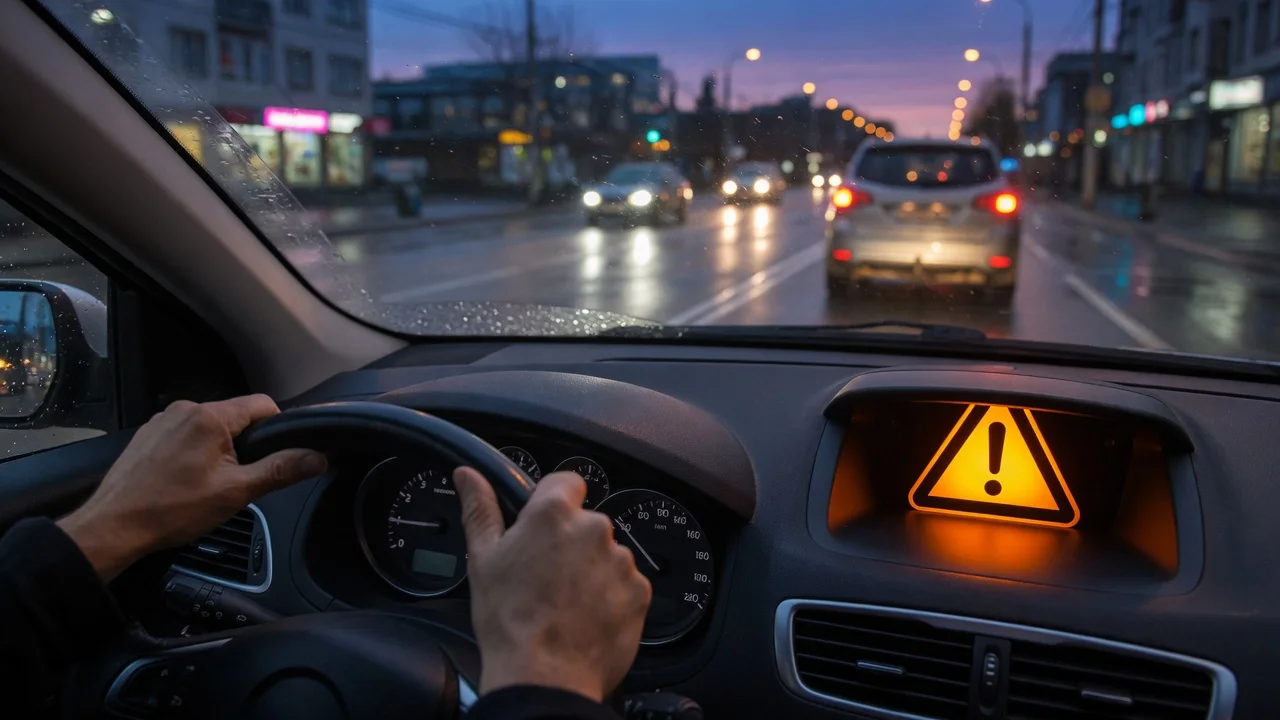
An automatic emergency braking (AEB) warning light typically means the system is temporarily unavailable, switched off, or has detected a fault. The light may be amber, yellow, or red depending on the vehicle. When this light is on, the car will not provide automatic braking interventions until the condition is resolved. In some vehicles, the same warning appears as a message such as "AEB OFF," "Front Camera Blocked," or "Sensor Blocked."
What the Warning Light Covers
Automatic emergency braking relies on forward-facing sensors, commonly a camera mounted behind the windshield or a radar unit in the front grille. Systems with pedestrian detection may combine both. The warning light generally covers the entire AEB function, including vehicle detection and, where equipped, pedestrian or cyclist detection. If the light is on, expect all automatic braking functions to be inactive.
Common Causes and Observable Checks
The first thing to check is whether the system was manually switched off. Many cars have a physical button or a menu setting that disables AEB. If the switch is off, the warning light will remain on by design. Turning the system back on should clear the light.
The most frequent external cause is a blocked or obscured sensor. Dirt, snow, ice, mud, or condensation on the windshield camera area or front radar emblem can prevent the system from seeing the road ahead. Clean the outside of the windshield in front of the rearview mirror and the front grille or bumper area. After cleaning, restart the vehicle. If the blockage was the cause, the light should go out after a short drive or on the next ignition cycle.
Poor visibility can also trigger the warning. Heavy rain, fog, direct low sun, or driving into bright light can temporarily reduce sensor confidence. In these conditions, the light may appear even when the hardware is clean. This is usually temporary and clears when visibility improves.
If the light stays on with clean sensors and clear weather, a system fault may be present. Possible causes include a misaligned camera or radar, a wiring or connector issue, a software error, or a failed component. A stored diagnostic trouble code is evidence to investigate rather than proof that a specific part has failed. For example, a code related to the front camera does not automatically mean the camera itself is faulty; the wiring, mounting, or calibration may be responsible.
When to Stop Driving or Seek Professional Diagnosis
The car remains drivable with the AEB light on, but the automatic braking safety net is unavailable. Drive with extra following distance and brake manually. If the warning light is red or is accompanied by other warnings such as a brake system, stability control, or airbag light, stop driving and have the vehicle inspected. A persistent amber or yellow AEB light that does not clear after cleaning the sensors and restarting the car should also be checked by a qualified technician. Calibration of a camera or radar after windshield replacement or front-end repair is a documented requirement on many models, and skipping this step can leave the warning light on.
Variant Notes
Exact behavior varies by model year, generation, trim, and market. Some vehicles use "AEB OFF" when the driver disables the system and a separate fault symbol when a failure is detected. Others show a single warning for both conditions. Vehicles equipped with pedestrian detection may display a distinct message if only that subset is degraded, but most systems treat the AEB warning as global to the function. Always check the owner's manual for the specific symbol and recommended action for your vehicle.