Auto Start-Stop Not Working After Battery Replacement: Causes and Checks
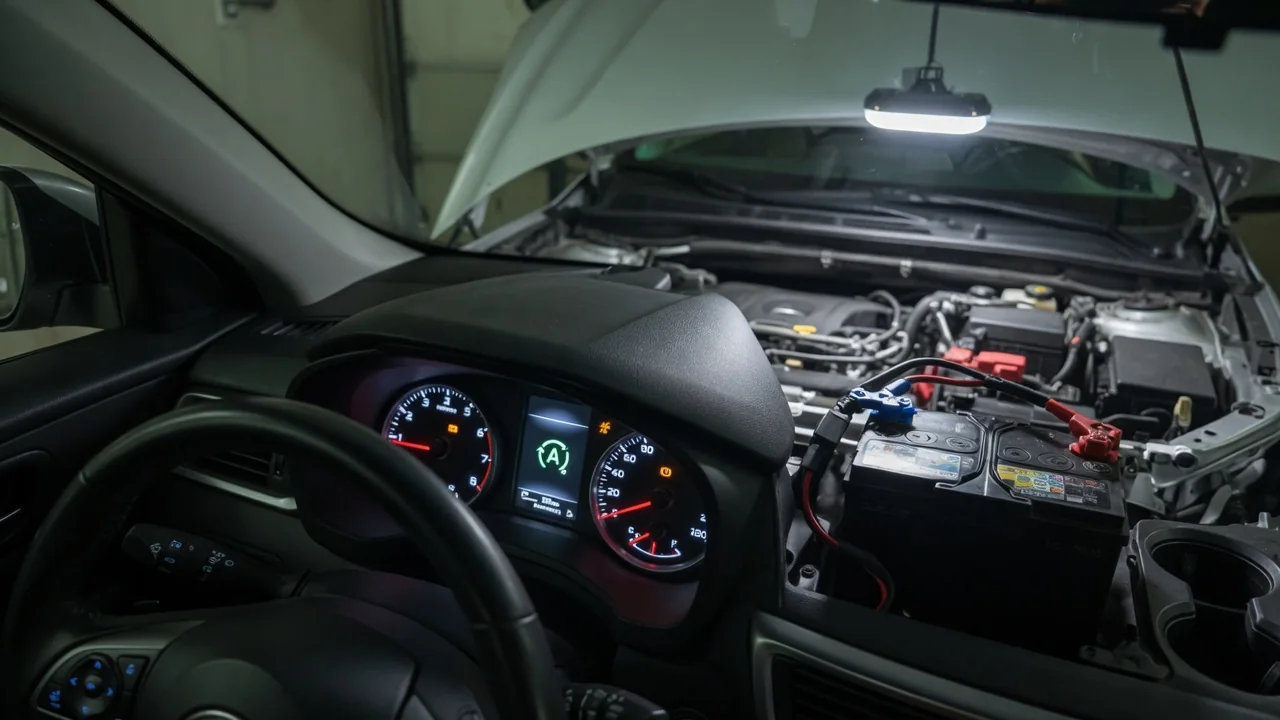
When auto start/stop is not working after battery replacement, the cause is often the vehicle protecting itself rather than a defective part. The system depends on how the car judges battery charge and health, and a swap can disturb that judgment. This guide explains the common reasons, what Jeep Wrangler owners should confirm, and which checks are safe before booking a shop visit.
Why Start-Stop Often Stays Off Right After a Battery Swap
Start-stop logic leans heavily on the vehicle's running estimate of battery state of charge and overall health. Every engine stop means the battery must carry the electrical load alone and then crank the engine again, so the control module allows stops only when it trusts the numbers. Disconnecting a terminal or fitting a new battery can wipe or disrupt that stored estimate, leaving the module with little history to work from. Until confidence returns, a start-stop system unavailable message or a crossed-out indicator is a common result.
Many vehicles use a battery monitoring sensor, sometimes called an intelligent battery sensor, mounted at the negative terminal to track current, voltage and temperature. After a swap, that sensor or its module may need normal driving and periods of rest to relearn battery condition, and the time involved varies by manufacturer with no universal timeline. A new battery not fully charged from sitting on a shelf adds to the delay, because the system may wait until charge looks adequate. That waiting is usually a protective strategy, not a fault in itself.
Battery Type, Specification and Registration on Start-Stop Vehicles
Vehicles with start-stop commonly specify a particular battery technology, typically an AGM battery or an EFB battery, because frequent restarts and deeper cycling are hard on conventional flooded designs. The owner's manual or a dealer should confirm the correct type, size and rating for the exact vehicle. A battery that does not match the specification may be charged in a way that does not suit it, and the monitoring software may read its behavior differently than expected, which can influence whether engine stops are permitted.
Some manufacturers require battery registration or configuration with a scan tool so the charging strategy knows a fresh unit is installed and what its characteristics are; others adapt on their own through a battery relearn during driving. Because the requirement differs between brands and even between model years, owners should check what applies to their vehicle instead of assuming either way. Keeping the battery's label details, including its technology and ratings, along with the purchase receipt lets a shop quickly confirm that the replacement matches the specification.
Jeep Wrangler Start-Stop Not Working After a Battery Change
With a Jeep Wrangler auto start stop not working after battery change, the first step is confirming which battery or batteries the exact model year, engine and trim uses. Some configurations may use a supplementary battery, also called an auxiliary battery, to support start-stop alongside the main one, so replacing a single battery may not address the unit the system actually relies on. The owner's manual or a dealer can settle that question, and owners should note which battery was replaced and whether it matches the factory specification.
The instrument cluster or vehicle information display often shows a start-stop status message that states why the feature is unavailable, such as the battery charging or another condition not being met. Reading that message is more useful than guessing, because it points toward charge level, operating conditions or something needing diagnosis. It is also worth asking a dealer whether any service bulletins or software updates apply to the specific vehicle, checked by its identification number, rather than assuming a fix described by another owner will carry over.
Everyday Conditions That Disable Start-Stop Even With a Good Battery
A healthy, correctly matched battery does not guarantee engine stops, because the system weighs many other inputs. The engine generally needs to reach operating temperature first, and very hot or cold outside or cabin conditions can block stops so comfort and component protection are maintained. Heavy climate-control demand, a defrost setting or large electrical loads such as heated seats and rear window heating can also keep the engine running, since stopping it would drain the battery faster or interrupt air conditioning output.
Driver and vehicle status matter as well. On many vehicles an unbuckled seatbelt, an open driver's door or an unlatched hood prevents engine stops, as does turning the steering wheel sharply while halted. A minimum speed often has to be reached before the first stop of a trip, so short crawls through a parking lot may never qualify. The start-stop button also tends to reset to its default each time the engine starts on many models, making it sensible to glance at the start-stop indicator light after every start.
Safe Observations Owners Can Make Before Visiting a Shop
Begin by confirming the start-stop indicator shows the feature is enabled rather than switched off at the button, then write down any message explaining why it is unavailable, along with the outside temperature and how long the drive was. Next, drive normally over several trips that mix city stops with longer steady stretches, a pattern sometimes described as a drive cycle, and note whether stops return. A system that comes back on its own after a few days points toward relearning or charge recovery, not a defect.
Voltage read from a dashboard gauge or a basic meter says little about real capacity, so having a parts store or shop test the battery's state of charge and health with a proper tester is more reliable than guessing. A visual check under the hood for obviously loose clamps or corrosion is reasonable, but without touching terminals or handling the battery. Resist the urge to disconnect the battery again as a reset, because doing so may restart the relearn process and lengthen the wait.
When Start-Stop Problems Need Professional Testing
Professional diagnosis makes sense if the system stays unavailable after a reasonable period of normal driving, or sooner if a battery light or charging system warning appears. A technician will usually scan for stored codes, but codes related to battery sensors, charging or start-stop functions can mean different things depending on the manufacturer. Their meaning should be checked against vehicle-specific service information first, and even then a code is evidence to interpret alongside test results, not proof that a particular part has failed.
Several tasks call for proper tools and training: battery registration, testing the battery sensor and its wiring, checking a supplementary battery or its relay where fitted, and installing software updates. These involve scan tool functions and electrical measurements that are easy to get wrong without the correct procedures. A start-stop function that has simply stopped working usually does not affect normal driving, since the engine just keeps idling at stops, but charging-system warnings are different and should be checked promptly, because a battery that is not being charged can leave the vehicle stranded.