Audi TT Brake Booster Vacuum Hose: Choosing the Correct Part
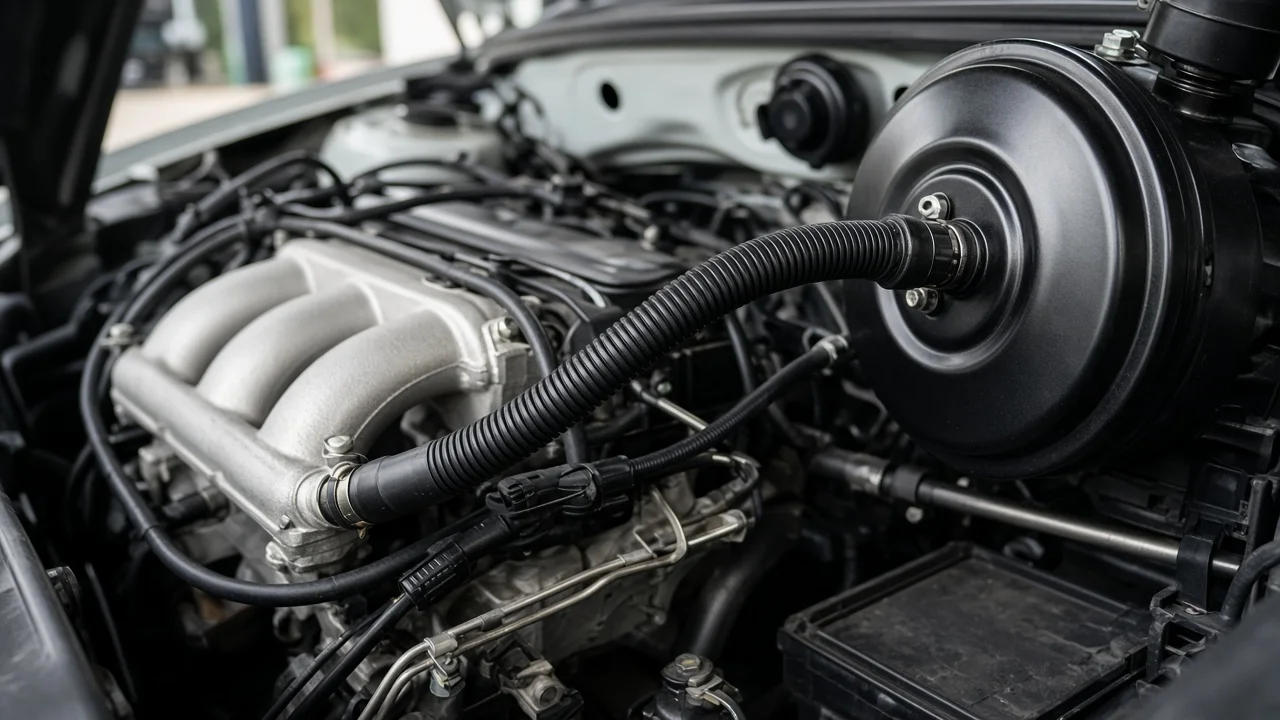
On an Audi TT, the brake booster vacuum hose carries the vacuum that keeps pedal effort light and predictable. It looks like a minor rubber or plastic line. If it cracks, collapses or loses its check valve function, the pedal turns hard and the car needs more force to stop. This guide shows how to confirm the hose is the problem, match a replacement to your TT and compare options on evidence.
Define the job the replacement hose must do
The brake booster uses vacuum to multiply the force your foot puts on the master cylinder. Depending on the engine, that vacuum comes from the intake manifold, a vacuum pump or a combination of the two. The hose links that source to the booster, usually through a one-way check valve. The valve holds vacuum in the booster when the engine supplies little of it. On turbocharged TT engines, it also stops boost pressure from reaching the booster under load. A replacement must seal completely, resist collapse under vacuum, tolerate engine-bay heat and oil vapor, and keep the check valve working in the correct direction.
Confirm the fault before buying parts. Typical signs of a leaking or blocked hose include a firm pedal, most noticeable on the first stops after a cold start. You may also hear a hiss near the firewall when you press the pedal, and an air leak can bring rough idle or lean-mixture fault codes. A quick check: with the engine off, pump the pedal several times to use up the stored vacuum. Then hold light pressure on the pedal and start the engine. A working system lets the pedal drop slightly. Next, inspect the hose for cracks, brittle or swollen sections, oil soaking and broken clips. A spongy or sinking pedal points to the hydraulic side, such as brake fluid or a caliper, not the vacuum hose. If braking is clearly weakened, stop driving the car and have it serviced.
Check compatibility with your TT
Vehicle fitment depends on more than the model name. The TT was built in three generations, and engines across them include the 1.8T, the 3.2 VR6, the 2.0 TFSI and the five-cylinder TT RS. Hose routing, length and connections can differ between engines, and sometimes within the same generation. Note your model year, generation, engine and transmission. Also check whether the car is left- or right-hand drive, because the booster sits on opposite sides. Some hoses also change during a production run, so the model year alone may not settle the question.
The most reliable route is a parts lookup by VIN. Alternatively, read the part number printed or molded on your existing hose, if it is still legible. Then compare the physical details against the old part. Check the overall length and the preformed bends. Count any tees or branches that feed other vacuum consumers. Match the connector type at each end, such as a quick-connect elbow at the booster or a push-on end at the vacuum source. Finally, confirm whether the check valve is built into the hose or sold separately. Treat listings that claim to fit every TT without naming generations and engines as unverified.
Features that affect the choice
Most options fall into three groups: original-equipment parts, direct-fit aftermarket hoses and universal hose sold by length. A direct-fit hose keeps the factory routing and fittings, so it avoids kinks and chafing points. Universal hose needs adapters and careful routing, which is a poor compromise on a braking system. The material matters too. Molded rubber and nylon lines are common, and any substitute must carry a vacuum and temperature rating, with walls stiff enough not to collapse. Silicone performance hoses can work if the wall thickness and rating suit vacuum service, but color and stiffness say nothing about that. Labels such as heavy duty, performance or OE quality mean little unless a part number cross-reference and a stated material back them up.
Useful evidence includes an OE number cross-reference and clear photos of both ends and the check valve. Look for the valve's flow marking: it should let air pass only from the booster toward the vacuum source. Check whether new clips, O-rings or a booster grommet are included, since reusing old, brittle fittings is a common cause of repeat leaks. A clear warranty and return policy also help if the part arrives with different connectors.
Limitations and ownership costs
The part itself is usually inexpensive, but plan for the extras. Depending on the engine, you may need to remove engine covers or intake components to reach the hose. Plastic quick-connect fittings that have aged in engine heat can crack during removal. The rubber grommet where the hose enters the booster may also be hardened, so budget for new clips and seals. After installation, check for leaks with the engine running, repeat the pedal test and clear any stored fault codes. Then confirm normal braking with a careful low-speed test before regular driving.
A new hose only restores vacuum supply. It will not cure a torn booster diaphragm, a weak vacuum pump, air or moisture in the brake fluid, or a sticking caliper. It also cannot help brake pads or brake rotors worn past their wear limits, or friction material that is glazed or contaminated. If the pedal is still hard with a sealed new hose, diagnose the booster and the vacuum source before buying more parts. A professional check makes sense whenever the cause is unclear.
Build a practical shortlist
Use a short checklist when comparing listings. Confirm the generation, model year and engine, ideally through a VIN-based lookup. Match the OE part number or a documented cross-reference. Compare length, bends, branch count and connector types against your old hose. Verify the check valve is included or ordered separately, with the correct flow direction. Look for a stated material rated for vacuum and engine-bay temperatures, and note whether clips, O-rings or a grommet come in the box. Finally, make sure the seller states a clear return policy for fitment mismatches.
Rank the options in a simple order. First choice is a hose matching your OE number with identical connectors. Next comes a direct-fit aftermarket hose with a documented cross-reference and clear photos. Universal hose belongs only in an emergency short trip to a workshop, not as a permanent repair. Drop any listing with vague fitment, no images of the fittings or no information about the check valve. A correctly matched hose, installed with fresh fittings and verified with a pedal test, is what returns normal assist.