Audi Transmission Fluid Change: Requirements and Procedure
What the service is, and what changes the answer
An Audi transmission fluid change is a gearbox-specific service: drain or exchange the fluid named for that unit, restore the level by the method that unit uses, and replace the filter, pan gasket, and plug seals when the procedure calls for them. There is no single Audi fluid, fill quantity, interval, or plug layout that covers every model year, market, and powertrain.
The gearbox family is the qualification that changes the job. Manual gearboxes use a dedicated gear oil and a fill-hole level. Torque-converter automatics use ATF and, on many units, a serviceable pan and filter. Wet dual-clutch S tronic and DSG units use a dual-clutch fluid and usually a temperature-controlled overflow level, often with a filter kit. Dry seven-speed dual-clutch units (the DQ200 family and related codes) keep a dry clutch and a small, separate mechatronic hydraulic fill. Older Multitronic CVT units require CVT fluid. Hybrid and e-tron drive units follow their own published fluids and access rules. Identify the gearbox code from the transmission data plate, the vehicle build data, or a diagnostic scan before ordering fluid.
Some owner’s literature describes certain automatics as filled for life. That wording is a factory maintenance policy for that handbook edition. It does not by itself define a mechanical limit, and later workshop documents for the same gearbox family may still list a fluid service. Treat the current maintenance literature for that VIN and gearbox code as the authority for interval and specification.
Documented fill volumes, plug torque values, and the exact temperature window for the overflow check are gearbox-code and revision dependent. Those figures are not listed here because they must be taken from the applicable manufacturer procedure. Using a substitute “universal ATF,” guessing a torque, or setting level on a sloping hoist are the usual ways this job fails.
What to confirm, tools, and the working procedure
Complete these checks before any drain. Match the fluid specification printed for that gearbox code in current Audi or Volkswagen Group workshop data. Decide whether the job is a single drain-and-fill or a fuller exchange: a single drain leaves a large volume in the torque converter, clutch sump, cooler, and galleries, so residual fluid remains unless the procedure uses repeated drains, a permitted cooler service, or a controlled exchange. Confirm whether the unit has a replaceable filter and pan. Plan a way to read gearbox fluid temperature; many Audi automatics and wet dual-clutch units set level at a defined temperature through an overflow plug, with the engine running and the vehicle level. If the gearbox code, fluid specification, or temperature display cannot be obtained, the work belongs with a shop that has the filling adapters and workshop steps for that unit.
Typical tools and materials: the specified fluid in a volume taken from workshop capacity data (allow extra if the procedure uses more than one drain); drain and level-plug bits, which may be Torx, hex, or a dedicated insert; new crush washers or one-time plugs; a pan gasket and filter kit when the pan comes off; a torque wrench; a fill adapter or pump, because many units fill from below through the level bore; a lift or ramps that leave the car level; a diagnostic tool that shows gearbox temperature and can run any listed basic settings; a drain pan, gloves, and a legal route for used ATF disposal.
Precaution before raising the car: transmission fluid can be hot enough to burn. Use a controlled warm-up to the temperature the procedure names. Keep the vehicle level for every level check. Keep each fluid specification in its own clean container so the fill cannot be mixed.
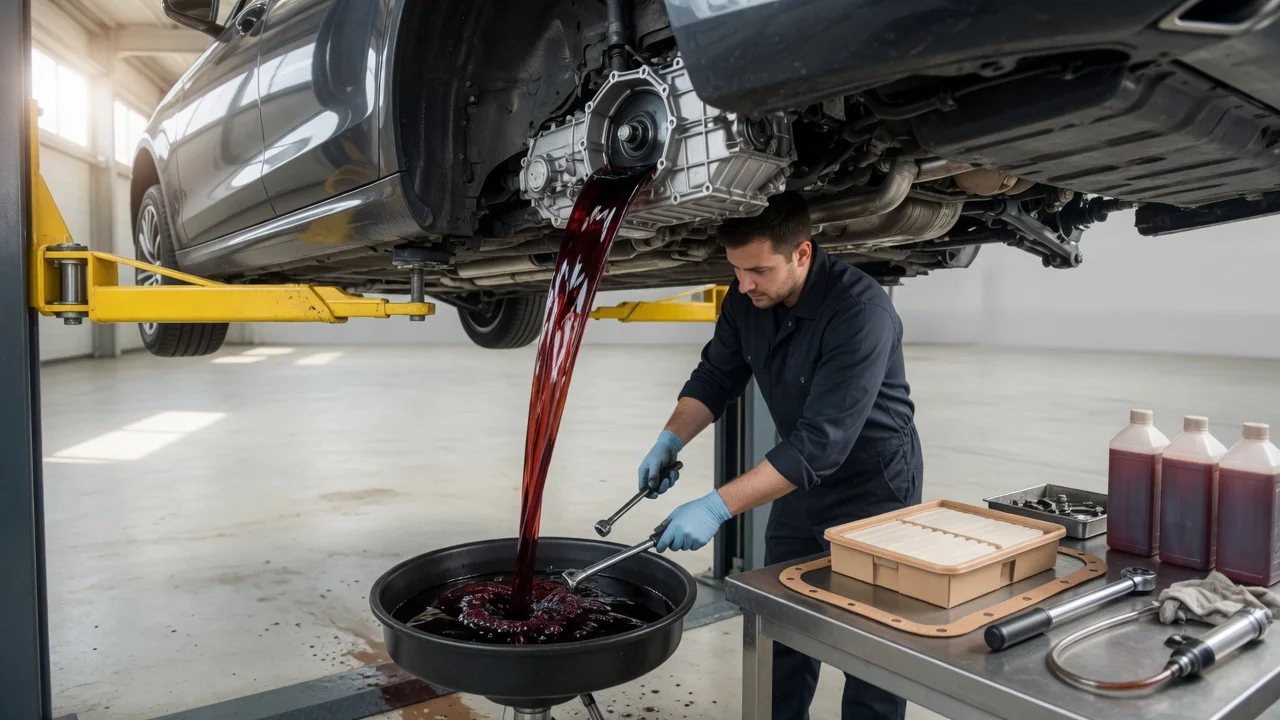
Record the gearbox code and the fluid specification from the current manufacturer procedure for that vehicle. Buy that fluid only. Raise the vehicle so it sits level and remove the undertray as needed to reach the pan, drain plug, and level or fill plug. If the unit uses a serviceable pan and filter, drain first, then drop the pan, replace the filter, clean the magnet or magnets, and fit a new gasket. If the service is drain-plug only, leave the pan in place. Drain from the designated point. Inspect colour, odour, and debris. Heavy clutch material, large flakes, or a burnt smell moves the job from routine service to diagnosis. Refit the drain plug with a new seal and tighten it to the torque published for that plug and gearbox. The value is code-specific. Fill with the specified fluid along the path the procedure names. Many Audi units fill from below through the level hole until fluid weeps, then finish the level after a temperature cycle; others use a case fill port. Start the engine with the parking brake applied. Move the selector slowly through each position and pause so the valve body and cooler fill. On dual-clutch units, complete any extra clutch-cooling or basic-setting steps listed for that code. With the engine idling and the car still level, watch gearbox fluid temperature on the diagnostic tool. Bring it into the published window. That window is often narrow and is defined in degrees Celsius for that gearbox; do not substitute a guess. At that temperature, open the level plug. A thin drip or light stream is the usual completion cue on overflow-style units. Add fluid if nothing emerges; allow excess to run until the flow becomes a drip. Close the level plug with a new seal and the published torque. Refit the undertray, lower the vehicle, and inspect the pan, plugs, cooler lines, and any mechatronic sleeve that was disturbed. Road-test, then repeat the temperature and level check if the procedure requires a second pass. Clear or reset a gearbox-oil service display if the vehicle tracks one. Run clutch adaptations or basic settings when the workshop steps list them after a fluid change.
Completion check: the fluid in the case is the specified product; the car was level when the overflow or fill-hole check was made; temperature was inside the published window at that moment; there are no leaks after a drive cycle; engagement and shift quality are normal, with no new gearbox warning lamp; a scan shows no new transmission faults.
Manual gearboxes follow a simpler path: drain, refill with the specified manual transmission oil to the bottom of the fill hole, vehicle level, engine off unless the literature says otherwise. Dry dual-clutch mechatronic service is a small hydraulic fill with its own fluid and published quantity; it is a different job from a wet-clutch pan service. Multitronic units take CVT fluid only. Hybrid and e-tron drive units can have high-voltage and coolant interfaces around the gearbox; stay inside the published isolation and access steps or hand the vehicle to a qualified shop.
Use a specialist when the gearbox is already in limp mode, the pan holds large clutch debris, a mechatronic or sleeve leak is present, factory fill adapters are required, or the temperature-controlled overflow method cannot be followed with the tools on hand. Wrong-specification fluid in an S tronic or torque-converter automatic is difficult and costly to reverse, and it should be treated as a reason to stop rather than to continue the fill.